FIFA WC: Nagelsmann slams knockout schedule, says Germany 'punished for winning'
Synopsis
Germany won their group — and Julian Nagelsmann isn't happy about it. The coach's pointed critique of the FIFA World Cup's knockout scheduling format exposes a structural flaw in the expanded 48-team tournament: the better you perform in the group stage, the less time you get to prepare for the round that follows.
Key Takeaways
Julian Nagelsmann criticised the FIFA World Cup knockout scheduling format on 25 June , saying group winners are 'punished' with less preparation time.
Germany topped Group E but faced a delayed opponent confirmation due to other groups still being decided.
Their Round of 32 fixture is scheduled for 29 June in Boston .
Germany's coaching staff pre-emptively scouted three or four games of each likely opponent to offset the short turnaround.
Germany had suffered back-to-back group-stage exits at the 2018 and 2022 World Cups before this campaign.
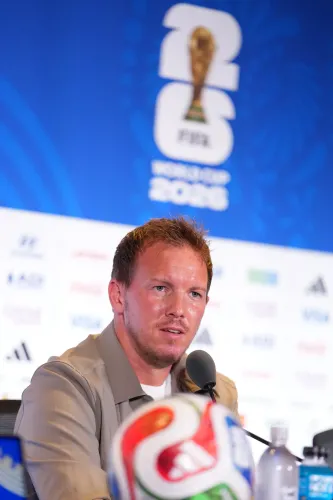
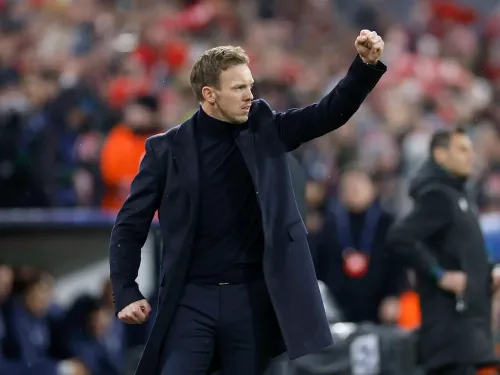
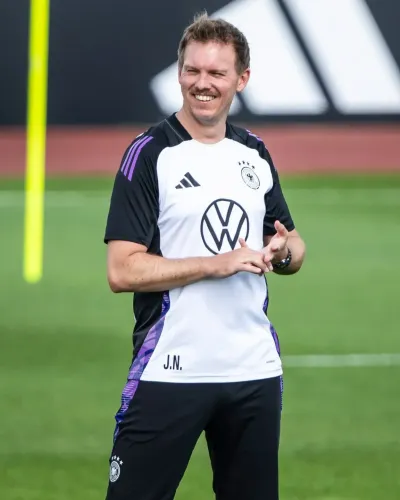
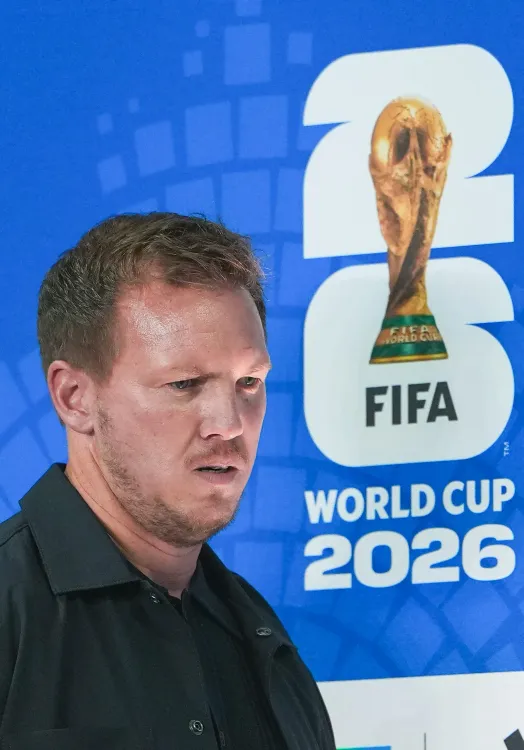
Germany head coach Julian Nagelsmann has publicly criticised the FIFA World Cup knockout-round scheduling format, arguing that group winners are structurally disadvantaged by a compressed preparation window before their Round of 32 fixtures. The remarks came on 25 June ahead of Germany's scheduled knockout tie in Boston on 29 June.
The Scheduling Grievance
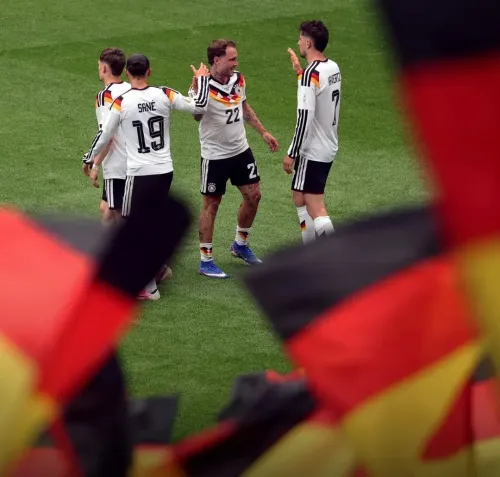
Germany clinched top spot in Group E with enough points to guarantee qualification before the group stage had even concluded. Yet, as several other groups were still being decided, the four-time world champions faced an uncertain wait to learn the identity of their Round of 32 opponents — leaving their coaching and analysis staff with a significantly narrowed preparation window.
'I don't think it's ideal that you're somewhat punished for winning the group. I'm not a big fan of it. Anyone can imagine that there are better setups than scrubbing through footage all Saturday night, only to present the opponent to the team on Sunday,' Nagelsmann told reporters.
How Germany Is Adapting
Rather than wait for official confirmation of their opponent, Germany's support staff moved proactively. The coaching group divided scouting responsibilities across the most likely Round of 32 opponents, with analysts and coaches each covering multiple potential rivals in advance.
'We have divided up the opponents that are most likely. I've watched a bit, and our analysis team has watched some. We have all already watched three or four games of the potential opponents. We can work through the night once in a while; it's not that bad,' Nagelsmann added.
Context: Germany's World Cup Redemption Arc
The criticism carries added weight given Germany's recent tournament history. The four-time world champions suffered back-to-back group-stage eliminations at the 2018 and 2022 FIFA World Cups — a pair of humiliations that reshaped German football's self-image. Clearing the group stage this time around marks a meaningful step in their rebuilding arc, making the scheduling complaint less a grievance and more a signal of genuine knockout ambition.
Notably, the tension between rewarding group-stage excellence and providing adequate preparation time is not new to the World Cup format — it has been a recurring structural debate, now amplified by the expanded 48-team tournament.
What Happens Next
Germany will wait for the remaining group-stage results to be finalised before their opponent is confirmed. With the Round of 32 fixture set for 29 June in Boston, the coaching staff will have a tight but, by Nagelsmann's own admission, manageable window to complete their tactical preparation.
Point of View
But it is also a symptom of a tournament design problem that FIFA has not resolved despite years of debate. The expanded 48-team format creates more scheduling asymmetry, not less — group winners routinely face tighter turnarounds than teams that scrape through as third-place qualifiers. Germany's ability to pre-scout multiple opponents simultaneously is a resource advantage most nations cannot replicate, which means the structural inequity hits smaller footballing nations harder. If FIFA is serious about competitive fairness in an expanded World Cup, the knockout draw timeline needs a structural fix, not a coaching workaround.
NationPress
24 Sept 2026
Frequently Asked Questions
Why did Nagelsmann say Germany was 'punished for winning the group'?
Nagelsmann argued that finishing first in Group E left Germany waiting longer for opponent confirmation, as other groups were still being decided — shrinking their preparation window before the Round of 32 on 29 June. He said the scheduling format disadvantages group winners relative to teams that qualify later with more clarity on their bracket.
When and where does Germany play their Round of 32 match?
Germany's Round of 32 fixture is scheduled for 29 June in Boston. Their opponent was yet to be confirmed at the time of Nagelsmann's comments, pending the conclusion of other group-stage matches.
How is Germany preparing without knowing their opponent?
Germany's coaching staff divided scouting responsibilities across the most likely Round of 32 opponents, with Nagelsmann and his analysts each watching three or four matches of potential rivals in advance of the official confirmation.
What is Germany's World Cup history?
Germany are four-time FIFA World Cup champions, but suffered back-to-back group-stage eliminations at the 2018 and 2022 tournaments. Advancing from the group stage at the 2026 edition marks a step forward in their post-2022 rebuilding process.
Is the scheduling complaint specific to Germany or a wider issue?
The tension between rewarding group-stage performance and providing adequate knockout preparation time is a recurring structural debate in World Cup formats, amplified by the expanded 48-team tournament introduced for 2026.