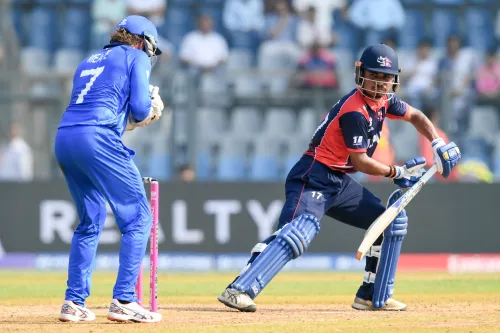
Did Nepal's Batting Unit Fail to Deliver in T20 WC?
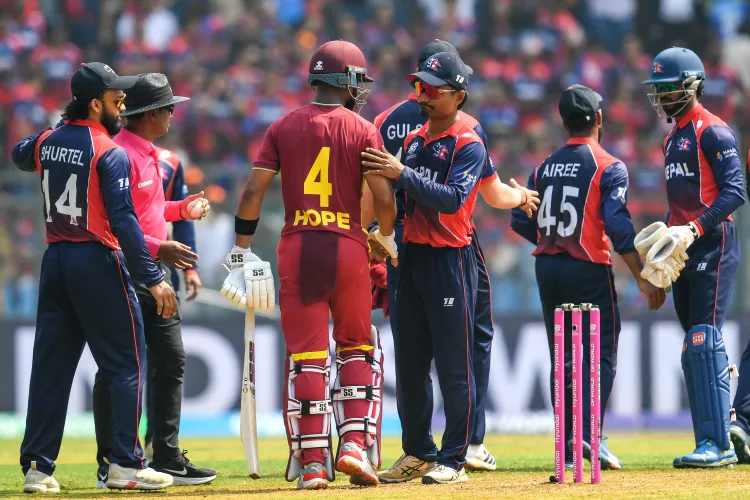
Synopsis
Nepal's journey in the ICC Men’s T20 World Cup comes to a disappointing end as captain Rohit Paudel reflects on the team's batting shortcomings after a nine-wicket defeat to the West Indies. Discover how they struggled with partnerships and what lessons can be drawn from their performance.
Key Takeaways
Batting Partnerships: The need for stronger collaborations among batsmen.
Converting Starts: Importance of turning starts into big scores.
Learning from Experience: Patience and adaptability are crucial in challenging conditions.
External Pressure: Maintaining positivity amidst criticism is essential.
Future Focus: Regrouping and learning from mistakes for future tournaments.
Mumbai, Feb 15 (NationPress) Nepal's captain Rohit Paudel acknowledged that his team fell short as a batting unit following their nine-wicket loss to the West Indies, which concluded their journey in the ICC Men’s T20 World Cup at the Wankhede Stadium on Sunday.
Nepal managed to score 133/8 after recovering from a dismal start of 22/3 during the powerplay. However, this total was inadequate as the West Indies chased it down in just 15.2 overs to secure their spot in the Super Eights.
Reflecting on the initial damage caused by the Caribbean bowlers, Paudel recognized the difficulties posed by their new-ball spell.
“It was challenging, especially the way Forde, Akeal, and Jason bowled during the powerplay. They effectively utilized the conditions. As a batting unit, we failed again. We need to improve,” Paudel stated post-match.
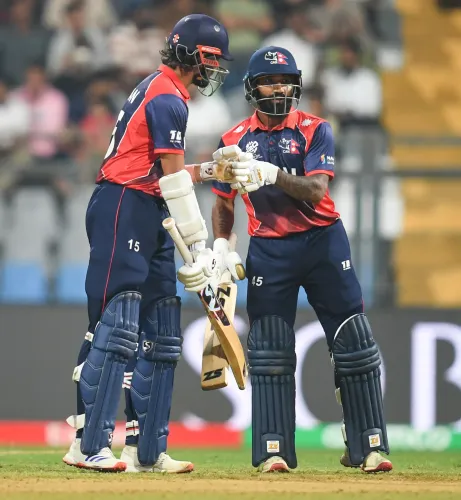
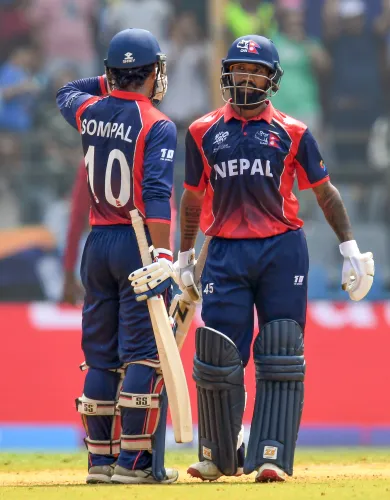
Nepal struggled once more to turn starts into significant scores, a recurring issue that Paudel highlighted as a major concern after multiple subpar totals.
“We are lacking in building batting partnerships. We often achieve partnerships of 20-30, but we fail to extend them. Batsmen who reach 20-30 runs aren’t converting those into big scores. We need to address these areas,” he added.
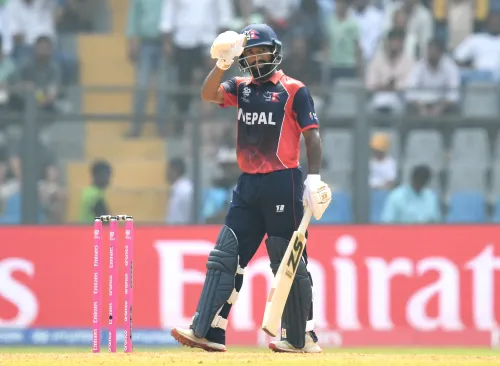
Captain Paudel pointed to Dipendra Singh Airee’s composed innings of 58 off 47 balls as a model of the patience and adaptability necessary on a challenging pitch. Airee rebuilt the innings before accelerating towards the end, helping Nepal surpass the 130-mark.
“He took his time and played exceptionally well. At the end of the innings, he picked up the pace. The wicket was tough at the start, but he waited for his moment and capitalized. We should learn from him,” he remarked.
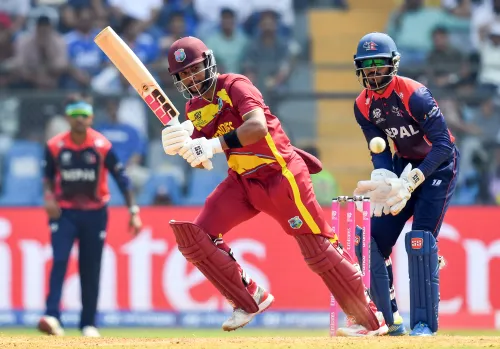
Despite a spirited fightback from the middle order and a late surge that provided a defendable total, the West Indies’ precise chase, spearheaded by Shai Hope and Shimron Hetmyer, left Nepal with no room for error.
As elimination was confirmed, Paudel emphasized the importance of shielding the squad from external pressures as they aim to regroup after the tournament.
“It’s crucial to keep outside noise at bay. Listening to it can hinder player performance in future matches. We’re trying to maintain positivity, especially during tough times,” he concluded.
Point of View
It's crucial to note that while Nepal faced a disappointing exit from the T20 World Cup, their journey has been an opportunity for growth. Despite the setbacks, the focus should be on the potential for improvement and resilience that the team can develop moving forward.
NationPress
5 Sept 2026
Frequently Asked Questions
What was Nepal's total score against the West Indies?
Nepal scored 133 runs for the loss of 8 wickets.
Who is the captain of the Nepal cricket team?
The captain of the Nepal cricket team is Rohit Paudel.
How many wickets did Nepal lose during the powerplay?
Nepal lost 3 wickets, scoring just 22 runs in the powerplay.
What did Rohit Paudel identify as a key concern for the team?
Rohit Paudel highlighted the lack of batting partnerships as a significant concern.
Who scored the highest runs for Nepal in the match?
Dipendra Singh Airee was the top scorer for Nepal, making 58 runs off 47 balls.