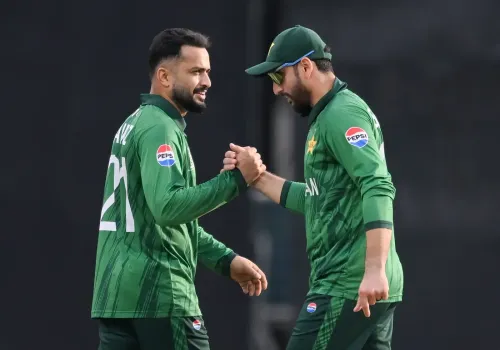
Pakistan fined 5% match fee for slow over-rate in ODI tri-series final vs Sri Lanka

Synopsis
Pakistan lifted the ODI tri-series trophy with a thrilling three-wicket win over Sri Lanka in Lahore — but the celebration came with a fine attached. Captain Shaheen Shah Afridi accepted a 5% match-fee penalty for bowling one over short of the required rate, as Fakhar Zaman's 12th ODI century and Arafat Minhas's explosive 61 off 31 balls powered the hosts to 329 for seven chasing 326.
Key Takeaways
Pakistan fined five per cent of match fees for a slow over-rate in the ODI Tri-Series final against Sri Lanka in Lahore .
Jeff Crowe (Emirates ICC Elite Panel) imposed the sanction; Shaheen Shah Afridi pleaded guilty, avoiding a formal hearing.
Pakistan bowled one over short of the required quota under Article 2.22 of the ICC Code of Conduct.
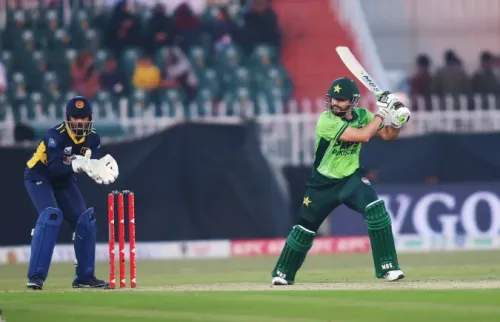
Pakistan won the final by three wickets , chasing 326 to finish at 329 for seven with nine balls to spare.
Fakhar Zaman top-scored with 127 off 99 balls (his 12th ODI century); Arafat Minhas smashed 61 off 31 to seal the chase.
Kamindu Mendis (131) and Pavan Rathnayake (77) had taken Sri Lanka to 325 for eight .
Pakistan have been fined five per cent of their match fee for maintaining a slow over-rate during the ODI Tri-Series final against Sri Lanka in Lahore on 2 November 2026. The sanction follows a thrilling three-wicket victory in which Pakistan chased down 326 to claim the tri-series trophy in front of their home crowd.
The Sanction and How It Was Applied
The penalty was imposed by Jeff Crowe of the Emirates ICC Elite Panel of Match Referees, after Pakistan were found to have bowled one over short of the required quota within the stipulated time — even after all available time allowances were accounted for. Under Article 2.22 of the ICC Code of Conduct for Players and Player Support Personnel, teams are penalised five per cent of their players' match fees for every over they fall short of the minimum over-rate requirement.
Pakistan captain Shaheen Shah Afridi pleaded guilty to the offence and accepted the proposed penalty, thereby avoiding the need for a formal hearing. The charge was levelled by on-field umpires Ahsan Raza and Wayne Knights, third umpire Sharfuddoula Ibne Shahid, and fourth umpire Rashid Riaz.
Pakistan's Match-Winning Chase
The fine arrives on the back of one of Pakistan's most memorable ODI run chases at home. Set a challenging target of 326, the hosts reached 329 for seven with nine balls remaining, completing the tournament-winning chase in style.
Opening batter Fakhar Zaman was the chief architect of the victory, striking a commanding 127 off 99 deliveries — his 12th ODI century. He was ably supported by Saad Baig, who contributed 74 off 75 balls, with the pair steadying Pakistan's innings after the early dismissals of Maaz Sadaqat and Babar Azam.
After Zaman's dismissal, Pakistan still needed late impetus, and Arafat Minhas provided it emphatically — smashing 61 off just 31 deliveries, including four sixes and four boundaries. His explosive knock brought the equation within reach before Shaheen sealed the victory with a six.
Sri Lanka's Strong but Ultimately Insufficient Total
Kamindu Mendis had earlier struck a fine 131 for Sri Lanka, while Pavan Rathnayake contributed a valuable 77, together taking the visitors to 325 for eight. Despite their efforts producing a competitive total, it ultimately proved insufficient against a determined Pakistan batting lineup.
Context and What It Means
Slow over-rate penalties are a recurring feature in international cricket, reflecting the ICC's ongoing effort to maintain the pace of play in limited-overs formats. This is not the first time Pakistan have attracted such a sanction, and the fine — while modest — adds an administrative footnote to what was otherwise a landmark tournament triumph. Notably, the penalty does not affect the match result or the trophy outcome. All eyes now turn to Pakistan's next bilateral series, with the tri-series title serving as a significant confidence boost heading into upcoming fixtures.
Point of View
But slow over-rate violations are becoming too routine to dismiss as administrative trivia. The ICC's Article 2.22 regime has existed for years, yet over-rate offences persist across all teams — suggesting the five-per-cent penalty is not a sufficient deterrent. For a Pakistan side that will need tight tactical discipline in upcoming bilateral series, the coaching staff will want this habit corrected well before a higher-stakes contest. The trophy win matters far more in the public imagination, but the fine is a reminder that winning ugly still has a cost.
NationPress
2 Nov 2026
Frequently Asked Questions
Why was Pakistan fined after the ODI tri-series final?
Pakistan were fined five per cent of their match fees for bowling one over short of the required over-rate in the tri-series final against Sri Lanka in Lahore. The sanction was imposed under Article 2.22 of the ICC Code of Conduct by match referee Jeff Crowe.
Did the slow over-rate fine affect Pakistan's trophy win?
No, the fine does not affect the match result or the tri-series title. Pakistan's three-wicket victory over Sri Lanka stands, and they retain the tri-series trophy.
How did Pakistan win the tri-series final against Sri Lanka?
Pakistan chased down a target of 326, finishing at 329 for seven with nine balls remaining. Fakhar Zaman top-scored with 127 off 99 deliveries, his 12th ODI century, while Arafat Minhas contributed a decisive 61 off 31 balls to seal the chase.
What did Sri Lanka score in the tri-series final?
Sri Lanka posted 325 for eight, with Kamindu Mendis striking 131 and Pavan Rathnayake contributing 77. Despite the competitive total, Pakistan successfully completed the chase.
What is the ICC rule on slow over-rates?
Under Article 2.22 of the ICC Code of Conduct for Players and Player Support Personnel, teams are fined five per cent of match fees for every over they fall short of the minimum over-rate requirement, calculated after all permissible time allowances.