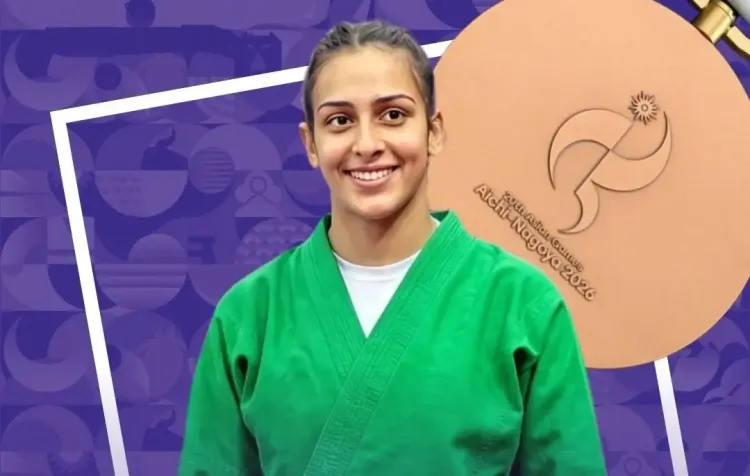
Pincky Balhara wins Kurash bronze at 2026 Asian Games, vows to carry on
Synopsis
Competing on an injured knee and brushing aside retirement talk, Pincky Balhara won her second Asian Games medal — a kurash bronze in Nagoya — and served notice that she is far from finished. Her story combines athletic grit, personal tragedy, and a blunt call for government support that India's kurash community has been making for years.
Key Takeaways
Pincky Balhara won a bronze medal in women's 78kg kurash at the 2026 Asian Games in Nagoya on 28 September .
She lost her semifinal 5-0 to South Korea's Sumin Mo at the Aichi Prefectural Martial Arts Hall , with a right knee injury hampering her throughout.
The bronze is her second Asian Games medal , matching a silver from the 2018 Jakarta Games .
Pincky, 28 , ruled out retirement, saying: 'I am not stopping yet.' Indian Kurash Association president Ravi Kapoor called for greater government backing, noting the association has largely been self-funded.
India's six-member kurash squad held its pre-Games camp in Saharanpur with limited international exposure.
Pincky Balhara claimed a bronze medal in the women's 78kg kurash event at the 2026 Asian Games in Nagoya on 28 September, competing through a painful right knee injury to secure her second Asian Games medal and defy calls to retire after her third continental appearance.
How the semifinal unfolded
The 28-year-old Delhi athlete faced South Korea's Sumin Mo in the semifinal at the Aichi Prefectural Martial Arts Hall, losing 5-0 in a bout that was shaped almost entirely by her injury. Sumin repeatedly targeted Pincky's heavily strapped right knee, restricting her attacking options and steadily building a points lead to advance to the final.
'I was determined not to give away points. Sumin knew my weakness, and she made good use of that,' Pincky said.
A career built on resilience
The bronze mirrors Pincky's performance at the 2018 Asian Games in Jakarta, where she won silver — a result she delivered under profound personal pressure after losing her father in the lead-up to the competition. She has spoken candidly about media criticism at the time, alleging she was accused of seeking sympathy over her father's death.
'A section of the media said I was taking sympathy for my father's death before the 2018 Asian Games. I proved them wrong with my medal. That fire still burns in me. The blood of a Jat girl is very hot, and that is what keeps me going against adversity,' she said.
Beyond Asian Games podiums, Pincky's record includes a junior Asian championship title in 2015, a gold medal at the 2024 World Nomad Games, and multiple national titles.
Not done yet, says Pincky
Despite speculation that a third Asian Games appearance could signal the end of her career, Pincky was emphatic in dismissing that narrative. 'A lot of people are saying my career is over after my third Asian Games. While I agree that the colour of the medal is not what I had aspired to, I am not stopping yet. I have worked very hard in the last eight years for this medal,' she said.
India's Kurash programme needs more support
India fielded a six-member squad in kurash at the Aichi-Nagoya Games, with the team holding a brief training camp in Saharanpur before travelling to Japan. Indian Kurash Association president Ravi Kapoor acknowledged that inadequate international preparation had limited the team's prospects.
'We could have done better had our team got some international exposure and training before coming to the Games. We need a lot of support from the government,' Kapoor said, adding that Prime Minister Narendra Modi's vision of making sports a career option must extend to kurash athletes as well.
Pincky pointed to the 2018 Asian Games as proof of what targeted overseas preparation can deliver — the Indian squad trained for 19 days in Uzbekistan, one of the sport's traditional strongholds, before winning two medals in Jakarta. Kurash is reported to have taken root in an organised form in India around 2000, with several athletes transitioning from judo to build the sport's domestic base. Kapoor said the association has largely self-funded its operations and appealed for government backing ahead of the next cycle.
With the medal count standing and her resolve undiminished, all eyes will now be on whether Pincky can secure the institutional support she needs to mount a stronger challenge at the next Asian Games.
Point of View
A pre-Games camp on home soil, and an athlete competing through a knee injury: these are not incidentals but symptoms of a support system that repeatedly asks athletes to outperform their preparation. India's kurash programme has delivered medals at two consecutive Asian Games largely on individual resolve; the question is how many medals are being left on the table for want of overseas training camps and dedicated coaching. Kapoor's appeal to Modi's sports-as-career vision deserves a concrete ministerial response, not a ceremonial acknowledgement.
NationPress
29 Sept 2026
Frequently Asked Questions
What medal did Pincky Balhara win at the 2026 Asian Games?
Pincky Balhara won a bronze medal in the women's 78kg kurash event at the 2026 Asian Games in Nagoya on 28 September. It is her second Asian Games medal, after a silver at the 2018 Jakarta Games.
Why did Pincky Balhara lose her semifinal at the 2026 Asian Games?
Pincky lost 5-0 to South Korea's Sumin Mo in the semifinal at the Aichi Prefectural Martial Arts Hall, largely because of a right knee injury. Sumin repeatedly targeted the injured leg, limiting Pincky's attacking options and building an unassailable points lead.
Is Pincky Balhara retiring after the 2026 Asian Games?
No. Pincky has explicitly rejected retirement talk, saying 'I am not stopping yet' despite this being her third Asian Games appearance. She acknowledged the bronze fell short of her medal-colour ambitions but pointed to eight years of hard work as motivation to continue.
What is kurash, and how strong is India in the sport?
Kurash is a Central Asian wrestling discipline that developed in an organised manner in India around 2000. India won two medals at the 2018 Jakarta Asian Games, with several athletes — including those who transitioned from judo — building the country's competitive base. Pincky Balhara is among the sport's most decorated Indian practitioners, holding a 2015 junior Asian championship and a 2024 World Nomad Games gold.
What support does the Indian Kurash Association say it needs?
Indian Kurash Association president Ravi Kapoor said the team needed greater international exposure and more extensive preparation before major events. He noted that the association has largely been self-funded and called on the government to provide institutional backing, citing Prime Minister Modi's vision of making sports a viable career option.