MSK Prasad backs Shubman Gill's call to lift saliva ban
Synopsis
India captain Shubman Gill now has a heavyweight ally in his push to end cricket's Covid-era saliva ban. Former chief selector MSK Prasad says batters dominate so heavily that bowlers deserve help, pointing to a 720-run total. He also says Gill, Pant and Shaw were once in his panel's third-tier 'C team'.
Key Takeaways
Former chief selector MSK Prasad backed Shubman Gill's call to lift the saliva ban after the Wellington Test against New Zealand .
Prasad said the Covid-era rule no longer makes sense and cited a 720-run total as proof that bowlers have little help.
His 2016-2020 selection panel placed Gill , Rishabh Pant and Prithvi Shaw in a third-tier 'C team'.
He credited ICC Chairman Jay Shah with narrowing the pay gap between men's and women's cricket.
N Sree Charani , an Andhra product, is the top-ranked bowler in the ICC women's T20I rankings.
Prasad tipped Henrietta Pereira , who plays for India A against England A at Wankhede next month, as Andhra's next India prospect.
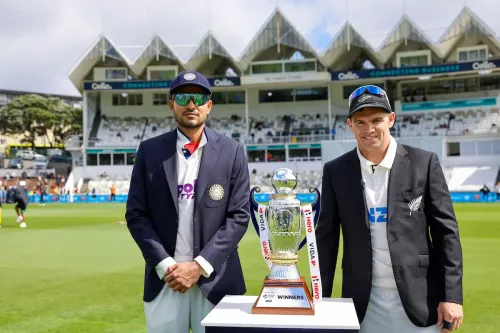
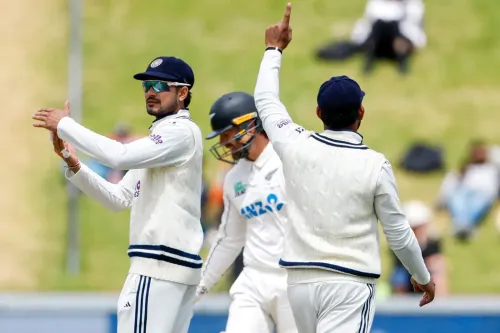
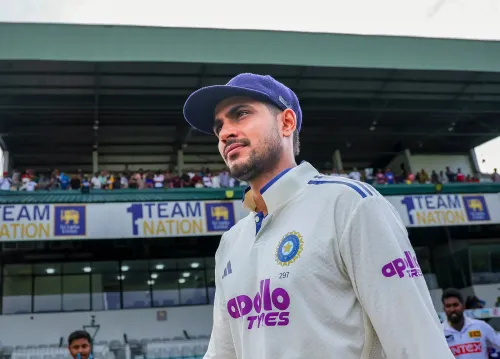
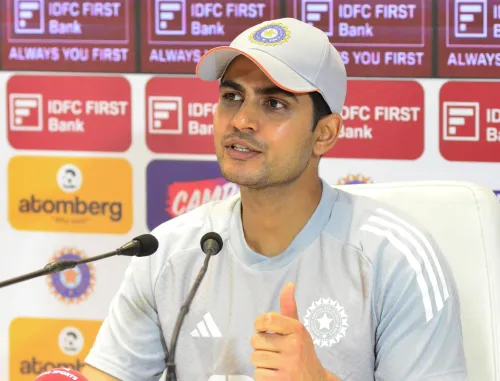
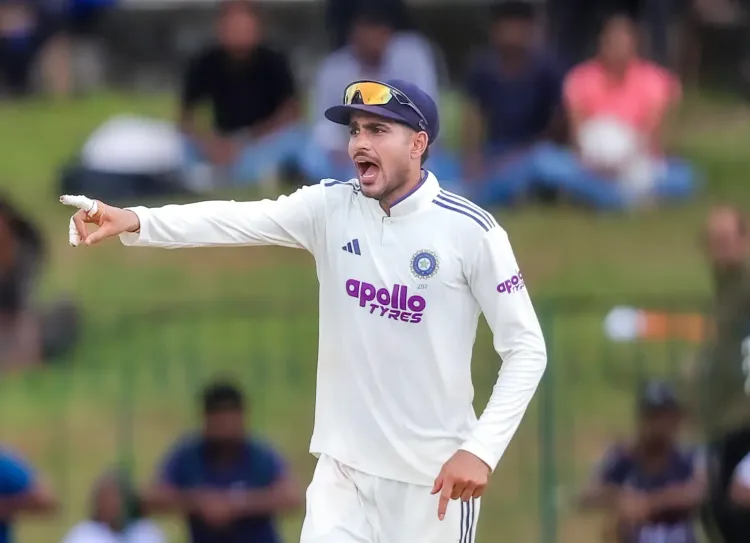
Former India chief selector MSK Prasad has backed captain Shubman Gill's call to lift the ban on using saliva to shine the cricket ball. Gill made the demand at the conclusion of the Wellington Test against New Zealand. Prasad argued that batters now dominate the game so heavily that bowlers deserve whatever help they can get.
Prasad is currently team director of Venice Livewires in the ongoing Italia T10 league. He said the restriction was a Covid-19-era measure that no longer makes sense now that the health situation has improved.
Prasad's Case for Bringing Back Saliva
“I'm with him, actually, because that rule came in during the Covid-19 period, when they were not allowed to use saliva and that kind of stuff. I think you can always revert to the old rule,” Prasad said in a conversation.
He pointed to the growing imbalance between bat and ball. “Now that the situation is better, there is nothing wrong with it, because these days, if you see, the other day we scored 720. There is nothing for the bowlers. So at least these little things can definitely be allowed. I am with Shubman Gill on this,” he added.
Bowlers have long argued that the saliva ban weakened conventional swing and reverse swing. Gill's public call has now given those voices a prominent backer from the current Indian set-up.
How Prasad's Panel Spotted Gill, Pant and Shaw
Gill was among the players identified early by Prasad's selection committee, which served from 2016 to 2020. Prasad said the panel built India's bench strength in three tiers. Gill, Rishabh Pant and Prithvi Shaw were all part of it.
“The idea and role of a selection committee is to identify new talent. We are like runners in a relay race, where we pass the baton on to the next selectors,” Prasad said. He cited West Indies and Australia as examples of teams whose rankings fell for a phase because they lacked bench strength.
According to Prasad, his committee identified 60 players. He described them as the current Indian team of 20, a second level of 20, and a third level of 30, organised as A, B and C teams. “Can you believe it – Rishabh Pant, Shubman Gill and someone like Prithvi Shaw were all in our third team, the C team,” he said.
He explained that players moved up as the A team needed replacements. “Today, looking back, five years after leaving the selection committee, the guys whom we identified – the guys who were in category C – are leading the Indian team. What else do you want? I think we identified the right people,” he said.
Jay Shah and Andhra's Role in Women's Cricket
On the rise of women's cricket, Prasad credited former BCCI secretary and current ICC Chairman Jay Shah. He said Shah narrowed the pay gap between men and women at the international level. “Once the payment started increasing, a lot of new girls started coming into the game,” Prasad said.
He also recalled that the Andhra Cricket Association started the first women's academy of its kind in India in 2012-13. He said the National Cricket Academy was based in Guntur for its first two years. He added that the 2013 World Cup team was announced there, with players such as Jhulan and Mithali training in the city.
That pipeline, Prasad said, helped produce left-arm spinner N Sree Charani, currently the top-ranked bowler in the ICC women's T20I rankings. “I am very, very proud of her,” he said.
Henrietta Pereira: The Next Andhra Prospect
Prasad also named Henrietta Pereira as the next Andhra player who could break into the Indian team. She is set to feature in the India A multi-day game against England A at the Wankhede Stadium in Mumbai next month.
“A fantastic player, she is. She is a very, very good player, a brilliant batter and an extraordinary fielder,” he said. “Going forward, she is the next girl from Andhra who can definitely make it to the Indian team.”
With the Indian captain and a former chief selector now publicly aligned, the saliva debate is likely to draw closer scrutiny from cricket's administrators in the months ahead.
Point of View
But saliva is a marginal fix. Flat pitches, shorter boundaries and heavier bats are the larger drivers, and a shiny ball will not undo a 720-run surface. The ban was made permanent well after the pandemic's peak, which suggests administrators see it as more than a Covid relic. Prasad's account of his tiered talent pipeline is also partly retrospective credit-taking: his own figures add up to 70 players, not the 60 he cites, and his panel faced sharp criticism over several calls during its tenure.
NationPress
27 Nov 2026
Frequently Asked Questions
What did MSK Prasad say about the saliva ban?
MSK Prasad backed Shubman Gill's call to lift the ban on using saliva to shine the ball. He said the rule was a Covid-19 measure and that bowlers now need help because batters dominate.
When did Shubman Gill call for lifting the saliva ban?
Gill made the call at the conclusion of the Wellington Test against New Zealand.
Why was saliva banned in cricket?
The restriction was introduced during the Covid-19 pandemic as a health precaution. Prasad argues that the situation has since improved, so the old rule can be restored.
Which current India stars did Prasad's selection panel identify early?
Prasad said Shubman Gill, Rishabh Pant and Prithvi Shaw were all in his panel's third-tier 'C team'. The panel served from 2016 to 2020.
Who is N Sree Charani?
N Sree Charani is a left-arm spinner from Andhra and currently the top-ranked bowler in the ICC women's T20I rankings. Prasad credits Andhra's early women's cricket academy with helping develop such talent.