Sanju Samson on Rohit's T20 WC support: 'I didn't believe him'
Synopsis
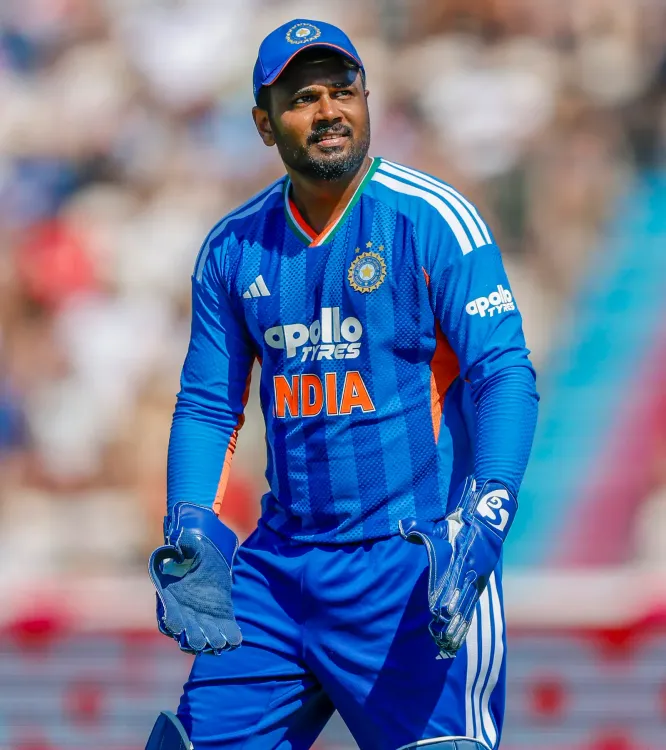
Sanju Samson's T20 World Cup 2026 story is more than a comeback — it is a candid account of disbelief, a four-day mental crisis at the start of a global tournament, and a mid-campaign rediscovery of purpose. His admission that even Rohit Sharma's personal reassurance did not register in the moment makes this one of the most honest player reflections of the cycle.
Key Takeaways
Sanju Samson admitted he could not believe Rohit Sharma's reassurance about his role in the ICC Men's T20 World Cup 2026 after being dropped from the playing XI.
Samson said he needed four to five days to recover mentally at the start of the World Cup campaign, which began just two days after the New Zealand T20I series.
He described a period of deep self-reflection — questioning why he plays cricket — as the turning point that restored his confidence.
His subsequent innings against the West Indies in a virtual quarter-final required him to suppress his natural attacking instinct as wickets fell around him.
Samson called the celebration after that knock 'a very private moment' rooted in faith, saying 'I know it wasn't me.'
India wicketkeeper-batter Sanju Samson has opened up on the mental low he endured during the ICC Men's T20 World Cup 2026, revealing that he initially found it impossible to accept captain Rohit Sharma's reassurance that he still had a part to play in the tournament — before a remarkable personal revival culminated in one of India's most important innings of the campaign, against the West Indies.
The Moment Rohit's Words Did Not Land
Speaking in an interview with JioStar, Samson was candid about the limits of even well-intentioned captaincy. After being dropped from the playing XI in the latter stages of the New Zealand T20I series, Rohit reportedly pulled him aside with words of encouragement — but Samson was not in a place to receive them.
'To be honest, I didn't believe him at that time. Sorry. He might have spoken from his heart or from his experience, but that day I wasn't able to see what he was seeing. You could see it on my face; I was a bit off that day,' Samson said.
The admission is striking in its honesty — a senior Indian cricketer acknowledging, on record, that a captain's pep talk fell flat in the moment.
A Difficult Transition Into the World Cup
The Kerala batter explained that the timing made recovery harder. India's T20 World Cup 2026 campaign began just two days after the New Zealand series concluded, leaving him no buffer to process the setback.
'Our World Cup campaign started two days after the New Zealand series, and it takes me at least a week to recover. I don't like to bottle things up, so it shows on my face if I'm not feeling 100 per cent. I went through that phase for four or five days before getting myself back on track,' he said.
That four-to-five-day window of visible struggle, at the start of a major global tournament, underlines the psychological weight carried by players who are in the squad but not in the XI.
Rediscovering Purpose Mid-Tournament
Samson described the low point as a catalyst for deeper self-examination. Rather than suppressing the disappointment, he used it to interrogate his own motivations.
'You know you've failed, so what's next? You're at the bottom, so from there, you can only go up. I started working on myself mentally. I started asking myself questions, why do I play cricket? What's my purpose? It was like I was rediscovering myself while the World Cup was going on. And then everything just came back,' he said.
This kind of in-tournament mental reset — without the luxury of a break or a support bubble — is rarely discussed publicly by Indian players, making Samson's account particularly candid.
The Match-Winning Knock Against West Indies
That renewed clarity translated directly into performance. In what was effectively a virtual quarter-final against the West Indies, Samson produced what he described as one of those rare innings where everything aligned instinctively.
'I prepared much better for that game after the Zimbabwe one. There are days I've played in the IPL and for India, and I've scored those centuries, when everything just feels right. It was one of those days. You just enjoy, stay in the moment, stay in the process, and things start happening automatically,' he said.
Notably, the innings required him to override his natural attacking instinct. As an opener, Samson's default mode after the Powerplay is to shift into high gear — but falling wickets at the other end forced a recalibration.
'After the powerplay, I usually go into fifth gear. I'm an opener, if I get through the Powerplay, and we bat till No. 8, my game plan is to take on the bowling. But in that game, every time I felt it was time to attack, a wicket would fall at the other end. That's when I realised the game is the biggest teacher. The game tells you what to do,' he stated.
The Celebration and What It Meant
The emotional celebration that followed the innings drew wide attention. Samson clarified it was not a personal statement but an expression of faith and gratitude.
'It's a very private celebration, but it became very public. I'm a very strong believer. I believe in my God, and I know it wasn't me,' he said.
He added that certain shots during the knock surprised even himself, deepening his sense that he was serving a purpose larger than individual achievement. 'I've played enough innings to know which shots I hit, and then there are some where I wonder, "How did I hit that one?" I'm just very grateful that it happened through me, that I was able to help the team. That moment will stay with me till my last breath. It was very special,' he said.
With the T20 World Cup 2026 still unfolding, Samson's account offers a rare window into the psychological demands placed on squad players — and how the gap between a captain's belief and a player's self-belief can be the defining distance in high-stakes cricket.
Point of View
Especially when a major tournament begins before a player has had time to process a setback. Rohit Sharma's reputation as a player-friendly captain is well-established, but Samson's candid admission that even a personal conversation did not land underlines how limited leadership tools are when a player is in genuine mental distress. The more significant story here is structural — India's bench culture demands that reserves stay match-ready under conditions that would test even the most experienced minds. That Samson found his way back without external intervention, through self-questioning during the tournament itself, says as much about individual resilience as it does about the gaps in support systems around elite Indian cricketers.
NationPress
20 Oct 2026
Frequently Asked Questions
What did Sanju Samson say about Rohit Sharma's support during the T20 World Cup 2026?
Samson revealed that he initially could not believe Rohit Sharma's reassurance that he would still have a role in the ICC Men's T20 World Cup 2026 after being dropped from the playing XI. He said he was too mentally drained at the time to see what Rohit was envisioning for him.
Why was Sanju Samson struggling mentally at the start of the T20 World Cup 2026?
Samson had been dropped from the playing XI during the New Zealand T20I series, and India's World Cup campaign began just two days later — before he had time to recover. He said it typically takes him at least a week to process such setbacks, and he visibly struggled for four to five days into the tournament.
What was Sanju Samson's innings against the West Indies about?
Samson played a match-winning knock in a virtual quarter-final against the West Indies during the T20 World Cup 2026. He described it as one of those rare days when everything felt right, and said he had to adapt his natural attacking game because wickets kept falling at the other end.
How did Sanju Samson turn his form around during the T20 World Cup 2026?
Samson said he went through a period of mental self-reflection, asking himself why he plays cricket and what his purpose is. He described it as 'rediscovering himself' while the tournament was ongoing, which he credits for his return to form.
What did Sanju Samson mean by his celebration after the West Indies innings?
Samson said the celebration was a private expression of faith that became public. He attributed the innings to a higher power rather than personal skill, saying 'I know it wasn't me,' and called it a moment that will stay with him for the rest of his life.