Sanju Samson on India T20I pressure: 'If I fail, the noise returns'
Synopsis
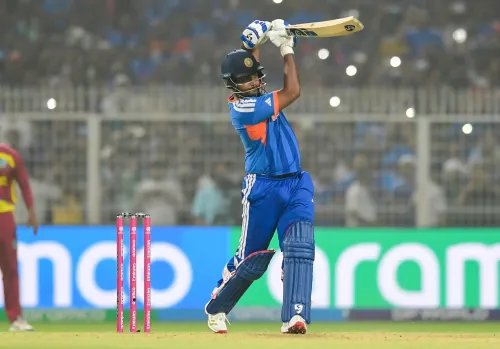
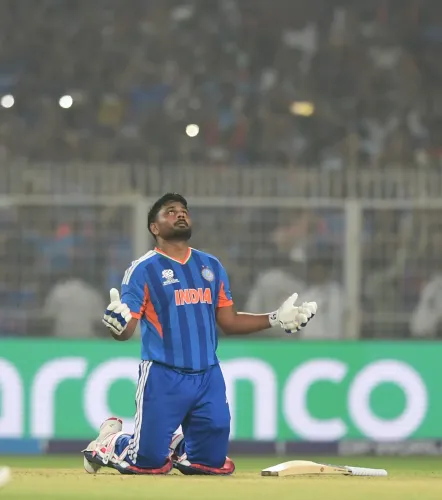
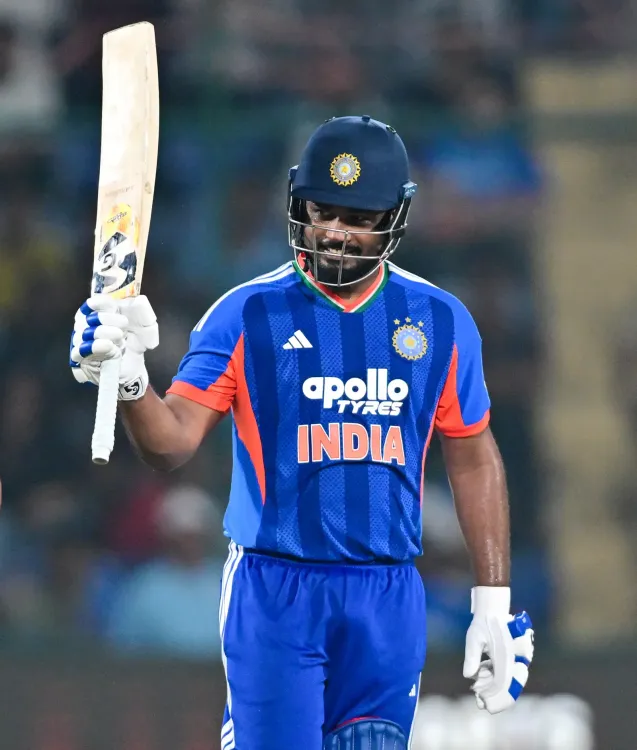
Sanju Samson's 57 off 22 balls sealed India's T20I series against Afghanistan — but it was what he said afterwards that cut through. In a rare moment of candour, Samson admitted failure genuinely hurts him, that social media criticism lands, and that he plays every innings knowing the noise will return if he fails. His answer: accept it, and bat anyway.
Key Takeaways
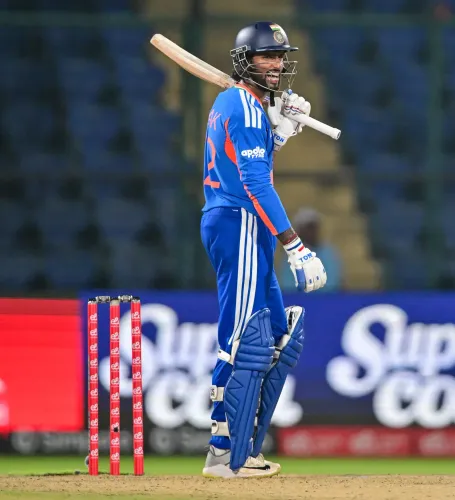
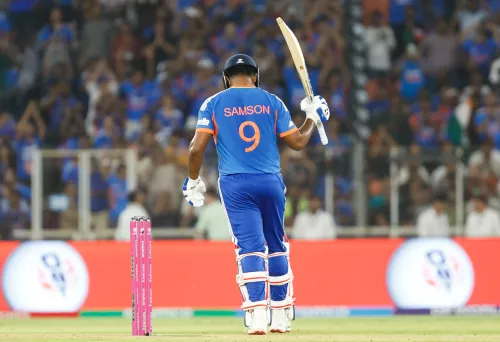
Sanju Samson scored 57 off 22 balls in the 2nd T20I vs Afghanistan at Arun Jaitley Stadium, New Delhi on 16 September 2026 .
The knock helped India seal the three-match series with a 2-0 lead.
Samson admitted that the fear of failure and renewed public scrutiny is real, but said he has chosen to play through it with the same attacking intent.
He described India's high-intent T20 template — targeting a 200 strike rate in the powerplay — as a system proven over the past two to three years and validated by a World Championship.
Samson credited India's leadership group for making tough selection calls and praised the squad's collective-first culture.
He used the phrase 'Wi-Fi problem' to describe the impact of social media criticism, admitting it does affect him before he refocuses on his own preparation.
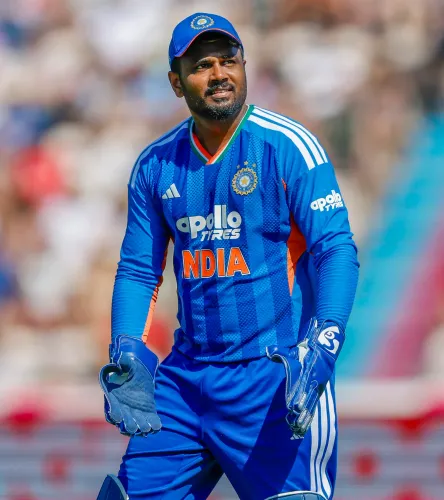
Sanju Samson has opened up candidly about the relentless scrutiny that follows an Indian cricketer through every failure, admitting the fear of renewed public noise is real — but insisting he has chosen to play through it rather than around it. The 31-year-old wicketkeeper-batter made the remarks at the post-match press conference following India's second T20I against Afghanistan at the Arun Jaitley Stadium, New Delhi, on Tuesday, 16 September 2026, after smashing 57 off 22 balls to help India seal the series with a 2-0 lead.
Samson on failure and the fear of noise
Samson was blunt about what failure means for a cricketer wearing the India colours. He acknowledged that criticism — from social media, from former players, from the wider public — does land. But he said experience has shifted where he places his attention.
'Being an Indian cricketer, it's not easy to face failures, but that's where my experience comes in. I think I try to shut out the noise and try to be confident and try to come out and still keep scoring at a high strike rate — even taking the chances, even taking the knowing that if I fail again, I'll be facing a lot of noise again. But I think that's the way we are built here in Indian cricket, and I just go out there and try to score maximum and contribute,' Samson told reporters.
His admission stands out for its honesty: he is not claiming to be immune. He is claiming to play anyway.
The fearless approach and India's T20 template
Samson contextualised his high-risk, high-reward batting style within India's established T20 philosophy — a framework he said has been refined over the past two to three years and validated by a World Championship.
'The nature of the way we have been playing from last two-three years — we are actually the world champions now and we have a format, an approach which has been very successful. So, we are just following it as we were following it last two-three years. So, just watching the ball and just trying to get maximum out in the powerplay. Sometimes it works out well, sometimes it doesn't work out well,' he said.
On consistency, Samson drew a clear line between controlling process and controlling outcome — arguing the latter is simply not possible at a 200 strike rate. 'Consistency has to be in the frame of mind which you're looking at, and then whatever happens, happens. I think that's what a fearless mindset is called.'
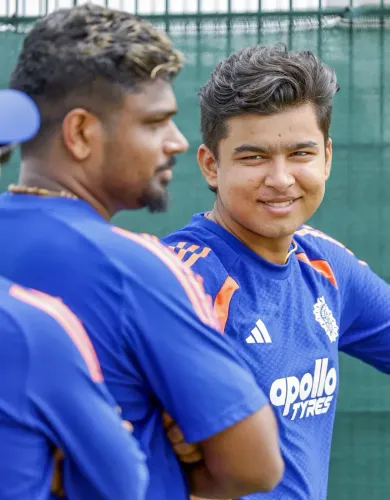
Competition in the top order: Team first, individual second
Samson was asked about the fierce competition for batting spots in India's top three — a subject that external observers often frame as a rivalry. He pushed back firmly on that framing.
'They are competitors for the outside world, but we are a team and we are playing for a country and we want to win the game first, and then it comes down to other individuals,' he said.
He also offered a window into the squad's internal culture, urging against negativity when opportunities are limited: 'We can't sulk or we can't be in a negative frame of mind ki, 'No, yaarr, mujhe nahi mila, usko kyu diya?' So, those kind of mindset don't work here.'
Leadership group and hard selection calls
Reflecting on his own past omissions from the playing XI, Samson credited India's leadership group for communicating transparently and putting the team ahead of individual sentiment. He said difficult calls — even unpopular ones — are a sign of a functioning team culture.
'Taking hard decisions is not easy. Taking very popular decisions is the easiest thing, but as a leadership group, we have been taking some really tough calls keeping the team first. So, that's where credit goes to our team's leadership group,' he said.
The 'Wi-Fi problem': Samson's self-deprecating take on social media
In one of the more memorable exchanges of the press conference, Samson used humour to describe his battle with online criticism — joking that his solution is to 'turn off the Wi-Fi', before acknowledging it does not always work.
'Sometimes the Wi-Fi gets turned on and I end up seeing comments, or some senior player says something. Initially, it does feel bad; I'm not a machine or a robot to say 'No, it doesn't affect me.' It definitely affects you, and you get a bit impacted, but then you talk to yourself and remind yourself who you are and what you need to do,' he said.
His ultimate position: accept the scrutiny, understand your own identity as a player, and express yourself with the team's interest first. With a 2-0 series lead sealed and another explosive innings banked, Samson appears to be living out exactly that philosophy heading into the series decider.
Point of View
Where the default is carefully worded positivity. His admission — that he plays every powerplay innings knowing failure will bring a fresh wave of public attack — reveals the psychological cost of India's high-octane T20 template, a cost seldom discussed openly. The 'fearless mindset' label has become a marketing phrase; Samson is telling us what it actually requires: not the absence of fear, but the decision to act despite it. That distinction matters, because the same public noise Samson describes is also what derailed several Indian batting careers in the social media era. The question is whether India's system — which Samson credits for its communication and collective ethos — can sustainably protect that mindset across an entire squad.
NationPress
16 Sept 2026
Frequently Asked Questions
How did Sanju Samson perform in the 2nd T20I vs Afghanistan?
Sanju Samson scored 57 off 22 balls in the 2nd T20I against Afghanistan at the Arun Jaitley Stadium in New Delhi on 16 September 2026. His knock helped India seal the three-match series with a 2-0 lead.
What did Sanju Samson say about handling failure and criticism?
Samson admitted that failing as an Indian cricketer brings intense public scrutiny and that criticism does affect him. He said he tries to shut out the noise, focus on his process, and continue batting with the same high-intent approach regardless of outcome.
What is the 'Wi-Fi problem' Sanju Samson mentioned?
Samson used the phrase 'Wi-Fi problem' humorously to describe the impact of social media criticism, saying his solution is to 'turn off the Wi-Fi'. He acknowledged that sometimes he still ends up reading comments or remarks from senior players, which initially affects him before he refocuses.
How does Sanju Samson view competition for India's top-order batting spots?
Samson said that while outsiders view his teammates as rivals for batting positions, inside the team they see themselves as playing for the country first. He said a negative mindset about missing out does not work in the current squad culture.
What is India's current T20 batting philosophy according to Samson?
Samson described India's approach as high-intent powerplay batting at close to a 200 strike rate, refined over the past two to three years. He said consistency in this format must come from the frame of mind and preparation, not from trying to control outcomes.