SC reserves order on Delhi-NCR firecracker ban, eyes Virat Kohli for awareness drive
Synopsis
The Supreme Court has had enough of its own annual ritual — and said so. Reserving its order on Delhi-NCR firecracker restrictions, the bench admitted its directives are 'violated more often than followed' and proposed something different: Virat Kohli appealing to the public to celebrate responsibly. A court that once relied on bans is now betting on behavioural change.
Key Takeaways
The Supreme Court reserved its order on Delhi-NCR firecracker restrictions on 29 October 2026 , ahead of Diwali.
A bench of Justice M.M.
Sundresh and Justice Prasanna B.
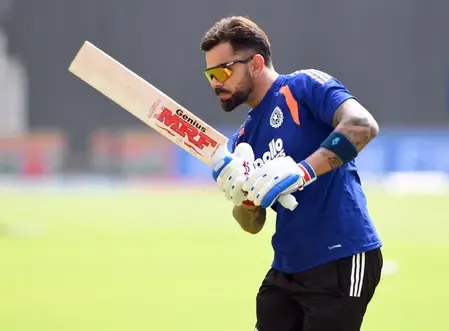
Varale said court orders are 'violated more often than they are followed.' The court suggested involving prominent public figures, naming Virat Kohli as an example, to lead a public awareness campaign.
An outright ban was flagged as counterproductive; the bench called for a balanced approach that respects the festive spirit.
The Union government has been asked to file an affidavit on enforcement steps taken so far.
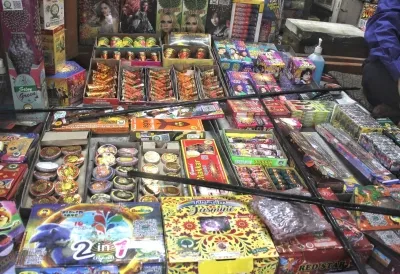
Last year, green crackers with QR codes were permitted for limited sale from 18–20 October 2025 under strict safeguards.
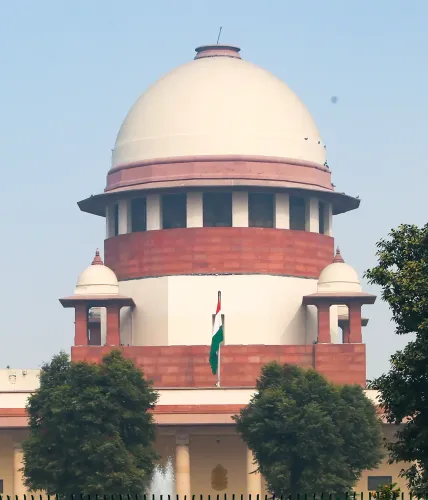
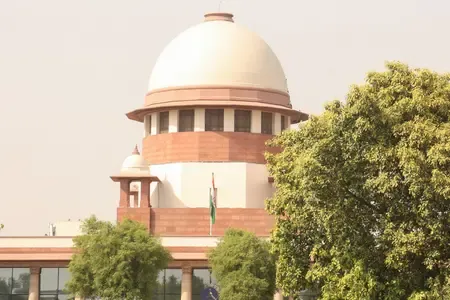
The Supreme Court on Thursday, 29 October 2026 reserved its order on firecracker restrictions in Delhi-NCR ahead of Diwali, expressing frustration that years of judicial directions had failed to curb violations and calling for innovative, celebrity-led awareness campaigns to tackle the region's worsening air pollution crisis.
Court's Frustration With Repeated Orders
A bench of Justice M.M. Sundresh and Justice Prasanna B. Varale was blunt in its assessment. 'Every year, we pass orders on the issue. For us, it has now become an academic exercise. Our orders are violated more often than they are followed,' Justice Sundresh observed, signalling that the court sees little value in simply reissuing annual directives without structural change.
The bench stressed that enforcement, not restriction alone, was the missing piece, warning that judicial directions would become a 'mockery' if authorities continued to fail on ground-level implementation. It asked the Union government to file an affidavit detailing concrete steps taken to enforce existing restrictions.
Virat Kohli Named as Potential Awareness Ambassador
In a notable departure from conventional judicial intervention, the apex court suggested leveraging the reach of celebrated public figures to change public behaviour. 'Why can't you use the services of prominent personalities to make the public aware, like the sportsmen, or the public figures who are highly respected, from any walk of life?' the bench asked.
Indian cricket star Virat Kohli was specifically cited as an example of the kind of personality whose appeal to responsible celebration could resonate far more widely than a court order. The bench also called for involving educational institutions to sensitise children and younger generations about pollution and its long-term health consequences.
No Complete Ban: Court Backs Balanced Approach
The Supreme Court was careful to signal that an outright prohibition on firecrackers was not the preferred route. It cautioned that an 'excessively harsh approach' could have wider repercussions, and reiterated the need for a framework that respects the festive spirit while protecting public health and the environment.
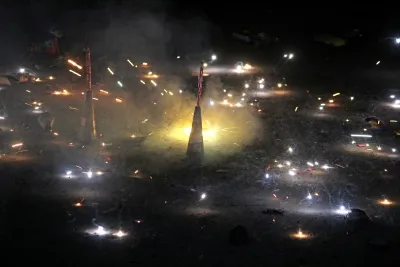
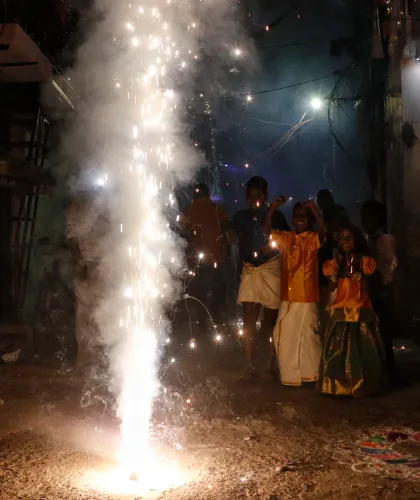
This comes amid years of escalating air quality concerns in Delhi-NCR during the post-monsoon festive season, when stubble burning, vehicular emissions, and firecracker use combine to push pollution indices to hazardous levels.
What Happened Last Year
In 2025, the Supreme Court — then under a bench comprising Chief Justice of India B.R. Gavai (now retired) and Justice K. Vinod Chandran — permitted the limited sale of green crackers in Delhi-NCR on a test basis. Approved green crackers bearing QR codes were permitted for sale between 18 October and 20 October 2025, with use restricted to specified morning and evening hours on the day before Diwali and on the festival day itself.
Only licensed traders were permitted to sell the approved products, online sales were prohibited, and authorities were directed to monitor air, water, and soil quality to assess the impact of the limited relaxation.
What Happens Next
With the order now reserved, the Supreme Court's final direction will set the framework for firecracker use across Delhi-NCR this Diwali season. The Union government's affidavit on enforcement steps will be a key input. Whether the court's suggestion of involving public figures like Kohli translates into a formal directive or remains an appeal to authorities remains to be seen — but the bench's remarks signal a court searching for new levers after years of limited impact.
Point of View
But it also exposes a structural failure: courts cannot substitute for executive enforcement. Naming Virat Kohli from the bench is attention-grabbing, but celebrity appeals cannot offset weak ground-level compliance machinery. The real accountability gap lies with Delhi and NCR administrations that have received clear directions for years and consistently underdelivered. Until the affidavit the court has demanded is followed by measurable enforcement targets, this Diwali order risks repeating the same cycle.
NationPress
29 Oct 2026
Frequently Asked Questions
What did the Supreme Court decide on Delhi-NCR firecracker restrictions?
The Supreme Court reserved its order on 29 October 2026, meaning a final decision is pending. The bench expressed frustration with repeated non-compliance and called for a balanced approach combining enforcement and public awareness rather than an outright ban.
Why did the Supreme Court mention Virat Kohli?
The court cited Kohli as an example of a celebrated public figure whose appeal could change public behaviour more effectively than judicial orders alone. It suggested the government enlist respected sportspersons and other prominent personalities to encourage responsible Diwali celebrations.
Will firecrackers be completely banned in Delhi-NCR this Diwali?
Not necessarily. The Supreme Court explicitly cautioned against an 'excessively harsh approach,' saying a complete ban could have wider repercussions. It favoured a balanced framework that protects public health without entirely curtailing the festive spirit.
What was the Supreme Court's ruling on firecrackers last year?
In 2025, the court permitted the limited sale of approved green crackers bearing QR codes in Delhi-NCR between 18 and 20 October, with use restricted to specified hours. Only licensed traders could sell them, online sales were banned, and pollution monitoring was mandated.
What has the Supreme Court asked the Union government to do?
The court has directed the Union government to file an affidavit detailing the specific steps taken to enforce firecracker restrictions. It warned that without ground-level implementation, judicial directions would become a 'mockery.'