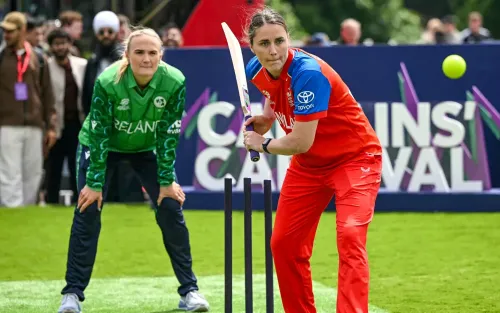
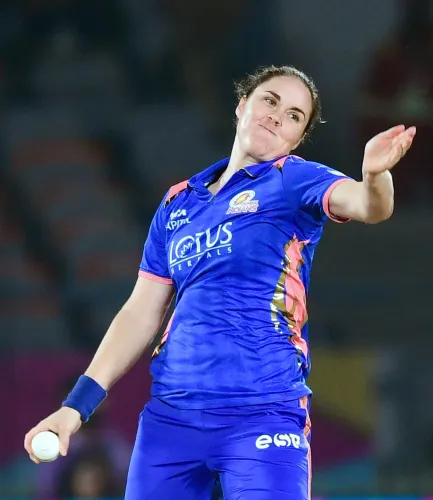
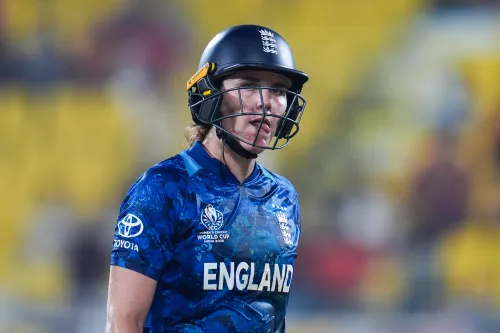
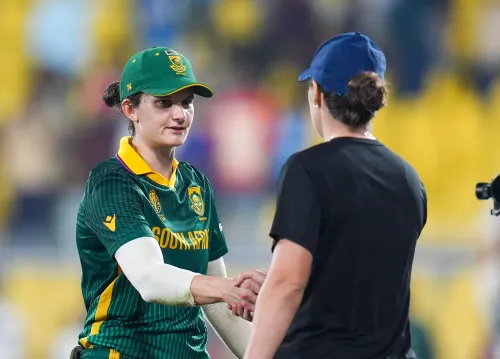
Sciver-Brunt vows to play on after Women's T20 WC final loss at Lord's

Synopsis
Nat Sciver-Brunt walked out at Lord's for the Women's T20 World Cup final with her son Theo — and left with a seven-wicket defeat. Despite battling a calf injury throughout the tournament and scoring fifties in both the semi-final and final, England fell short against Australia's seventh title. She won't say if it's the end.
Key Takeaways
Australia defeated England by seven wickets in the 2026 ICC Women's T20 World Cup final at Lord's on 6 July .
It was Australia's seventh ICC Women's T20 World Cup title.
Nat Sciver-Brunt scored 58 off 53 balls in the final but faced scrutiny over her strike rate.
Sciver-Brunt battled a calf injury that caused her to miss most build-up and early tournament matches.
She posted half-centuries in both the semi-final and the final despite limited match preparation.
Sciver-Brunt refused to confirm retirement, saying she does not want the tournament to be her last World Cup.
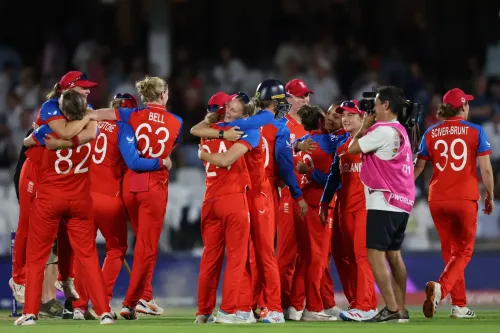
England captain Nat Sciver-Brunt refused to rule out future World Cup appearances on 6 July, even as she struggled to contain her emotions following England's seven-wicket defeat to Australia in the 2026 ICC Women's T20 World Cup final at Lord's. The loss denied England a long-awaited major title, with Australia claiming their seventh ICC Women's T20 World Cup crown in clinical fashion.
A Moment of Personal Significance
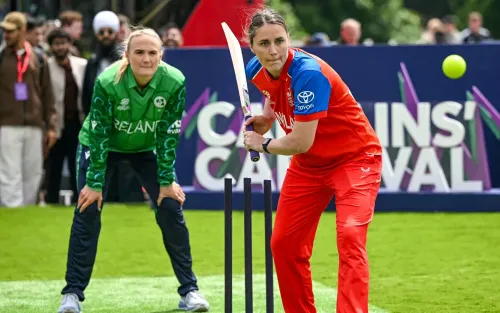
The final carried deep personal meaning for Sciver-Brunt, who walked out for the national anthem alongside her son, Theo — a moment she described as profoundly emotional. 'I probably won't play in a home World Cup again, so having the opportunity to bring Theo out was really special. And I'm going to cry... I can't really tell you how special it is,' she told reporters at the close of the tournament.
On the question of her international future, she remained deliberately non-committal. 'I don't want it to be my last World Cup. I don't even know when the next one is. I'm living day by day at the moment,' she said, adding that family and supporter backing had made the emotional weight of the occasion all the heavier.
Battling Injury Through the Tournament
Sciver-Brunt's route to the final was far from straightforward. A recurring calf injury forced her to miss the majority of England's build-up matches, both at home and during the early stages of the tournament. Despite the disruption, she returned to post half-centuries in both the semi-final and the final — a comeback she admitted had surprised even herself.
'It's been up and down, to be honest... trying to nurse an injury during a World Cup hasn't been easy. I probably surprised myself a bit coming back in that semi-final and being able to do what I did,' she said. 'I'm just really proud of what I've been able to do.'
Scrutiny Over Strike Rate in the Final
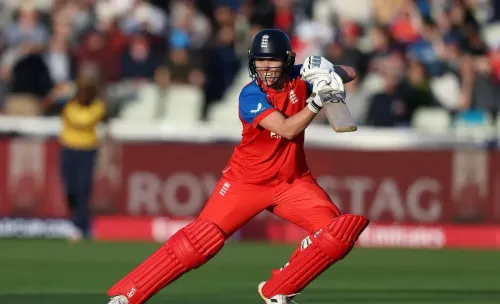
Her 58 off 53 balls in the final drew scrutiny, with Australia chasing down England's total with minimal difficulty. Questions were raised about her strike rate and whether she had considered 'retiring out' — a tactical move deployed by India's Jemimah Rodrigues earlier in the tournament. Sciver-Brunt firmly rejected the comparison.
'When I went off earlier in the tournament, it was because of my calf, not because I was retiring out. So in my head, it didn't feel that easy for people to come in and start hitting boundaries straight away,' she explained. She acknowledged, however, that she would have preferred a higher strike rate and felt she could have done better.
What Comes Next for England
Australia's comprehensive victory extended their dominance in the women's T20 format, while England will regroup around the question of leadership continuity and squad fitness. Sciver-Brunt's partnership with Freya Kemp and the contributions of Alice Capsey were among the positives England will carry forward. Whether Sciver-Brunt leads the side into the next cycle remains an open question — one she, for now, is not ready to answer.
Point of View
However unfair to her personally, reflects a wider tension in England's T20 approach: the balance between anchor innings and acceleration. Her future matters, but so does the question of whether England's batting philosophy can evolve before the next cycle begins.
NationPress
5 Oct 2026
Frequently Asked Questions
What happened in the 2026 Women's T20 World Cup final?
Australia defeated England by seven wickets in the 2026 ICC Women's T20 World Cup final at Lord's on 6 July, claiming their seventh title in the format. England captain Nat Sciver-Brunt scored 58 off 53 balls but her side could not post a challenging total.
Is Nat Sciver-Brunt retiring from international cricket?
Sciver-Brunt has not announced retirement and said she does not want the 2026 World Cup final to be her last appearance in a global tournament. She told reporters she is 'living day by day' and has not yet thought about the next steps in her international career.
What injury did Nat Sciver-Brunt deal with during the tournament?
Sciver-Brunt managed a recurring calf injury throughout the 2026 Women's T20 World Cup, missing most of England's build-up matches and several early tournament games. She returned to score half-centuries in both the semi-final and the final.
Why was Sciver-Brunt's strike rate questioned in the final?
Her innings of 58 off 53 balls came under scrutiny because Australia chased down England's total with minimal difficulty, raising questions about whether a faster innings could have set a more competitive target. Sciver-Brunt acknowledged she would have preferred a higher strike rate but rejected comparisons to the 'retire out' tactic.
How many Women's T20 World Cup titles has Australia won?
Australia's victory at Lord's on 6 July 2026 was their seventh ICC Women's T20 World Cup title, further cementing their dominance as the most successful side in the format's history.