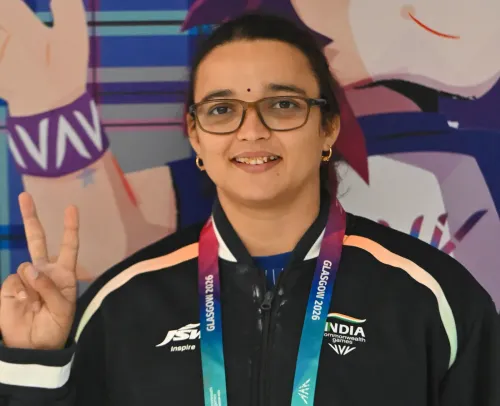
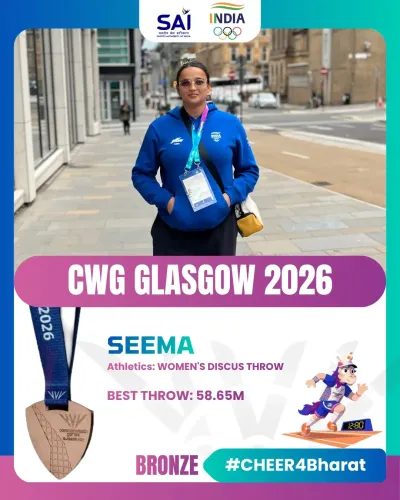
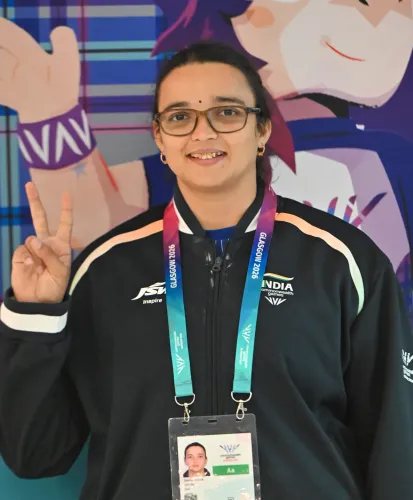
Seema Kaliramna wins CWG 2026 discus bronze; husband Ravinder reveals son sacrifice
Synopsis
Seema Kaliramna's CWG 2026 discus bronze in Glasgow came with a hidden price — her four-year-old son Rudra stayed home in India because he had no passport, while her husband's visa cleared just 48 hours before the event. Her candid disclosure that a 25-year age cap in government jobs has shut her out despite her achievements puts a spotlight on a policy gap that punishes late-blooming athletes.
Key Takeaways
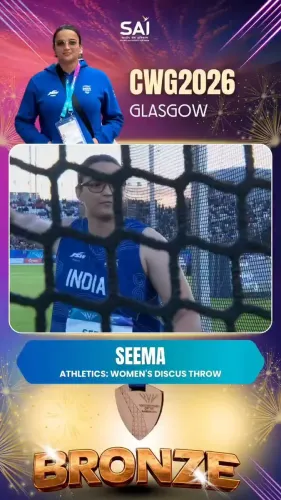
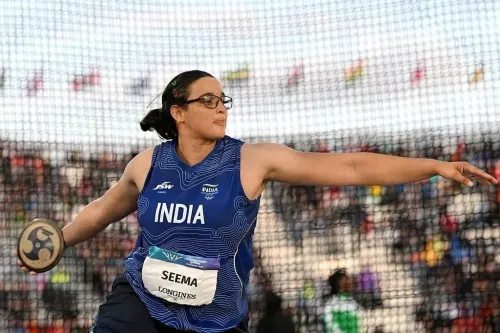
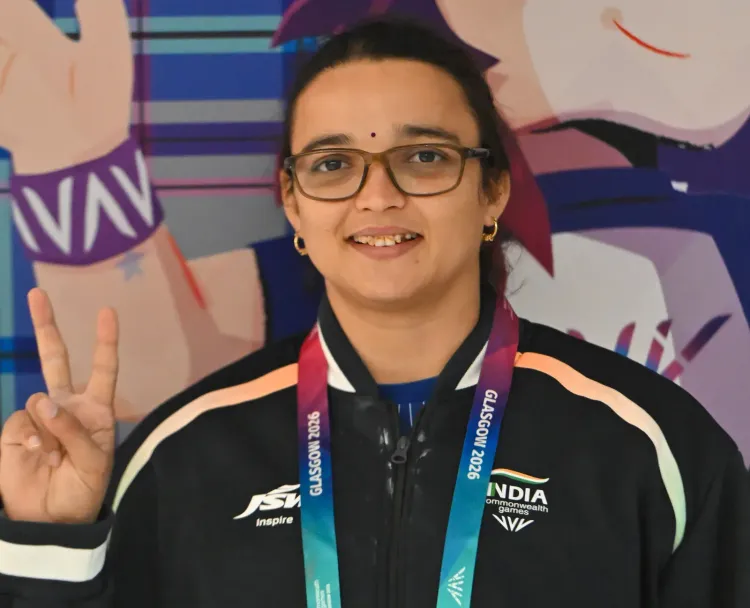
Seema Kaliramna , 27, won the discus throw bronze at Commonwealth Games 2026 in Glasgow with a best throw of 58.65m at Scotstoun Stadium on 31 July .
Her son Rudra , 4 , could not travel as he had no passport; husband Ravinder's visa was approved only on the evening of 28 July .
Seema revealed she was denied a government job due to an age limit of 25 years , despite being a medal-winning international athlete at 27 .
She is currently supported by AFI , SAI , JSW , and trains at NCOE Patiala .
Seema, also a PhD scholar , appealed to policymakers to extend financial and institutional support to aspiring young athletes.
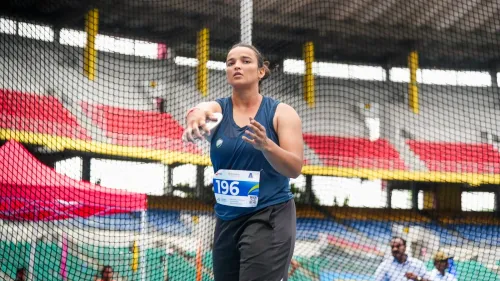
Indian discus thrower Seema Kaliramna claimed a bronze medal at the Commonwealth Games 2026 in Glasgow on 31 July, registering a best throw of 58.65m at Scotstoun Stadium — her maiden major international medal. Behind the podium moment, however, lay a deeply personal story of family separation, last-minute visa scrambles, and ongoing financial uncertainty.
A Family Kept Apart
Seema's husband and personal coach, Ravinder, was present at Glasgow but the couple's four-year-old son, Rudra, had to remain in India. Ravinder revealed that the child lacked a passport and that his own travel arrangements were uncertain until the very last day. 'We missed our son a lot,' Ravinder told reporters after the event. 'He could not come because he did not have a passport, and my own travel was uncertain until the last moment. My visa was approved only on the evening of the 28th, and I flew here on the 29th, so it was not possible to bring him along. However, he watched the event from home. When I called home, he said that he slept 2 minutes ago. He is not used to waking up late.'
Seema, 27, echoed the sentiment, crediting Ravinder's unwavering mentorship for her post-motherhood comeback. 'My son is at home. I miss him a lot. Whenever I talk about my son, those emotions come out again and again. Now I will go home and meet him,' she said.
The Employment Barrier Facing Mature Athletes
Beyond the emotional cost, Seema spoke candidly about the structural barriers that make athletic careers financially precarious. She disclosed that age-limit criteria in government job recruitment have shut her out despite her sporting achievements. 'I tried for a job earlier, but I did not get it. Now I am 27 years old, and according to the criteria, there is an age limit of 25 years,' she said. 'I don't have any financial support, and that remains a big barrier. If I had a job, it would be extremely helpful.'
The disclosure highlights a long-standing policy blind spot: athletes who peak later in their careers — often after years of investment and sacrifice — find themselves ineligible for the government employment pathways that provide the financial security most professional sportspersons rely on.
Institutional Support and Its Limits
Despite the financial gaps, Seema acknowledged meaningful backing from several organisations. 'AFI (Athletics Federation of India) is supporting me a lot. SAI (Sports Authority of India) is supporting me a lot, and I am currently practising at NCOE Patiala. JSW is also supporting me a lot. If I need anything else, my family arranges it for me,' she shared.
Seema, who is also a PhD scholar, noted that the combination of institutional support and family backing has helped her persist — but stressed that it is not a substitute for stable employment.
A Medal-Winner's Appeal to Policymakers
Using her podium moment as a platform, Seema made a direct appeal to sports administrators and policymakers to invest in young athletes early. 'If a child shows interest in sports and wants to pursue it, please support them. If you can support an institute or a corporate partner, please help them. A player has to go through a lot before winning a medal; they face so many difficulties,' she stated.
She also drew attention to the hidden costs of elite performance. 'There is a lot of compromise behind every success — financial constraints, mental health, dietary supplements. You have to manage all of this to improve your game and performance,' the discus thrower added.
Seema's 58.65m bronze at the 2026 Commonwealth Games is a milestone for Indian women's field athletics, and her story is likely to intensify the conversation around athlete welfare and age-limit reform in government recruitment. With Rudra waiting at home, her next goal is clear — and personal.
Point of View
SAI, and JSW support is welcome, but it is project-based and conditional, not the stable employment floor that allows athletes to train without financial anxiety. The conversation this medal should trigger is not just about Seema — it is about how many others quietly exit sport because the system's timelines do not match athletic ones.
NationPress
14 Sept 2026
Frequently Asked Questions
What medal did Seema Kaliramna win at Commonwealth Games 2026?
Seema Kaliramna won the bronze medal in the discus throw event at the Commonwealth Games 2026 in Glasgow, with a best effort of 58.65m at Scotstoun Stadium on 31 July. It is her first major international medal.
Why did Seema Kaliramna's son not travel to Glasgow?
Her four-year-old son Rudra could not travel because he did not have a passport. Her husband and coach Ravinder's own visa was approved only on the evening of 28 July, making it logistically impossible to arrange the child's travel in time.
What government job barrier did Seema Kaliramna highlight?
Seema disclosed that she was unable to secure a government job because the age limit for recruitment is 25 years, and she is now 27. She said the absence of financial stability through employment remains a significant barrier to her athletic career.
Who is currently supporting Seema Kaliramna's athletic career?
Seema is supported by the Athletics Federation of India (AFI), the Sports Authority of India (SAI), and corporate sponsor JSW. She trains at the National Centre of Excellence (NCOE) in Patiala, with additional support from her family.
What appeal did Seema Kaliramna make after winning her bronze medal?
Seema appealed to policymakers and sports administrators to provide early and sustained support to young athletes, stressing that every medal comes after years of financial, mental, and personal sacrifice. She called on institutions and corporate partners to step up their backing.