Seoul 1988 Olympian Shyam Lal Meena, Indian archery pioneer, dies at 61
Synopsis
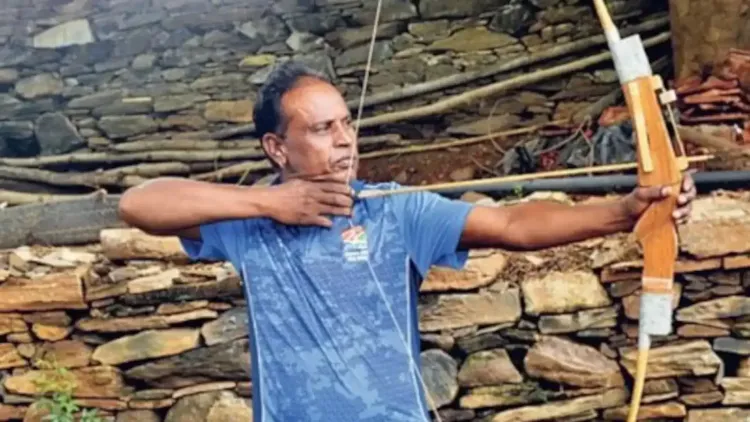
Shyam Lal Meena, who helped put India on the Olympic archery map at Seoul 1988 and won the Arjuna Award in 1989, has died at 61. He started with a bamboo bow in a Rajasthan village and ended up coaching the next generation in the same district — a full-circle life that modern Indian archery owes more to than it often acknowledges.
Key Takeaways
Shyam Lal Meena , Indian archery pioneer and Seoul 1988 Olympian , passed away on 26 May at the age of 61 after a prolonged illness.
He was part of India's first-ever Olympic archery team , alongside Limba Ram and Sanjeeva Singh , at the 1988 Seoul Games .
Meena was a key member of the team that won bronze at the 1987 Asian Archery Championships in Kolkata — widely considered India's first major international archery success.
He was honoured with the Arjuna Award in 1989 for his contribution to Indian sport.
Born on 4 March 1965 in Banswara, Rajasthan , he later served as a coach at the District Sports Training Centre in Banswara.
Indian archery pioneer Shyam Lal Meena, a member of India's first-ever Olympic archery team at the 1988 Seoul Games, passed away on 26 May after a prolonged illness. He was 61. Meena had been battling liver-related complications in recent years, and his condition deteriorated before he breathed his last in hospital. His death closes a defining chapter in Indian archery history.
From Banswara Village to the Olympic Stage
Born on 4 March 1965 in Kevadia village of Rajasthan's Banswara district, Meena rose from modest beginnings to represent India on the world's biggest sporting stage. He began with a traditional bamboo bow under severe financial constraints, gradually honing his craft before receiving institutional backing through the Government's Special Area Games (SAG) Scheme. His journey remains one of Indian sport's more remarkable stories of grassroots perseverance.
The Bronze That Changed Indian Archery
Meena's most consequential competitive moment came in 1987, when he joined Limba Ram and Rajat Haldar to claim bronze at the Asian Archery Championships in Kolkata. That medal is widely regarded as Indian archery's first major international success. Crucially, it also secured India's qualification for the 1988 Seoul Olympics — the country's maiden appearance in Olympic archery, a milestone that redefined the sport's ambitions domestically.
Seoul 1988: India's Historic Olympic Archery Debut
After clearing the national selection trials, Meena became part of India's inaugural Olympic archery contingent alongside Limba Ram and Sanjeeva Singh. At the Seoul Games, he finished 71st in the individual qualification round, while the Indian men's recurve team placed 20th overall. The results, measured against today's standards, may appear modest — but the significance lay in the precedent: India had arrived at Olympic archery, and Meena was among those who made it possible.
Arjuna Award and a Life Devoted to the Sport
In recognition of his contribution to Indian sport, Meena was conferred the Arjuna Award in 1989, one of the country's highest sporting honours. Post-retirement, he remained deeply embedded in the sport as a coach at the District Sports Training Centre in Banswara, dedicating himself to mentoring young archers and nurturing grassroots talent across Rajasthan. This is the second high-profile loss Indian archery has faced in recent years, underscoring how much of the sport's foundational generation is now passing.
Legacy and What Comes Next
Meena's life — from a bamboo bow in a Rajasthan village to an Olympic Games and a national award — represents the kind of origin story that contemporary Indian archery, now a medal-contending programme, was built upon. The Archery Association of India and the sporting community are expected to pay formal tribute. His family and former students in Banswara are mourning the loss of both a trailblazer and a mentor.
Point of View
But without that debut — earned through a 1987 Asian Championship bronze — India's current archery infrastructure, which now routinely produces World Cup podium finishers, may never have been funded or taken seriously. The SAG Scheme that backed Meena was a lifeline for tribal and rural athletes; its legacy deserves scrutiny as much as celebration, particularly given how many of that generation received honours but little financial security in later life. That Meena spent his final years coaching in the same Banswara district where he grew up, rather than in a national programme, says something about how Indian sport rewards its pioneers.
NationPress
27 Sept 2026
Frequently Asked Questions
Who was Shyam Lal Meena?
Shyam Lal Meena was an Indian archer from Banswara, Rajasthan, who became part of India's first-ever Olympic archery team at the 1988 Seoul Games. He was also a member of the team that won bronze at the 1987 Asian Archery Championships in Kolkata and was conferred the Arjuna Award in 1989.
How did Shyam Lal Meena die?
Meena passed away on 26 May after a prolonged illness, having battled liver-related complications in recent years. He was 61 years old at the time of his death.
What was Shyam Lal Meena's biggest achievement in archery?
His most significant achievement was being part of the Indian team — alongside Limba Ram and Rajat Haldar — that won bronze at the 1987 Asian Archery Championships in Kolkata. That result is widely regarded as Indian archery's first major international success and directly secured India's qualification for the 1988 Seoul Olympics.
What did India achieve at the 1988 Seoul Olympics in archery?
India made its maiden appearance in Olympic archery at the 1988 Seoul Games. Meena finished 71st in the individual qualification round, while the Indian men's recurve team placed 20th overall — historic simply by virtue of participation, as it was the country's first-ever Olympic archery campaign.
What was Shyam Lal Meena doing after retirement?
After his competitive career, Meena served as an archery coach at the District Sports Training Centre in Banswara, Rajasthan. He devoted his post-retirement years to mentoring young archers and developing grassroots talent in his home district.