Tejas Shirse: India's 110m hurdles record holder eyes CWG and Asiad gold
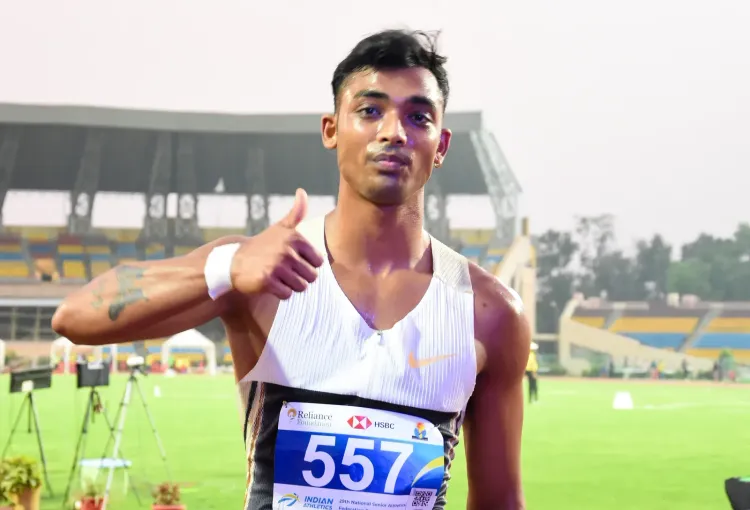
Synopsis
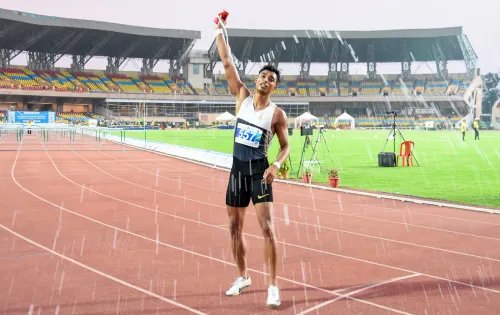
Tejas Shirse shattered the Indian 110m hurdles national record at 13.27 seconds just weeks after being told the Commonwealth Games were an unrealistic target following a multi-fracture ankle injury. Now qualified for both the CWG and Asian Games, the 23-year-old from Chhatrapati Sambhajinagar isn't talking about participation — he's talking about winning, and the numbers back up the ambition.
Key Takeaways
Tejas Shirse , 23 , is India's national record holder in the 110-metre hurdles with a time of 13.27 seconds .
He qualified for the Commonwealth Games in Glasgow at the Indian Athletics Series in Ludhiana and for the Asian Games at the National Inter-State Athletics Championships in Bhubaneswar ( 13.43 seconds ).
A severe ankle fracture in three to four places sidelined him for four months ; he restarted training only in mid-April .
His recovery was led by the Reliance Foundation team including coach James Hillier , physiotherapist Nilesh Makwana , and S&C coach Kshitij Bhoite .
Shirse's stated mission is to make the 110m hurdles as popular in India as the javelin throw became after Neeraj Chopra's Olympic gold.
Indian hurdler Tejas Shirse, the national record holder in the 110-metre hurdles, has arrived at the threshold of the Commonwealth Games in Glasgow and the Asian Games with a single, unambiguous objective: winning. The 23-year-old from Chhatrapati Sambhajinagar is not chasing participation certificates — he is chasing podiums, and he says so without apology.
'All I care about is winning. The world will care about winning,' Shirse said in an exclusive interview ahead of the Commonwealth Games. 'I just want to go out there in the Commonwealth Games and Asian Games and just win — that is the only goal.'
The Records That Booked His Tickets
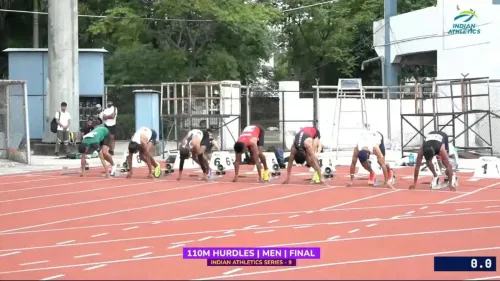
Shirse secured his CWG berth with a blistering 13.27 seconds at the Indian Athletics Series in Ludhiana — a new Indian national record that comfortably cleared the required standard of 13.39 seconds. He subsequently locked in his Asian Games qualification by clocking 13.43 seconds at the National Inter-State Athletics Championships in Bhubaneswar. Both marks arrived after one of the most testing recoveries in recent Indian athletics.
Mission Miracle: Back From a Broken Ankle
Just as Shirse was building peak competitive momentum, a severe collision with a hurdle left his ankle fractured in three to four places. He was sidelined for four months during a critical qualification window — a setback he described as devastating. 'Despite doing everything right, even though I didn't do anything wrong, something like this has happened to me,' he said.
His rehabilitation was led by the Reliance Foundation sports science team, comprising coach James Hillier, physiotherapist Nilesh Makwana, and strength and conditioning coach Kshitij Bhoite. Initially, the Commonwealth Games were considered an unrealistic target. Shirse reframed the challenge internally, calling it 'Mission Miracle' to keep himself motivated. He resumed training in mid-April, with qualification due by the end of May and early June.
After clocking 13.67 seconds and 13.50 seconds at the Federation Cup in Ranchi, he stripped away all external pressure at Ludhiana. 'I told myself that even if I lose from here, I can't go any lower than this. So why not just give yourself an opportunity to perform at your best?' When the trackside clock flashed 13.27 seconds, Mission Miracle had delivered.
Roots, Wooden Hurdles, and a Sport That 'Chose Him'
Shirse's competitive fire was forged in the absence of resources. Growing up in Chhatrapati Sambhajinagar, he trained on wooden hurdles fashioned by hand, learning technique through internet tutorials. 'Hurdles chose me, not me choosing it,' he said, drawing a parallel between the obstacles on the track and the financial and family hardships of his early life.
That origin shapes his larger mission: to do for the 110m hurdles what Neeraj Chopra did for the javelin throw — make an unfamiliar discipline visible and beloved across India. 'People didn't even know about javelin throw before. But since Neeraj Chopra won an Olympics gold, then people came to know that there is a game called javelin throw. If I can do something extraordinary for India, people are going to recognise hurdles as well,' he said. He drew a further parallel with cricket's 1983 World Cup triumph as proof that India rallies around heroes who deliver on the biggest stages.
The Competition Ahead and the Mental Edge
The path to a medal at the Commonwealth Games runs through formidable opposition. The hurdles lineup features Caribbean powerhouses, including Demario Prince of Jamaica, while the Asian Games brings competition from Japan and China. Shirse's tactical response is deliberate tunnel vision. 'When I go on the track, I shut down myself — what is he or she doing, I just focus on myself,' he said. He trains daily alongside top Indian sprinters including Jyothi Yarraji, Gurindervir Singh, and Animesh Kujur, crediting the high-performance environment for keeping his competitive edge sharp.
His emotional equilibrium is equally deliberate. After breaking the national record in Ludhiana, he noted that within two to three hours the euphoria had settled. 'I am not very happy and I am not very sad if I win or lose — and I think that is helping me perform better,' he said. As the multi-sport season approaches, Tejas Shirse carries India's national record, a recovered ankle, and an uncompromising ambition onto the global stage.
Point of View
Not months, and broke a national record in the process. Yet the deeper question is structural: the 110m hurdles remains largely invisible in India's sporting consciousness, and Shirse's ambition to change that is real but singular. One athlete cannot shift a culture alone. What the sport needs alongside individual heroics is broadcast visibility, school-level infrastructure, and consistent national-level coaching depth — none of which a single podium finish, however historic, can guarantee on its own.
NationPress
20 Oct 2026
Frequently Asked Questions
What is Tejas Shirse's national record in the 110m hurdles?
Tejas Shirse set the Indian national record in the 110-metre hurdles with a time of 13.27 seconds at the Indian Athletics Series in Ludhiana. The previous qualifying standard for the Commonwealth Games was 13.39 seconds, which he cleared comfortably.
How did Tejas Shirse qualify for the Commonwealth Games and Asian Games?
Shirse qualified for the Commonwealth Games in Glasgow by clocking 13.27 seconds at the Indian Athletics Series in Ludhiana, and secured his Asian Games berth with a 13.43-second run at the National Inter-State Athletics Championships in Bhubaneswar.
What injury did Tejas Shirse suffer before his national record run?
Shirse suffered a severe ankle injury after a collision with a hurdle that left the ankle fractured in three to four places, according to his own account. He was sidelined for four months during a critical qualification period, with the Commonwealth Games initially deemed an unrealistic target by his support team.
Who supported Tejas Shirse's recovery?
His rehabilitation was managed by the Reliance Foundation sports science team, led by coach James Hillier, physiotherapist Nilesh Makwana, and strength and conditioning coach Kshitij Bhoite. Shirse resumed training in mid-April ahead of late-May and early-June qualification deadlines.
What is Tejas Shirse's goal beyond winning medals?
Shirse has stated a broader mission of making the 110-metre hurdles a recognised and popular discipline in India, drawing a parallel with how Neeraj Chopra's Olympic gold in the javelin throw brought that event into the mainstream. He believes extraordinary individual performance is the catalyst for public interest in niche athletics events.