Spain's World Cup triumph draws 2 million fans to Madrid streets
Synopsis
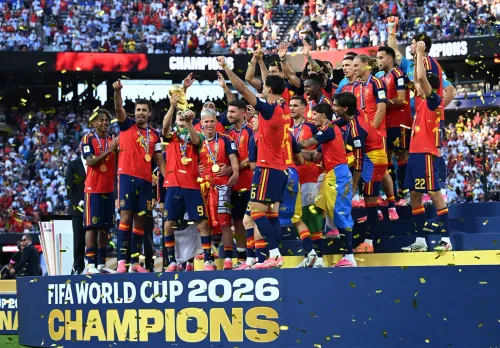
Nearly 2 million fans flooded central Madrid as Spain paraded the World Cup trophy after beating Argentina 1-0 in extra time — the country's second world title. The euphoria was tempered by the death of a 13-year-old fan in Ciudad Rodrigo and violence in Barcelona that left 30 needing medical attention.
Key Takeaways
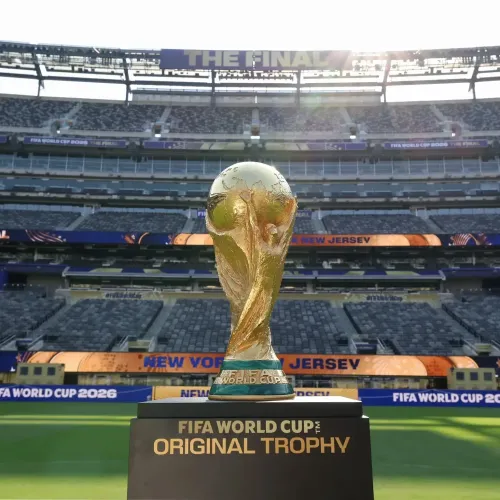
Spain defeated Argentina 1-0 after extra time in the FIFA World Cup final at New York New Jersey Stadium , claiming their second World Cup title .
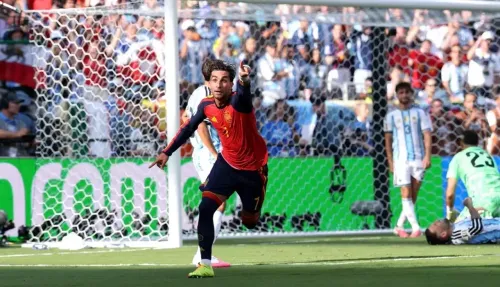
Ferran Torres scored the only goal of the final to seal the victory.
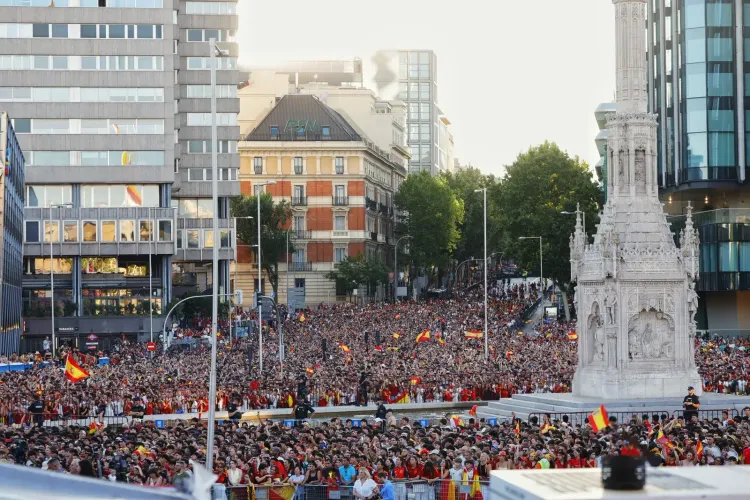
An estimated 2 million fans — including 1.8 million lining the parade route and 120,000 at Plaza de Cibeles — welcomed the squad in Madrid on 22 July .
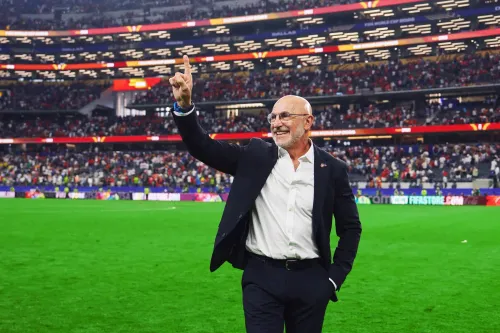
King Felipe VI and Prime Minister Pedro Sanchez hosted official receptions; the king praised the team's unity.
A 13-year-old fan died in Ciudad Rodrigo after being struck by part of a fountain during celebrations.
Violence in Barcelona led to 3 arrests and around 30 people requiring medical treatment.
Spain's national football team was greeted by an estimated 2 million fans in Madrid on 22 July as the squad celebrated clinching a second FIFA World Cup title with an open-top bus parade through the capital, culminating in a massive gathering at the iconic Plaza de Cibeles. The victory came after Spain defeated Argentina 1-0 in extra time in the World Cup final held at New York New Jersey Stadium, with Ferran Torres scoring the decisive goal.
The Homecoming
The squad touched down in Madrid at around 1 pm local time and were first received at official receptions hosted by King Felipe VI and Prime Minister Pedro Sanchez, both of whom had been present at the final in New Jersey. The king praised the team's unity during the ceremony.
The players then boarded an open-top bus from Moncloa Palace, the prime minister's official residence, and wound their way through the heart of the capital. An estimated 1.8 million fans lined the route, turning central Madrid into a sea of red and yellow.
Plaza de Cibeles: The Climax
The bus reached Plaza de Cibeles at 10 pm, where a further 120,000 supporters had been waiting for hours, kept entertained by performances from several Spanish pop artists. Players took turns hoisting the World Cup trophy, joining supporters in chants and songs as temperatures exceeded 35 degrees Celsius. The celebrations stretched until nearly midnight, with defender Marc Cucurella drawing attention for playing the drums on stage.
Tragedy Amid the Joy
The jubilation was, however, overshadowed by a fatal incident. A 13-year-old fan died in the town of Ciudad Rodrigo after being struck by a fragment from a fountain where revellers had gathered to celebrate. Separately, festivities in Barcelona turned violent, with police arresting three people and approximately 30 others requiring medical treatment.
Historical Context
This marks Spain's second FIFA World Cup title, adding to their 2010 triumph in South Africa. The victory also continues a golden era for Spanish football, a nation that has repeatedly set the standard in international competition. Notably, the margin of victory — a single goal in extra time against the defending champions Argentina — underscores the closely contested nature of this tournament's final.
What Comes Next
With the celebrations concluded, attention will turn to the squad's future, including potential contract renewals and the upcoming club season. The Spanish Football Federation is expected to formally honour the squad in the coming days. The scenes in Madrid will also likely fuel discussions around public safety protocols at large-scale victory celebrations across Spain.
Point of View
But the homecoming celebrations have exposed a recurring blind spot in European football culture: the absence of robust crowd-safety frameworks for spontaneous mass gatherings. The death of a 13-year-old in Ciudad Rodrigo and the violence in Barcelona are not aberrations — they are predictable consequences of inadequate planning. Authorities across Spain will need to reckon with how victory euphoria can turn lethal before the next major tournament.
NationPress
20 Oct 2026
Frequently Asked Questions
How did Spain win the 2026 FIFA World Cup?
Spain beat Argentina 1-0 after extra time in the World Cup final held at New York New Jersey Stadium. Ferran Torres scored the decisive goal to hand Spain their second World Cup title.
How many fans attended the Madrid victory parade?
An estimated 2 million fans turned out across Madrid on 22 July, with 1.8 million lining the open-top bus parade route and a further 120,000 gathering at Plaza de Cibeles for the climax of the celebrations.
What tragedy occurred during the World Cup celebrations in Spain?
A 13-year-old fan died in Ciudad Rodrigo after being struck by part of a fountain during local celebrations. In Barcelona, festivities turned violent, resulting in 3 arrests and approximately 30 people requiring medical treatment.
Which Spanish officials attended the World Cup final?
King Felipe VI and Prime Minister Pedro Sanchez both attended the final at New York New Jersey Stadium. On the team's return, they hosted official receptions in Madrid, with the king publicly praising the squad's unity.
Is this Spain's first or second World Cup title?
This is Spain's second FIFA World Cup title. Their first came in 2010 in South Africa, making this victory a continuation of the country's dominant run in international football.