McLaren’s Andrea Stella: Ferrari and Mercedes Lead Ahead of 2026 F1 Season
Synopsis
As the 2026 Formula 1 season approaches, McLaren's Andrea Stella highlights Ferrari and Mercedes as frontrunners after pre-season testing. With tight margins among teams, the race for supremacy looks intense, focusing on energy management and circuit dynamics.
Key Takeaways
Ferrari and Mercedes are frontrunners as the 2026 season approaches.
McLaren and Red Bull are close competitors.
Circuit characteristics will significantly affect performance.
Energy management is crucial under new regulations.
Strong collaboration exists between McLaren and Mercedes .
New Delhi, Feb 23 (NationPress) McLaren's team principal Andrea Stella has indicated that Ferrari and Mercedes possess a slight advantage as they gear up for the 2026 Formula 1 season, following the recent conclusion of the final pre-season test.
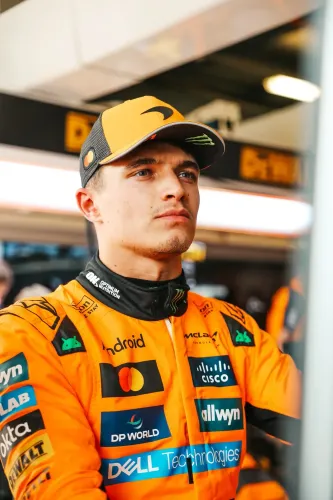
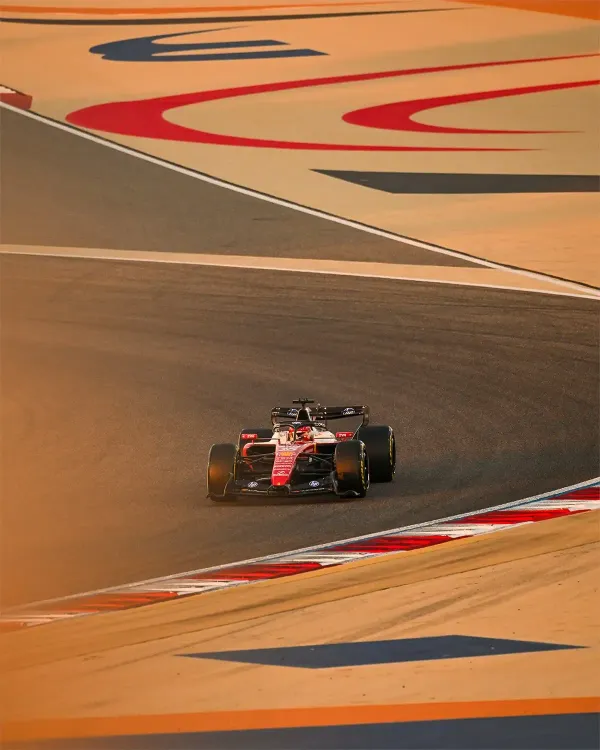
This assessment follows a robust performance from Ferrari, where Charles Leclerc finished over eight-tenths of a second ahead of Lando Norris on the concluding day of testing. Leclerc also executed a competitive race simulation during the warmer hours, emphasizing Ferrari's apparent speed.
While McLaren successfully completed its planned schedule ahead of the season-opening Australian Grand Prix set for March 6-8, Stella conceded that it is challenging to definitively assess the competitive landscape.
"It's quite difficult to determine. There was a race simulation involving Oscar Piastri and Max Verstappen that occurred around the same time of day and showed similar pace," Stella remarked, as quoted by Sky Sports, when inquired about the hierarchy among the teams.
"Typically, race simulations reveal a more accurate reflection of the true performance of the cars. However, we must be cautious because the time of day can significantly influence the race simulation speeds."
"For instance, on the last day, Lando was quite strong in a race simulation, but the end of day three likely recorded the fastest track conditions across the six days. Hence, it's difficult to say definitively. I believe McLaren and Red Bull are quite comparable, whereas Ferrari and Mercedes are a step ahead."
Initial observations suggest that the leading quartet might be separated by narrow margins, with performance likely varying based on circuit configurations and prevailing conditions.
Red Bull Racing showcased impressive energy-deployment efficiency during testing, a potentially crucial factor under the new 2026 regulations that permit electrical harvesting when drivers are off the throttle. Stella noted that the characteristics of the circuit will play a vital role in how effectively teams can balance energy harvesting and deployment.
"In 2026, we need to consider circuit attributes, especially concerning how conducive a circuit is for power unit requirements," he mentioned.
"For instance, Barcelona was relatively demanding in terms of balancing energy deployment and harvesting. In contrast, Bahrain was easier because there was ample braking time to facilitate harvesting without needing to lift off the throttle.
"Now, as we head to Australia, the circuit will present more challenges. I anticipate that drivers will need to adopt a more intricate driving style to optimize energy harvesting and deployment effectively, ensuring efficiency over a prolonged period."
McLaren, which utilizes customer engines from the Mercedes-AMG Petronas Formula One Team, continues to collaborate closely with Mercedes’ High Performance Powertrains division. Stella recognized the advantages of this partnership but also noted there is room for improvement in how the power unit is integrated and managed.
"We appreciate the efforts from HPP in ensuring our progress daily. However, I believe there's still a considerable amount to learn, particularly regarding engine control, power unit management, and its effective utilization," stated the Italian.
"One lesson we've learned is how to maximize the features available within the power unit and what new features should be under the driver's control to ensure the power unit is competitive not only in terms of lap times but also in race situations when contending with rivals on the track."
As the new regulatory cycle approaches and competitive gaps narrow, Stella’s insights suggest a highly competitive start to the 2026 season, where technical execution and circuit-specific strengths could be critical in determining outcomes from race to race.
Point of View
It's evident that Ferrari and Mercedes have established themselves as the teams to beat, with McLaren and Red Bull closely trailing. The interplay of circuit characteristics and energy management will be pivotal in shaping the championship narrative.
NationPress
22 Sept 2026
Frequently Asked Questions
What did Andrea Stella say about Ferrari and Mercedes?
Andrea Stella noted that Ferrari and Mercedes currently have a slight advantage as the 2026 F1 season approaches.
How did Ferrari perform during pre-season testing?
Ferrari showed strong performance, with Charles Leclerc finishing significantly ahead of McLaren's Lando Norris.
What factors will influence team performance in the 2026 season?
Circuit characteristics and energy management will play crucial roles in determining team performance.
What is McLaren's relationship with Mercedes?
McLaren runs customer engines from Mercedes-AMG Petronas and collaborates closely with their High Performance Powertrains division.
What challenges do teams face in the upcoming Australian Grand Prix?
Teams will need to adapt their driving styles to manage energy harvesting and deployment effectively at the Australian circuit.