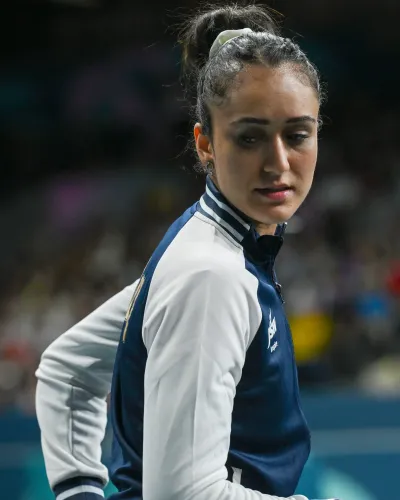
Suchika Tariyal wins Asian Games MMA bronze after weight rule ends semifinal
Synopsis
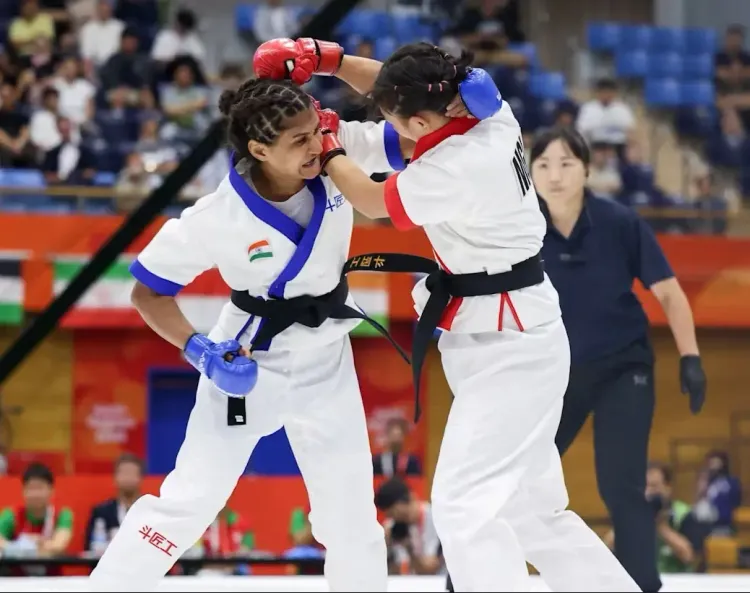
India's Suchika Tariyal scripted history at the Aichi-Nagoya Asian Games by claiming the country's first-ever MMA medal — a bronze — after a semifinal that ended in a draw on rescoring and was then decided by a 700-gram weight difference under AMMA rules. Coach Nikhil Kunder's detailed explanation has spotlighted an obscure rule that denied India a shot at gold.
Key Takeaways
Suchika Tariyal won India's first-ever Asian Games MMA medal — a bronze — at Aichi-Nagoya 2026 on 21 September .
Her semifinal loss to Singapore's Hui Hoon Teo was decided by a weight criterion after arbitration produced a draw .
Suchika was 700 grams heavier than her opponent, triggering the AMMA lesser-weighed contestant rule .
Coach Nikhil Kunder maintained that Suchika 'won' on the technical and scoring merits of the fight.
MMA is making its Asian Games debut at Aichi-Nagoya, adding historic weight to the medal.
Suchika, 36 , defeated Mongolia's Altanchimeg Baigalmaa 2-0 in the quarterfinals to reach the semifinal.
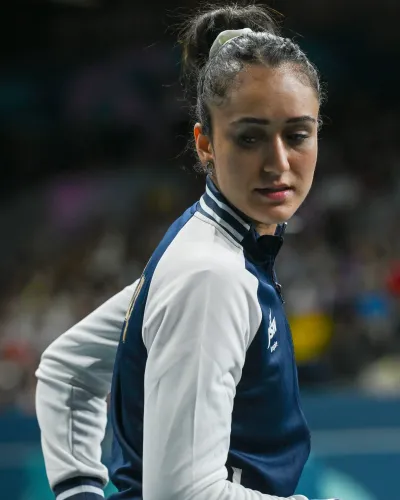
Suchika Tariyal returned from the 2026 Asian Games in Nagoya with a historic bronze medal in Mixed Martial Arts (MMA) on 21 September, after a controversial semifinal loss that was ultimately decided by a weight criterion — not by the judges' scorecards. Her coach, Nikhil Kunder, has since offered a detailed account of the rule that cost India a shot at the final.
How the Semifinal Decision Unfolded
Suchika was initially ruled to have lost her semifinal bout against Singapore's Hui Hoon Teo, a verdict that prompted the Indian camp to lodge a formal protest. The bout was subsequently sent to arbitration, where a fresh panel of three judges rescored the contest from scratch.
'We were confident that Suchika had won the fight. According to the rule, when arbitration happens, we select three judges. Those three judges get a chance to score the bout again. After they scored the bout again, it was declared a draw,' Kunder said.
The Weight Criterion That Decided the Outcome
Once the bout was officially declared a draw, the rules of the Asian Mixed Martial Arts Association (AMMA) presented Singapore with two choices: pursue counter-arbitration or invoke the lesser-weighed contestant rule. Singapore opted for the latter.
'Singapore chose not to pursue counter-arbitration and instead went with the lesser-weighed contestant. Unfortunately, Suchika was 700 grams heavier than her. And on those grounds, this match has been awarded to her opponent,' Kunder explained.
Kunder maintained that the technicalities of the fight did not reflect the final ruling. 'But if you look at the technicalities and scoring of the fight, Suchika won,' he said.
A Landmark Medal for Indian Combat Sports
Despite the semifinal exit, Suchika's bronze is a landmark result for India. At 36 years of age, she became the first Indian athlete to win an Asian Games medal in MMA — a sport making its debut at the Aichi-Nagoya Games. Her path to the podium included a commanding 2-0 quarterfinal victory over Mongolia's Altanchimeg Baigalmaa.
Suchika's sporting pedigree spans multiple combat disciplines, including judo, kurash, and fighting Jiu-Jitsu, making her transition into MMA all the more remarkable at the elite Games level.
MMA's Asian Games Debut Adds to the Significance
The inclusion of MMA in the Asian Games for the first time in Aichi-Nagoya 2026 elevates the significance of every medal won. India's first-ever podium finish in this discipline — secured under contentious circumstances — is likely to sharpen the focus of Indian combat sports administrators on AMMA rule familiarity and weight management protocols ahead of future editions. The weight criterion, while officially part of AMMA rules, will now come under scrutiny in India's sporting community.
Point of View
But it exposes a gap in India's preparation protocols that is entirely fixable. A 700-gram difference is well within the margin a serious weight-management programme would eliminate before a bout of this magnitude. The Indian camp's confidence that Suchika won on merit — confidence strong enough to trigger a formal protest — makes the oversight sting more. As MMA enters the Asian Games ecosystem, Indian federations must now treat AMMA's tiebreaker provisions not as obscure fine print but as a competitive variable. The bronze is historic; the manner of the semifinal loss is a cautionary tale.
NationPress
21 Sept 2026
Frequently Asked Questions
What is India's first Asian Games medal in MMA?
Suchika Tariyal won India's first-ever Asian Games MMA medal — a bronze — at the Aichi-Nagoya 2026 Games on 21 September. MMA is making its debut at the Asian Games at this edition, making the medal a landmark for Indian combat sports.
Why did Suchika Tariyal lose her MMA semifinal at the Asian Games?
Suchika initially received an adverse decision against Singapore's Hui Hoon Teo. After India lodged a protest, the bout went to arbitration and was rescored by three judges, resulting in a draw. Under AMMA rules, Singapore then invoked the lesser-weighed contestant clause, and since Suchika was 700 grams heavier, the bout was awarded to her opponent.
What is the AMMA lesser-weighed contestant rule?
Under Asian Mixed Martial Arts Association (AMMA) rules, when arbitration produces a draw, the opposing team may choose between counter-arbitration or invoking the weight criterion. The lesser-weighed contestant is awarded the bout. Singapore exercised this option in Suchika's semifinal.
What did coach Nikhil Kunder say about Suchika's performance?
Kunder maintained that Suchika won the fight on technical merit and scoring, stating 'if you look at the technicalities and scoring of the fight, Suchika won.' He expressed confidence in her performance while acknowledging the weight rule was applied in accordance with AMMA regulations.
How did Suchika Tariyal reach the MMA semifinal at the Asian Games?
Suchika defeated Mongolia's Altanchimeg Baigalmaa 2-0 in the quarterfinals to advance to the last four. The 36-year-old is a multi-discipline combat athlete with experience in judo, kurash, and fighting Jiu-Jitsu.