Is UAE's Defeat to South Africa a Valuable Learning Experience?
Synopsis
UAE's bowling coach Yasir Arafat views their defeat against South Africa as a critical learning experience for the team. Despite challenges faced during the match, Arafat reflects on the evolving nature of T20 cricket and the importance of adapting to elite pace bowling. Will this experience help UAE grow in future tournaments?
Key Takeaways
UAE's defeat to South Africa serves as a vital learning opportunity.
The team is adjusting to facing elite pace attacks.
Modern T20 cricket has shifted in favor of batting.
Fast bowlers are focusing on variations over speed.
Year-round playing opportunities enhance skill development.
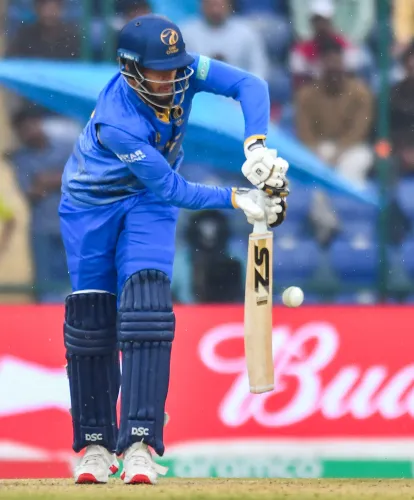
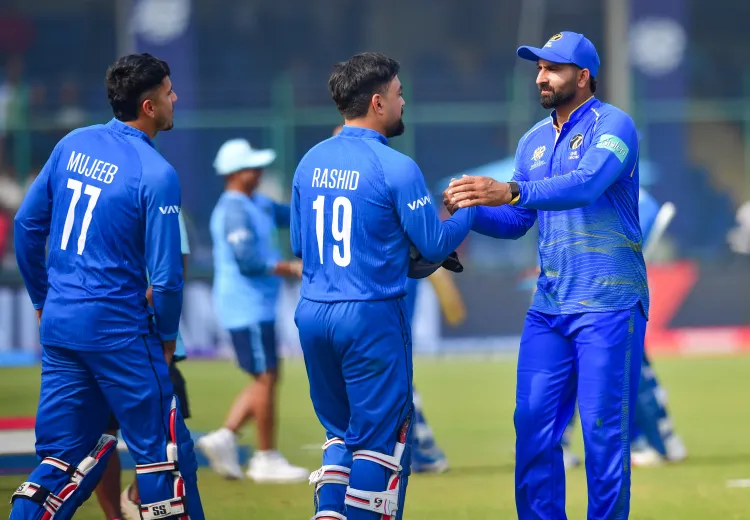
New Delhi, Feb 18 (NationPress) The bowling coach of the United Arab Emirates (UAE), Yasir Arafat, expressed that the six-wicket loss to South Africa will provide a significant learning opportunity for a team that is not used to facing top-tier pace attacks under overcast conditions. At the Arun Jaitley Stadium on Wednesday, the UAE struggled to gain momentum after a quick power-play, ultimately scoring 122/6 on a challenging pitch, which South Africa effortlessly chased down in just 13.2 overs.
“South Africa’s bowling lineup is heavily dependent on their fast bowlers, and they utilized four of them. For our players, this was a new challenge. They have not faced such rapid bowling in a significant tournament before,” he stated.
“This serves as a learning experience for our batsmen, as collectively we didn’t perform as well as expected. However, in each match, someone would step up. If 2-3 players take responsibility in every T20 match, a competitive score can be achieved. We emphasize this to our players. Similarly, we expect the same collective effort in bowling,” Arafat remarked during the post-match press conference.
Arafat, who was part of Pakistan’s squad in the inaugural T20 World Cup in 2007, where they finished as runners-up to India, downplayed the impact of weather conditions on the defeat, attributing the moisture on the pitch to overnight rain.
“There’s certainly a difference when it’s overcast. We had planned to bowl first if we won the toss, but we lost it. Nevertheless, I don’t believe it made a significant difference as the ball was coming through well. Typically, the ball gets wet, but it didn’t this time,” he explained.
Reflecting on T20 cricket's evolution since its inception, Arafat noted that a score once considered defendable has become nearly obsolete due to current batting prowess.
“T20 has transformed immensely due to global leagues. It is now more favorable for batters and audiences alike. The boundaries are smaller, and the rules leave little room for bowlers,” he elaborated.
“I can only wish my bowlers luck; that’s all. In 2007, a score of 130-140 was defendable, but nowadays, totals of 180-200 can be challenging to defend,” he added.
He further acknowledged that in today’s game, speed has been replaced by variations and deception as essential traits for modern fast bowlers. “In current cricket, it’s rare to find bowlers consistently exceeding 90 mph. The focus is on honing skills for shorter formats and mastering variations, which are crucial for a successful pacer,” he stated.
Despite the UAE securing only one victory out of four matches, Arafat remains optimistic about the future of fast bowlers emerging from the Gulf region. “They are promising bowlers, and what’s remarkable about UAE cricket is the year-round opportunities to play,” he noted.
“Unlike in other countries where indoor cricket is common, many of these young players participate in multiple matches daily. This is a positive aspect as they gain experience throughout the year,” he added.
On the broader context of the tournament, Arafat highlighted India and Pakistan as formidable competitors, thanks to their well-rounded spin attacks, noting the unexpected early departure of Australia. He emphasized that a balanced approach across pace, spin, and batting will likely determine the next world champion.
“Many teams are performing exceptionally well. Australia’s exit surprised everyone. The conditions in India and Sri Lanka favor spinners, and both India and Pakistan possess strong bowling lineups. Teams that maintain balance across all three aspects have a better chance of winning the World Cup,” he concluded.
Point of View
I believe the UAE's journey in this T20 World Cup showcases the challenges faced by emerging cricketing nations. The insights shared by coach Yasir Arafat highlight the importance of resilience and adaptability in the ever-evolving landscape of T20 cricket. With continued support and development, UAE can emerge as a competitive force on the international stage.
NationPress
29 Sept 2026
Frequently Asked Questions
What did Yasir Arafat say about the defeat?
He stated that the defeat to South Africa will serve as a valuable learning experience for the UAE team, which is not accustomed to facing elite pace attacks.
How did UAE perform in the match against South Africa?
UAE scored 122 runs for 6 wickets, which South Africa chased down in just 13.2 overs.
What does Arafat think about T20 cricket's evolution?
He believes T20 cricket has changed significantly, with modern batting power rendering once defendable totals obsolete.
What is the future outlook for UAE bowlers?
Arafat is optimistic about the future of fast bowlers from the UAE, citing their year-round playing opportunities as a positive factor.
Which teams did Arafat identify as strong contenders?
He identified India and Pakistan as strong contenders due to their balanced spin attacks.