Vijender Singh slams Punjab govt for credit-grabbing after Gurindervir's 10.09s record
Synopsis
Olympic medallist Vijender Singh has called out the Punjab government for celebrating Gurindervir Singh's historic sub-10.10 second 100m run only after the fact — citing the sprinter's own admission that he was denied a national-level stadium and proper training support despite holding a government job. The rebuke lands a pointed question: what does state sports patronage actually mean when it shows up only for the photo opportunity?
Key Takeaways
Vijender Singh publicly criticised the Punjab government on 26 May 2026 for credit-taking after Gurindervir Singh's national record.
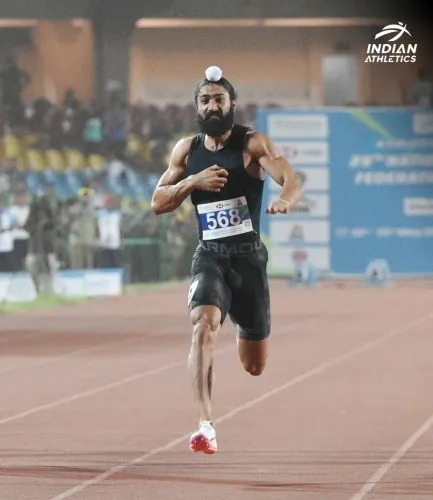
Gurindervir Singh , 25 , clocked 10.09 seconds at the National Senior Athletics Federation Competition 2026 in Ranchi , becoming the first Indian to run 100m in under 10.10 seconds .
He broke Animesh Kujur's previous national record of 10.18 seconds twice in two days.
Vijender cited Gurindervir's own interview, in which the sprinter reportedly said he received neither a national-level stadium nor proper training support from the state.
Punjab CM Bhagwant Mann had posted congratulations on 24 May , prompting Vijender's sharp response.
Olympic boxing medallist Vijender Singh on 26 May 2026 publicly criticised the Punjab government for rushing to claim credit for sprinter Gurindervir Singh's historic 100m national record, arguing that state support came only after the glory — not during the years of struggle that preceded it.
What Vijender Said
Posting on X, Vijender cited Gurindervir's own interview to make his point. 'The Punjab government has now come forward to take credit for Gurindervir Singh, but if you listen to his interview, he clearly says that he neither got a national-level stadium nor proper support from the government. They gave him a government job, but then sent him on duty without providing the right environment for practice and preparation. But the moment Gurindervir broke the national record, everyone rushed to take credit. Athletes don't need support after winning — they need support during their struggle,' Vijender posted.
Gurindervir's Record-Breaking Run
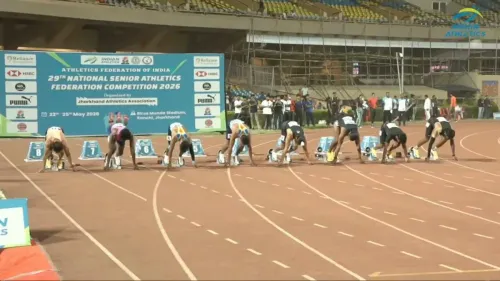
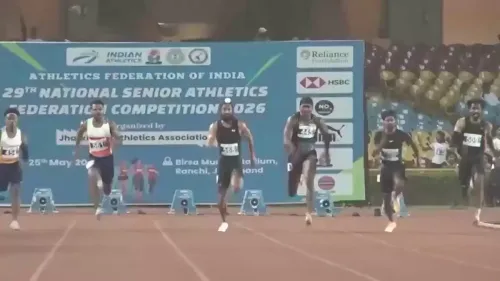
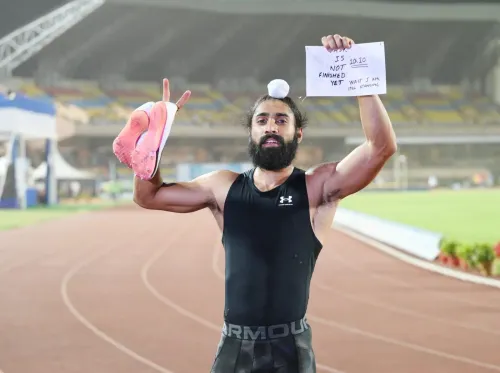
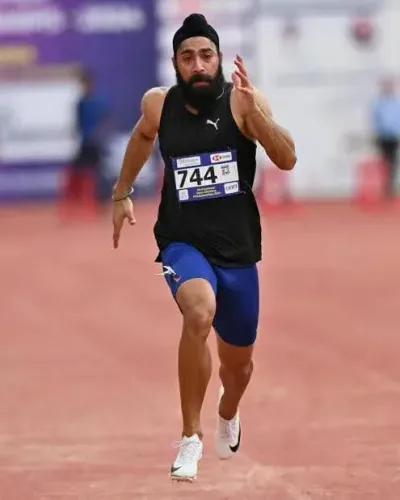
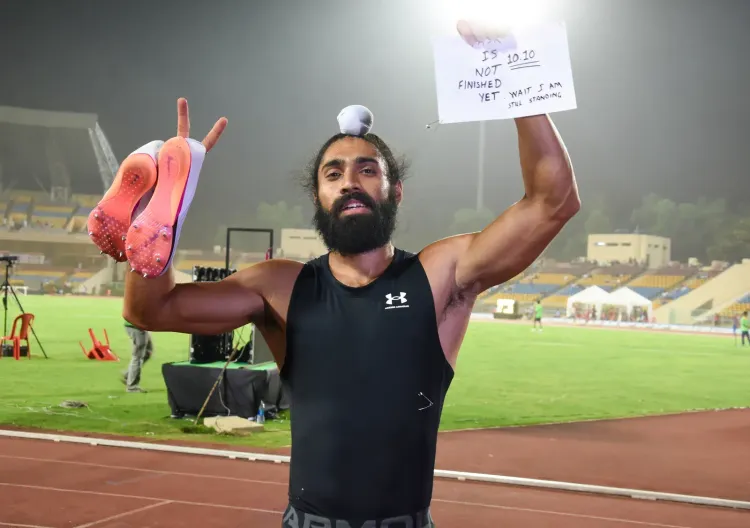
The controversy follows a landmark weekend for Indian athletics. Gurindervir Singh, 25, rewrote the record books at the National Senior Athletics Federation Competition 2026 in Ranchi. Representing Reliance, the Punjab sprinter first clocked 10.17 seconds in the opening semifinal heat, erasing Animesh Kujur's previous national mark of 10.18 seconds. He then went further, clocking 10.09 seconds in the final to reclaim the men's 100m crown — becoming the first Indian athlete to run the distance in under 10.10 seconds.
Punjab CM's Congratulatory Post
On 24 May, Punjab Chief Minister Bhagwant Mann posted on X: 'Heartiest congratulations to our promising athlete Gurindervir Singh for winning the gold medal in the 100-meter freestyle race at the Federation Cup in Ranchi. Our brave young son has set a new national record by clocking just 10.09 seconds. Gurindervir has become the first Indian athlete to clock less than 10.10 seconds in the 100-meter race. By breaking a second national record in two days, the son of Punjab has brought glory to the state on the national and international stage.' It was this public celebration that drew Vijender's sharp rebuke.
A Wider Pattern in Indian Sports
Vijender's criticism touches a recurring fault line in Indian athletics — state governments and institutions that are conspicuously absent during an athlete's formative years but eager to associate with success once it arrives. Gurindervir's case, where a government job reportedly came without the training infrastructure to match, illustrates the gap between administrative optics and ground-level support. This comes amid growing scrutiny of how Indian states manage their sports quotas and athlete welfare obligations. How the Punjab government responds — and whether it commits to concrete infrastructure for Gurindervir and peers — will be closely watched ahead of upcoming international competitions.
Point of View
It is administrative box-ticking. The deeper problem is structural — India's sports quota system routinely provides employment without the ecosystem that turns employment into performance. Gurindervir broke the record despite the system, not because of it. That distinction matters enormously as India prepares for the next Olympic cycle.
NationPress
23 Sept 2026
Frequently Asked Questions
Why did Vijender Singh criticise the Punjab government?
Vijender Singh criticised the Punjab government for publicly celebrating sprinter Gurindervir Singh's national record only after the achievement, while reportedly failing to provide him a national-level stadium or proper training support beforehand. Vijender cited Gurindervir's own interview as evidence of the state's neglect during his formative years.
What national record did Gurindervir Singh set in 2026?
Gurindervir Singh clocked 10.09 seconds in the men's 100m final at the National Senior Athletics Federation Competition 2026 in Ranchi, becoming the first Indian athlete to run the distance in under 10.10 seconds. He had earlier set a new national record of 10.17 seconds in the semifinal, breaking Animesh Kujur's previous mark of 10.18 seconds.
What did Punjab CM Bhagwant Mann say about Gurindervir Singh?
On 24 May, CM Bhagwant Mann posted on X congratulating Gurindervir Singh for his gold medal and record-breaking 10.09-second run at the Federation Cup in Ranchi, calling him 'the first Indian athlete to clock less than 10.10 seconds' and saying he had 'brought glory to the state.' This post prompted Vijender Singh's public criticism.
What support did Gurindervir Singh reportedly receive from Punjab?
According to Vijender Singh, citing Gurindervir's own interview, the sprinter was given a government job by Punjab but was sent on duty without access to a national-level stadium or the right environment for practice and preparation.
Who is Gurindervir Singh?
Gurindervir Singh is a 25-year-old Punjab sprinter representing Reliance who became India's fastest 100m runner in 2026 by clocking 10.09 seconds at the National Senior Athletics Federation Competition in Ranchi. He is now the first Indian to break the 10.10-second barrier in the 100m.