WADA pushes harmonisation as 2027 Anti-Doping Code nears rollout
Synopsis
With the 2027 World Anti-Doping Code six months from rollout, WADA's Beijing summit was less ceremonial than strategic. Witold Banka's twin message — harmonise fast, and keep politics out of anti-doping — lands at a moment when geopolitical disputes have repeatedly threatened the integrity of global testing regimes.
Key Takeaways
WADA is pushing for harmonisation ahead of the new World Anti-Doping Code taking effect on 1 January 2027 .
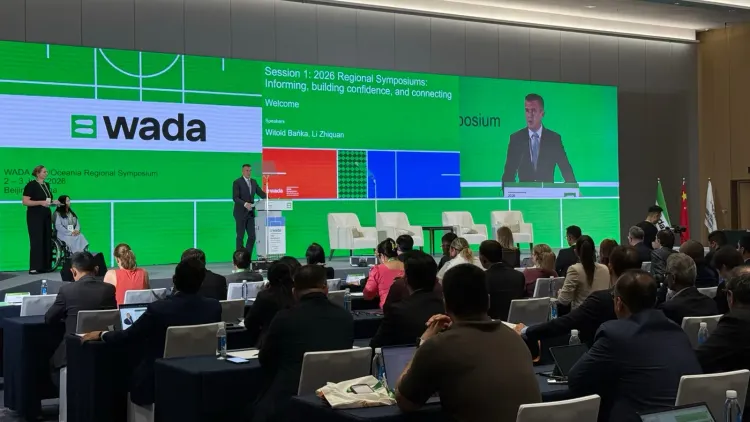
President Witold Banka made the call at the Asia and Oceania Regional Symposium in Beijing (1-3 June).
The Ministerial Meeting drew over 140 representatives from around 40 countries and regions .
A unanimous resolution declared sports ministers ‘against the politicisation of anti-doping'.
Signatories have six months to align national frameworks with the revised Code and Standards.
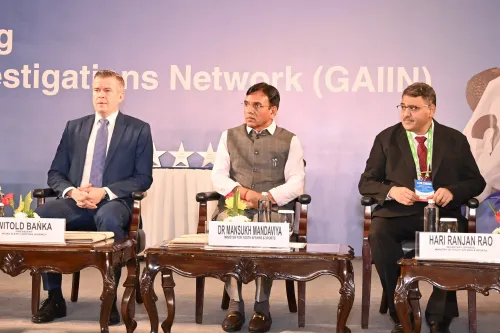
The World Anti-Doping Agency (WADA) on 2 June urged global stakeholders to prioritise ‘harmonisation' as the sporting world prepares for the rollout of the updated World Anti-Doping Code and International Standards, which come into force on 1 January 2027. Speaking at the Asia and Oceania Regional Symposium in Beijing, WADA president Witold Banka pledged the agency's full support to signatories in the run-up to the deadline.
Key Developments in Beijing
WADA, in partnership with co-host China Anti-Doping Agency, is hosting the Asia and Oceania Intergovernmental Ministerial Meeting and the Regional Symposium from 1 to 3 June in the Chinese capital. Banka opened the Symposium on Tuesday by underscoring the shared responsibility of signatories to adapt national frameworks before the 2027 deadline.
‘It is incumbent upon all of us to take the necessary steps to ensure that Code signatories are ready on 1 January 2027 when the updated rules come into force,' Banka said, adding that WADA would back partners ‘in a variety of ways in the months ahead'.
What the WADA Chief Said
Banka argued that the global anti-doping community ‘is strongest when we are united', referencing the unity shown at last year's World Conference in Busan. ‘I look forward to seeing this momentum being carried forward tomorrow and throughout the next six months towards the implementation of the 2027 Code,' he told delegates.
The Ministerial Meeting on Monday drew more than 140 representatives from about 40 countries and regions across Asia and Oceania. Banka said he was satisfied with the outcome and that governments had been pushed to ‘accelerate the process' of aligning with the new framework.
Stand Against Politicisation
The Beijing meeting concluded with a resolution unanimously approved by participating governments. Banka highlighted one of its central planks: that ‘ministers of sport are against the politicisation of anti-doping' — a pointed statement amid years of geopolitical friction over doping investigations.
‘The harmonisation of the system is extremely important to adopt the Code in accordance with the rules,' he added, signalling that uneven national adoption could undermine the level playing field WADA is trying to preserve.
What Happens Next
Signatories now have a six-month window to align domestic anti-doping regulations with the revised Code and Standards. WADA is expected to roll out implementation support, including compliance reviews, in the months leading up to the 1 January 2027 deadline. The Symposium concludes on 3 June, with regional partners tasked with translating the lessons into action back home.
Point of View
In practice, a damage-control exercise. The agency has spent recent years navigating high-profile disputes — from Russian state-sponsored doping fallout to the contamination findings around Chinese swimmers — and uneven national enforcement has been at the heart of each crisis. The 2027 Code is meaningful only if signatories adopt it in lockstep; otherwise, the ‘level playing field' Banka invokes remains aspirational. The explicit anti-politicisation language in the Beijing resolution is notable, but resolutions are not enforcement.
NationPress
21 Oct 2026
Frequently Asked Questions
When does the new World Anti-Doping Code come into force?
The updated World Anti-Doping Code and International Standards take effect on 1 January 2027. Signatories have until then to align national anti-doping rules with the new framework.
What did WADA president Witold Banka say in Beijing?
Banka said ‘harmonisation is extremely important' and pledged WADA's support for signatories preparing for the 2027 Code. He also emphasised that the anti-doping community ‘is strongest when we are united'.
Who attended the Asia and Oceania Ministerial Meeting?
More than 140 representatives from around 40 countries and regions across Asia and Oceania participated. The meeting was co-hosted by WADA and the China Anti-Doping Agency in Beijing from 1 to 3 June.
What does the Beijing resolution say about politicisation?
The unanimously approved resolution states that ministers of sport are against the politicisation of anti-doping. It is a direct response to years of geopolitical disputes that have spilled into doping enforcement.
Why does harmonisation matter for the 2027 Code?
Without uniform adoption, athletes face different standards in different jurisdictions, undermining the level playing field. WADA argues that synchronised implementation is essential for credibility and fairness in global sport.