India's Commitment to Combat Trafficking of Prohibited Substances: Mandaviya's Address at WADA Conference
Synopsis
Union Minister Mansukh Mandaviya highlights India's strong stance against doping at WADA's Global Anti-Doping Intelligence & Investigations Network conference, announcing plans for new criminal laws targeting trafficking of banned substances and emphasizing international cooperation.
Key Takeaways
Mansukh Mandaviya emphasizes India's strong commitment to anti-doping.
New criminal provisions are being introduced to combat trafficking of prohibited substances.
The National Anti-Doping Act and upcoming amendments align India with international standards.
International cooperation is crucial in dismantling doping networks.
Education and awareness initiatives are vital for prevention.
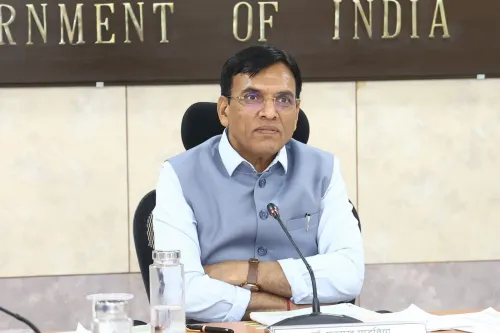
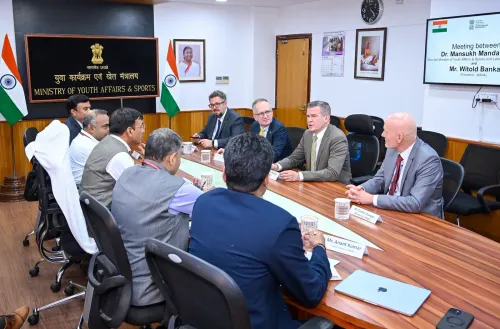
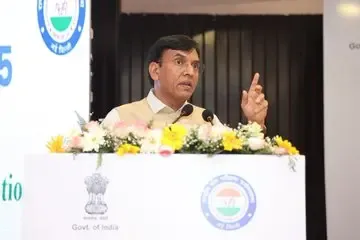
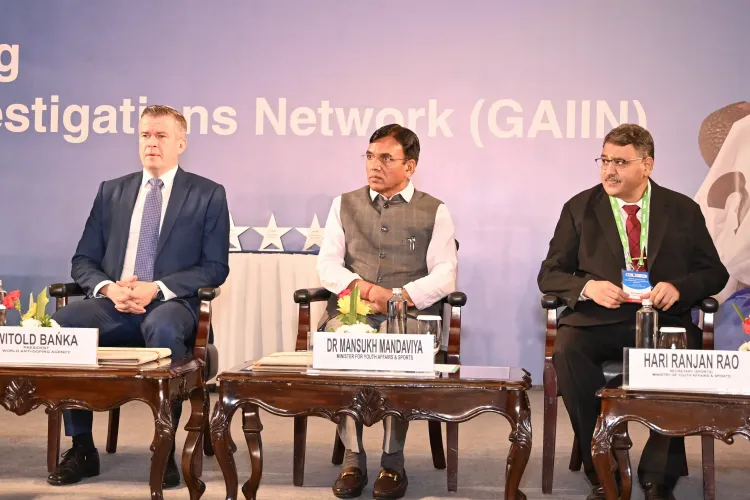
New Delhi, April 16 (NationPress) Union Minister for Youth Affairs and Sports, Mansukh Mandaviya, addressed attendees at the launch of the Final Conference of WADA's Global Anti-Doping Intelligence & Investigations Network (GAIIN), reiterating India’s commitment to fair play and global cooperation in the battle against doping.
During his address, the Minister stressed the significance of global collaboration, stating, “a worldwide anti-doping intelligence and investigations network can greatly improve cooperation in these vital areas.” He pointed out that the conference brings together crucial stakeholders in the international fight against doping.
Mandaviya emphasized that India has implemented proactive reforms “not merely for compliance, but with a sincere commitment to the integrity of sports.”
He cited the National Anti-Doping Act, 2022, as a robust legal framework, and noted that the forthcoming National Anti-Doping Amendment Act, 2025, aligns India’s regulations with global benchmarks.
The Minister revealed that the government is actively pursuing criminal legislation aimed at individuals involved in the distribution or trafficking of prohibited substances.
He noted that previous efforts were primarily centered on lab testing protocols and athlete compliance. However, doping has now morphed into a well-structured multinational operation rather than just individual misconduct, underscoring the urgent need for a coordinated global approach to dismantle these networks effectively.
Witold Bańka, President of WADA, acknowledged the necessity for enhanced global partnerships, stating, “WADA’s Intelligence and Investigations model has advanced to fortify cooperation between National Anti-Doping Organizations and law enforcement agencies.”
He added, “This model is grounded in partnerships, merging the expertise of anti-doping professionals with law enforcement capabilities, backed by international organizations such as Europol and INTERPOL.”
Highlighting India’s rising global influence, Mandaviya noted that hosting international events, including WADA workshops and the current conference, has substantially improved our investigative capabilities and fortified our anti-doping framework. He reiterated India’s aspiration to become “a global sporting powerhouse, driven by the leadership of Prime Minister Narendra Modi.”
Mandaviya also reaffirmed India’s dedication to sports development, pointing out investments in infrastructure, talent identification, and scientific training. Initiatives like Khelo India and the Fit India Movement are transforming the sports landscape and embedding sports into the essence of our national identity.
Addressing the ethical aspect, Mandaviya asserted that “athlete values must be at the heart of sporting excellence.” He cautioned that while sports can cultivate discipline, integrity, and character, the increasing competitive pressures may tempt some towards unethical decisions. He highlighted the necessity of promoting fairness, honesty, and respect at all levels of sport.
On preventive initiatives, Mandaviya stressed that “prevention is the most effective strategy,” adding that “providing timely and accurate information empowers athletes to make informed choices, thus avoiding both intentional and accidental violations.” He emphasized the importance of ongoing education throughout an athlete’s journey.
He mentioned that the National Anti-Doping Agency (NADA) India employs a comprehensive, multi-layered strategy to raise awareness, which includes workshops, seminars, digital campaigns, and event-based education. Notably, specialized educational modules have been developed for athletes with disabilities, adhering to a universal design approach.
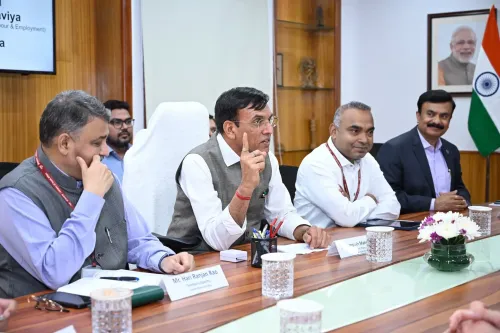
Hari Ranjan Rao, Secretary (Sports), highlighted India’s proactive stance, stating, “The Ministry of Sports has focused on enhancing the institutional and investigative capabilities of NADA, fostering closer coordination with enforcement agencies and improving information sharing. Collaborations with entities like the Food Safety and Standards Authority of India and the Central Drugs Standard Control Organisation are crucial in mitigating risks from contaminated or unregulated substances, which pose a significant global challenge.”
The Minister also spotlighted technological advancements like the “Know Your Medicine” mobile application, which assists athletes in verifying medications for banned substances. Regarding contaminated supplements, he mentioned the establishment of cutting-edge testing laboratories at leading institutions to safeguard athletes.
Mandaviya shared insights on testing and enforcement, noting that India boosted its anti-doping tests from approximately 4,000 in 2019 to around 8,000 in the previous year. He pointed out a marked reduction in adverse findings, decreasing from 5.6% in 2019 to under 2% currently, showcasing the effectiveness of ongoing awareness and prevention efforts.
Anant Kumar, Director General of NADA India, underscored the scale and evolution of India’s anti-doping initiatives, indicating that “our testing program has significantly expanded in recent years, complemented by a strategic shift towards risk-based and effectiveness-driven methodologies. However, as we acknowledge, testing alone is insufficient; integration, intelligence, and education must be central to our anti-doping strategy.”
The Union Minister also announced that India is in the process of establishing new drug-testing laboratories that comply with WADA standards, aiming to meet the growing demand and enhance the nation's anti-doping infrastructure.
Reiterating India’s commitment, Mandaviya concluded, “no single entity can tackle the doping challenge alone,” emphasizing the need for robust partnerships among governments, regulators, and sporting organizations. He further declared, “India is dedicated not only to sporting excellence but also to upholding the highest standards of integrity,” characterizing the conference as a testament to our collective resolve to ensure that sport remains fair and true to its values.
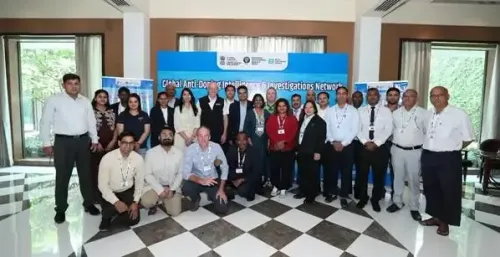
Participants on the panel included Gunter Younger, Director of Intelligence & Investigations at WADA, and Francisco Portugal from INTERPOL.
Point of View
The content reflects India's proactive stance towards enhancing its anti-doping framework and tackling the challenges posed by doping in sports. The emphasis on international cooperation and legislative reforms showcases a commitment to integrity and fair play on a global scale.
NationPress
14 Oct 2026
Frequently Asked Questions
What new measures is India implementing against doping?
India is introducing criminal provisions targeting individuals involved in trafficking prohibited substances and enhancing international cooperation through the National Anti-Doping Act.
How has India's approach to anti-doping evolved?
India's approach has shifted from focusing solely on lab testing and athlete compliance to addressing doping as a coordinated global enterprise, necessitating international collaboration.
What initiatives are being taken to educate athletes about doping?
The National Anti-Doping Agency employs a multi-layered strategy, including workshops, seminars, and digital campaigns to raise awareness about doping among athletes.
What role does technology play in India's anti-doping efforts?
Technological initiatives like the 'Know Your Medicine' app help athletes verify medications for banned substances, enhancing safety and awareness.
What is the significance of the WADA conference?
The WADA conference serves as a platform for global stakeholders to unite in combating doping, fostering cooperation and sharing best practices in anti-doping efforts.