Khawaja reveals Steve Smith talked him out of Sandpapergate statement for 8 years
Synopsis
Eight years after Sandpapergate, Usman Khawaja has gone on record — revealing Steve Smith personally talked him out of speaking at the time, and that a promise to David Warner in 2020 kept his account alive. His memoir Sabr now accuses Cricket Australia of imposing penalties that were 'grotesquely overboard', reigniting questions about how many players truly knew.
Key Takeaways
Usman Khawaja reveals in his autobiography Sabr that Steve Smith personally dissuaded him from speaking out publicly after the 2018 Cape Town ball-tampering scandal .
Khawaja says a promise made to David Warner in 2020 was a key factor in his eventual decision to publish his account.
He argues the 12-month bans on Smith and Warner and the 9-month ban on Bancroft were 'grotesquely overboard' and exceeded ICC benchmarks .
Khawaja wrote his original notes within days of the incident to preserve his recollection, with no initial intention of publishing a book.
Pat Cummins and Mitchell Starc have denied prior knowledge; Warner and Chadd Sayers have publicly backed Khawaja's account.
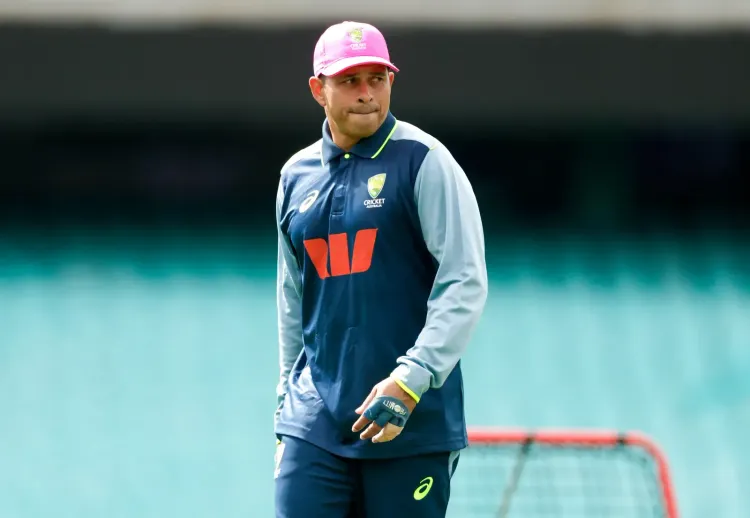
Usman Khawaja has broken his near-decade-long silence on Australia's 2018 ball-tampering scandal, revealing in his autobiography Sabr that Steve Smith personally persuaded him not to speak out independently at the time — and that a promise made to David Warner in 2020 ultimately compelled him to put his account in writing. The former Australia opener's disclosures have reopened one of cricket's most contentious controversies, with fresh questions about how widely knowledge of the sandpaper plan extended within the Australian camp during the Cape Town Test.
Why Khawaja Stayed Silent for Eight Years
Speaking on the They Used To Be… podcast, Khawaja described his original intent as wanting to address the issue collectively as a team rather than through an individual public statement. He recalled that Smith had spoken to him at the time and convinced him against going public on his own.
'It's not what I wanted, but I felt that right from the very start I gave an account of me wanting to take it as a team… wanting to come out, but being talked out of coming out by myself from Steven Smith and then wanting to come out in 2021,' Khawaja said, as quoted by The Daily Mail.
He added that writing a book offered a level of control and careful reflection that a media interview could not. He revisited his account 'over and over again' before deciding what to make public.
The Sandpapergate Controversy: A Recap
The scandal broke during the third Test between Australia and South Africa in Cape Town in March 2018, when Cameron Bancroft was filmed using sandpaper to illegally alter the condition of the ball. Cricket Australia (CA) subsequently handed Steve Smith and David Warner 12-month bans, while Bancroft received a nine-month suspension. The episode triggered one of the most damaging reputational crises in Australian cricket history.
Khawaja has long questioned the finding that prior knowledge of the plan was confined exclusively to the three sanctioned players — a position he now details explicitly in his memoir.
Khawaja's Case Against the Penalties
In his book, Khawaja argues that the sanctions imposed by Cricket Australia were disproportionate and without precedent, going far beyond what the International Cricket Council (ICC) would have imposed under its own code.
'The penalties that happened to these guys were grotesquely overboard. No one had ever gotten these penalties before… the benchmark should be ICC penalties. Cricket Australia went over the top and I go into details about why I think that happened and the context of what made that happen,' he said.
Notably, he stated that his original notes were written within days of the incident — not for publication, but to preserve an accurate recollection before memory could fade. 'Sandpaper didn't just happen overnight; I wrote a whole bunch of stuff down days after it happened… I didn't write it down because I wanted to write a book… I didn't look at it again for years,' he said.
Reactions and Renewed Debate
Khawaja's claims have drawn varied responses from those involved. Pat Cummins and Mitchell Starc have both denied having prior knowledge that sandpaper would be used. Warner and former Australia player Chadd Sayers have publicly supported Khawaja's account.
The disclosures revisit a fault line that Australian cricket has never fully closed — the question of collective versus individual culpability in a plan that upended careers and triggered a cultural reckoning within the sport. Khawaja's memoir is likely to sustain pressure on Cricket Australia to revisit its handling of the affair.
What Comes Next
With Sabr now in circulation and Khawaja speaking publicly on the podcast circuit, the debate over the breadth of knowledge within the 2018 Australian Test squad is set to intensify. Cricket Australia has not issued an immediate response to the memoir's claims. Whether the governing body will be drawn into a formal review of the sanctions remains to be seen.
Point of View
The question of individual versus collective culpability in Cape Town becomes sharper than Cricket Australia's original findings acknowledged. The governing body imposed career-defining sanctions on three players while apparently accepting, without public challenge, that knowledge stopped there. Khawaja's memoir, combined with Warner's support and Sayers's corroboration, makes that a harder line to hold. Cricket Australia's silence in response is itself a data point.
NationPress
16 Nov 2026
Frequently Asked Questions
Why did Usman Khawaja wait eight years to speak about Sandpapergate?
Khawaja says he was persuaded by Steve Smith not to issue an independent public statement at the time, and later wanted to come out in 2021 but held back. A promise made to David Warner in 2020 and the reflective space offered by writing his autobiography Sabr finally prompted him to go public.
What does Khawaja's book Sabr say about the 2018 ball-tampering scandal?
Sabr argues that the bans handed to Steve Smith, David Warner, and Cameron Bancroft by Cricket Australia were 'grotesquely overboard' and far exceeded ICC penalty benchmarks. Khawaja also questions the finding that prior knowledge of the sandpaper plan was limited exclusively to the three sanctioned players.
What were the original penalties handed out after the Cape Town scandal?
Cricket Australia banned Steve Smith and David Warner for 12 months each and Cameron Bancroft for nine months following the discovery that sandpaper had been used to illegally alter the ball during the March 2018 Cape Town Test against South Africa.
Who has supported Khawaja's version of events?
David Warner and former Australia player Chadd Sayers have publicly backed Khawaja's account. Conversely, Pat Cummins and Mitchell Starc have both denied having prior knowledge that sandpaper would be used.
What is the significance of Khawaja's claim about Steve Smith?
Khawaja's claim that Smith personally talked him out of speaking independently raises new questions about how information around the scandal was managed within the Australian camp. It suggests the decision to limit public statements was coordinated, adding complexity to the existing narrative of individual culpability.