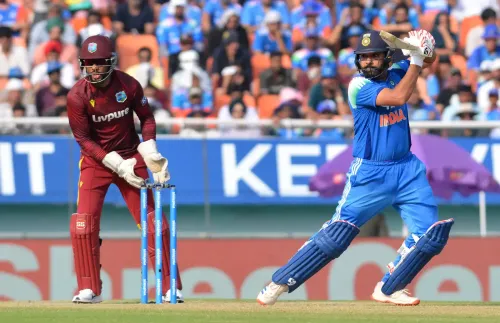
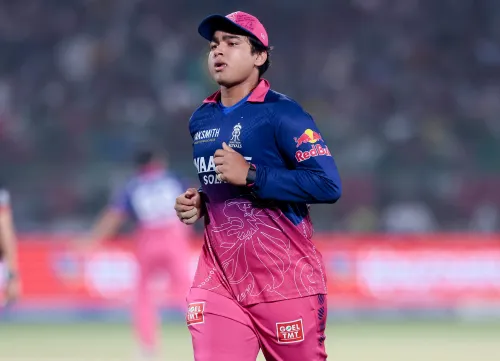
Chahal questions flat pitches after WI chase 250 in Ranchi T20I
Synopsis
A 250-run chase wrapped up in 18.3 overs — and Yuzvendra Chahal had seen enough. The India leg-spinner's blunt post-match question — 'what is the use of their skill?' — cuts to the heart of T20 cricket's deepening imbalance, linking Ranchi's flat surface to IPL structural changes and demanding that administrators answer for a game increasingly tilted against bowlers.
Key Takeaways
West Indies chased down 250 in 18.3 overs against India in the second T20I in Ranchi on 10 October 2026 , winning by six wickets .
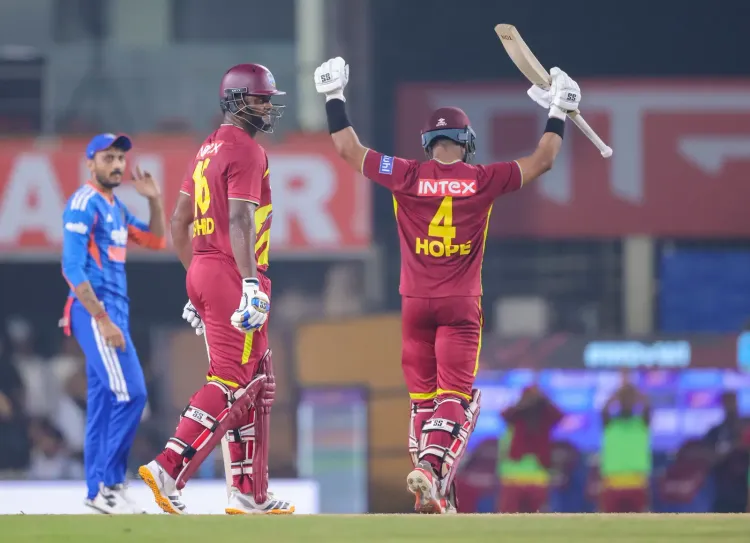
Shai Hope scored an unbeaten 102 off 45 balls ; Sherfane Rutherford hit 84 off 37 balls ; their partnership was worth 120 runs .
The result levels the five-match T20I series at 1-1 .
Yuzvendra Chahal publicly questioned flat pitches, dew, and smaller boundaries, saying bowlers are being rendered irrelevant.
Chahal also criticised the IPL Impact Player rule , arguing it compounds the disadvantage for bowlers on small grounds.
The third T20I is scheduled in Indore on Sunday .
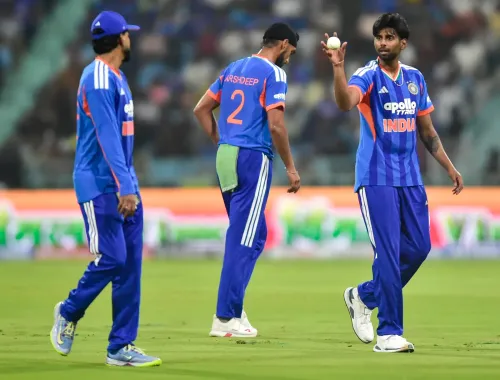
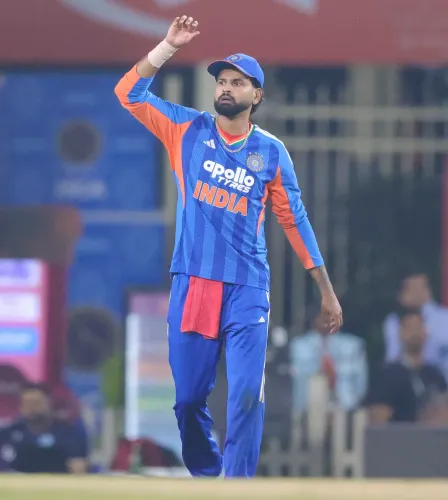
India leg-spinner Yuzvendra Chahal has questioned the fairness of modern T20 conditions after the West Indies chased down 250 against India in the second T20I in Ranchi on Friday, 10 October 2026, calling out flat pitches, dew, and shrinking boundaries as factors that are systematically disadvantaging bowlers.
Chahal's Blunt Assessment
'On such wickets, there's nothing for the bowlers. When the ball gets old, there's dew, the ball comes nicely onto the bat, and the grounds are getting smaller. We've seen this in the IPL as well, with 260 being chased in 19 overs. In this game too, 250 got chased down easily in 18.3 overs. So, what should bowlers do? What is the use of their skill,' Chahal said, speaking to JioStar.
The wrist-spinner's remarks were pointed and personal — he did not merely critique conditions in the abstract but drew on his own experience of bowling on small grounds in the Indian Premier League (IPL). His frustration reflects a broader anxiety in bowling communities across formats about whether the game is being recalibrated too heavily in favour of batting spectacle.
How the Chase Unfolded
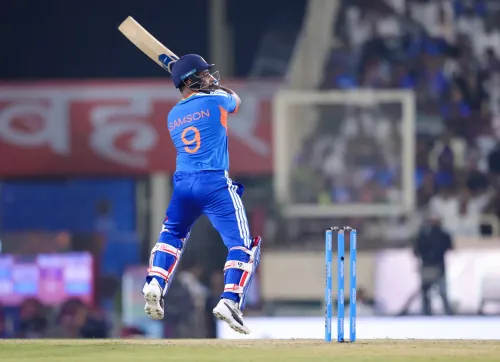
India posted 249/5 in their allotted 20 overs, a total that would historically have been considered match-winning in T20 cricket. The West Indies, however, overhauled it in just 18.3 overs, finishing on 252/4 to win by six wickets with four balls to spare.
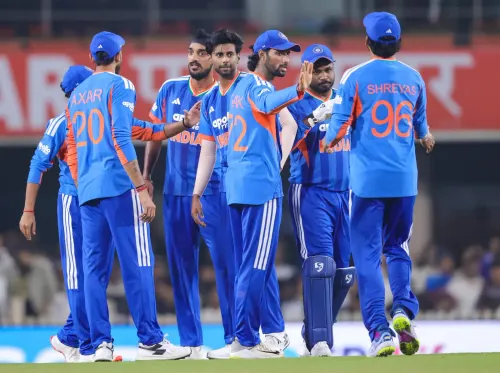
Shai Hope anchored the chase with an unbeaten 102 off 45 deliveries, while Sherfane Rutherford blazed 84 off 37 balls. Their 120-run partnership proved decisive after India had made early inroads into the West Indies top order. The result levelled the five-match series at 1-1.
The IPL Factor and the Impact Player Rule
Chahal extended his criticism beyond this match, drawing a direct line to structural changes in the IPL. 'I feel for them, because I am a bowler too and when I bowl in the IPL, on small grounds with flat wickets, you have an Impact Player as well. Earlier, when the Impact Player rule was not there, you used to see 50 runs in six overs, and 170-180 was a fighting total. But these days, 70-80 runs are scored in the first six overs, and the game is done there itself. So, either you have to have something for the bowlers in the wicket, or else just install a bowling machine,' he added.
The Impact Player rule, introduced in the IPL, allows teams to substitute an additional specialist — a change that critics argue amplifies batting depth at the cost of bowling variety. Chahal's point is that this creates a compounding effect: smaller grounds, dew-affected pitches, and an extra batter in the lineup all converge to leave bowlers with diminishing returns on skill and craft.
A Pattern That Is Hard to Ignore
This is not an isolated grievance. Across the IPL and international T20s, totals above 200 are being chased with increasing regularity. The data from recent seasons shows powerplay run rates climbing steadily, and death-overs economics shifting in favour of batters. Chahal's invocation of a 260-in-19-overs IPL chase situates Friday's result within a wider trend that administrators have been slow to address.
Notably, the debate around pitch preparation and boundary sizes touches on a fundamental tension in T20 cricket: the format's commercial appeal is built on high scores and big hits, yet its competitive credibility depends on bowling remaining a meaningful contest. Whether the Board of Control for Cricket in India (BCCI) or the International Cricket Council (ICC) respond to such on-record criticism from active players remains to be seen.
What Comes Next
India will have a chance to recalibrate their bowling strategy in the third T20I in Indore on Sunday, with the series level at 1-1. The conditions in Indore and the pitch surface will be closely scrutinised after Ranchi's batter-friendly surface set off the current debate.
Point of View
But what makes it significant is that he is an active international cricketer saying on record what many bowlers whisper privately. The structural shifts he identifies — flatter pitches, smaller boundaries, the IPL Impact Player rule — are policy choices, not accidents of nature, and they have measurable consequences for the game's competitive balance. The BCCI and ICC have so far treated high-scoring games as a marketing asset rather than a governance problem. If specialist bowlers continue to become economically unviable in franchise cricket, the pipeline of quality spinners and seamers — particularly from lower-resource cricket nations — will quietly dry up. That is a longer-term cost that headline run rates do not capture.
NationPress
10 Oct 2026
Frequently Asked Questions
Why did Yuzvendra Chahal criticise pitch conditions after the Ranchi T20I?
Chahal criticised the pitch after the West Indies chased down 250 in 18.3 overs, arguing that flat surfaces, dew, and smaller grounds leave bowlers with no competitive edge. He said on record that bowlers are being reduced to the level of a 'bowling machine' in such conditions.
How did West Indies chase 250 against India in Ranchi?
West Indies overhauled India's 249/5 to finish at 252/4 in 18.3 overs, winning by six wickets with four balls to spare. Shai Hope's unbeaten 102 off 45 balls and Sherfane Rutherford's 84 off 37 balls powered the chase, with their 120-run partnership proving decisive.
What is the current status of the India vs West Indies T20I series?
The series is level at 1-1 after five matches are scheduled. West Indies' win in Ranchi levelled things after India had taken an earlier lead. The third T20I is scheduled in Indore on Sunday.
What role does the IPL Impact Player rule play in Chahal's criticism?
Chahal argued that the Impact Player rule, which allows an additional specialist substitute, effectively increases batting depth at the expense of bowling options. Combined with small grounds and flat pitches, he says it has pushed powerplay run rates to 70-80 runs in six overs — compared to 50 runs in the same phase before the rule existed.
Which ground will host the third T20I between India and West Indies?
The third T20I in the five-match series will be played in Indore on Sunday. The pitch conditions there will be closely watched given the debate sparked by Ranchi's batter-friendly surface.