FIFA World Cup 2026 kicks off at Azteca with Shakira, Burna Boy spectacle
Synopsis
The 2026 FIFA World Cup opened at Mexico City's Estadio Azteca — a stadium that has now hosted three separate World Cups, a first in football history. Shakira and Burna Boy performed the official anthem Dai Dai as FIFA President Gianni Infantino lifted the trophy before a packed crowd, kicking off a month that will cost millions of fans their sleep and, reportedly, their productivity.
Key Takeaways
The 2026 FIFA World Cup opened on 12 June at Estadio Azteca , Mexico City .
FIFA President Gianni Infantino officially declared the tournament open and presented the World Cup trophy .
Shakira and Burna Boy performed the official anthem Dai Dai at the opening ceremony.
Estadio Azteca becomes the first stadium in history to host matches at three separate FIFA World Cups — 1970 , 1986 , and 2026 .
The 2026 edition features an expanded 48-team format across USA , Mexico , and Canada .
The 2026 FIFA World Cup officially got underway on Thursday, 12 June at Mexico City's iconic Estadio Azteca, launching a month-long global festival that has already cost millions of fans their sleep schedules and, reportedly, a measurable dip in office productivity. From India to Indonesia, supporters are surviving on coffee, hope, and football — a ritual as old as the tournament itself.
The Opening Ceremony
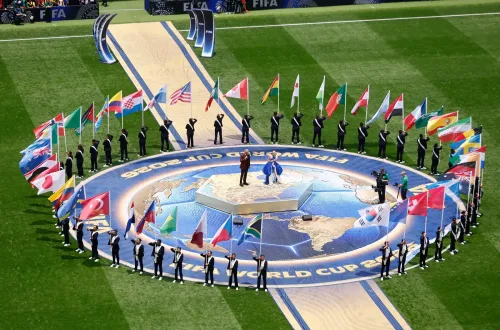
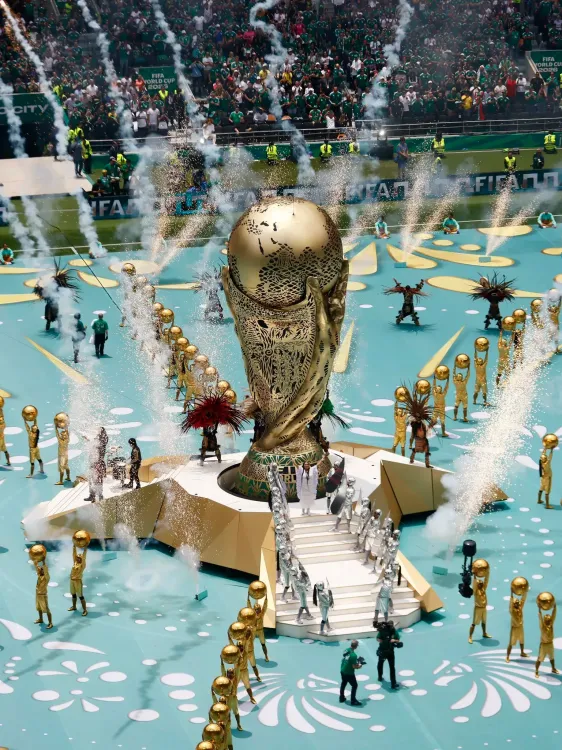
FIFA President Gianni Infantino formally declared the tournament open before a packed Azteca crowd, presenting the coveted World Cup trophy to a deafening roar. The ceremony then handed the stage to global pop icon Shakira and Nigerian Afrobeats superstar Burna Boy, who performed the official tournament anthem, Dai Dai, in a dazzling set of music, lights, and colour that transformed the historic venue into a celebration of football's worldwide reach.
Estadio Azteca: A Stadium Like No Other
Beyond the entertainment, the Estadio Azteca itself was the evening's most resonant symbol. Pelé lifted the World Cup trophy there in 1970. Diego Maradona did the same in 1986. With the 2026 edition, the legendary arena has become the first stadium in football history to host matches across three separate FIFA World Cups — a milestone that underscores just how deeply this ground is woven into the sport's mythology.
Generations United by the Beautiful Game
This tournament has drawn together millennials who grew up setting alarms to watch Cristiano Ronaldo, Zinedine Zidane, and Ronaldinho, alongside a new generation of Gen Z supporters documenting every goal, save, and celebration on social media in real time. Social media timelines transformed into virtual stadiums within minutes of the opening ceremony, flooding with memes, predictions, and heated debates.
'Four years of waiting and now my sleep schedule is officially destroyed,' one fan posted on X. Another captured the mood: 'The World Cup isn't a tournament. It's a month-long emotion.'
Why This World Cup Feels Different
The 2026 edition is the first to feature an expanded 48-team format, spread across three host nations — the United States, Mexico, and Canada. That scale amplifies both the spectacle and the stakes, giving more footballing nations — and their fans — a seat at the table. For older supporters, Azteca is a journey back to cherished memories. For younger ones, it is the beginning of a new chapter in the sport's most celebrated story.
As the group stage unfolds across North America over the coming weeks, one thing is already clear: when the World Cup begins, the world stops sleeping and starts dreaming.
Point of View
A trade-off FIFA has not been fully transparent about. The social-media frenzy around the opening ceremony also masks a quieter question: as fan engagement migrates entirely to short-form content and meme cycles, does the tournament's emotional depth survive the scroll? The World Cup has always been about shared dreaming — the challenge in 2026 is whether that dream survives the attention economy.
NationPress
26 Oct 2026
Frequently Asked Questions
Where did the 2026 FIFA World Cup opening ceremony take place?
The opening ceremony was held at Estadio Azteca in Mexico City on 12 June 2026 . The iconic stadium is one of three host nations' venues, alongside the United States and Canada.
Who performed at the FIFA World Cup 2026 opening ceremony?
Global pop icon Shakira and Nigerian Afrobeats star Burna Boy headlined the opening ceremony, performing the official tournament anthem Dai Dai . The performance combined music, lights, and colour in a celebration of football's global appeal.
Why is Estadio Azteca historically significant for the World Cup?
Estadio Azteca is the only stadium in history to have hosted matches at three separate FIFA World Cups — in 1970 (when Pelé lifted the trophy), 1986 (when Diego Maradona won it), and now 2026 . It is widely regarded as one of football's most sacred venues.
How many teams are competing in the 2026 FIFA World Cup?
The 2026 FIFA World Cup features an expanded field of 48 teams , up from the previous 32-team format. Matches are being played across three host nations — the United States , Mexico , and Canada .
Who officially opened the 2026 FIFA World Cup?
FIFA President Gianni Infantino officially declared the tournament open at the Estadio Azteca ceremony, presenting the World Cup trophy before a packed crowd ahead of the first match.