White House Hypes FIFA World Cup 2026, One Day to Kickoff
Synopsis
The White House marked one day to the FIFA World Cup 2026 with a public countdown post, as the United States prepares to co-host the expanded 48-team tournament alongside Canada and Mexico across 16 venues — the country's first World Cup since 1994.
Key Takeaways
The White House posted a countdown on 10 June 2026 , declaring one day until the FIFA World Cup 2026 begins.
The tournament is the 23rd edition of the World Cup, expanded to 48 teams for the first time.
The United States , Canada , and Mexico are jointly hosting across 16 venues — the first tri-nation arrangement in World Cup history.
The US last hosted the World Cup in 1994 ; Mexico previously hosted in 1970 and 1986 .
FIFA awarded the joint hosting rights to the three nations in 2018 .
The US will stage the majority of matches, including the final .
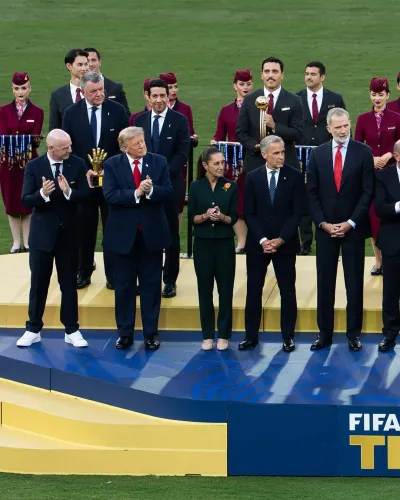
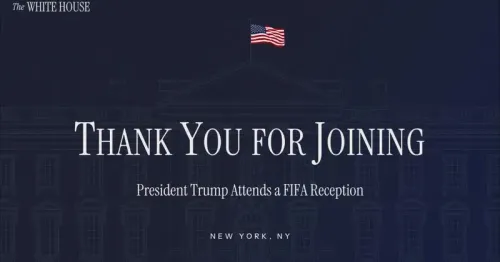
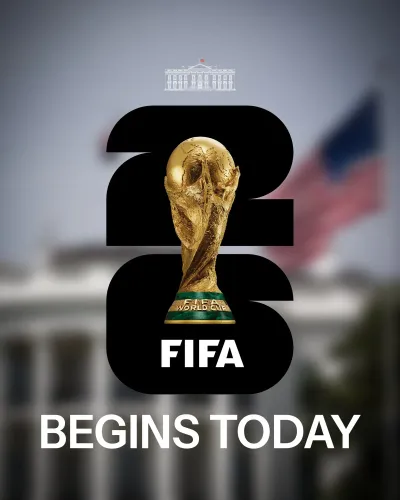
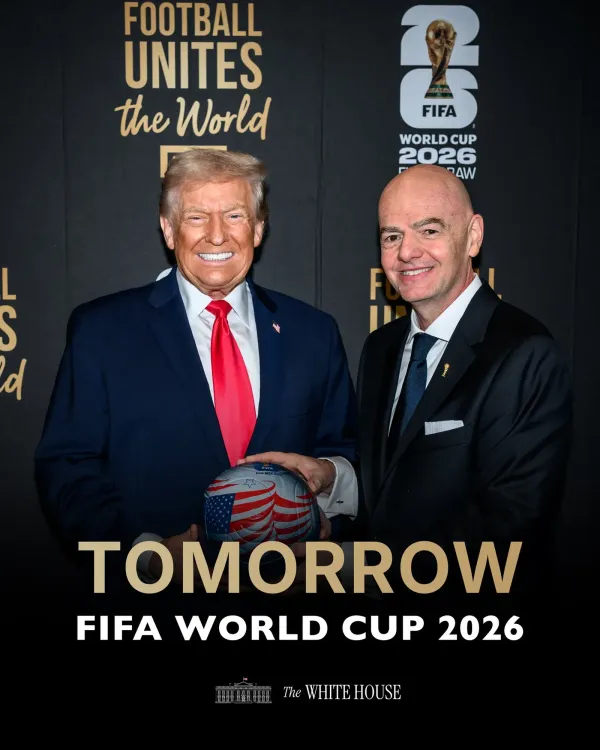
The White House, the official communications account of the Executive Office of the President of the United States, posted an enthusiastic countdown message on Wednesday, 10 June 2026, declaring just one day remained before the FIFA World Cup 2026 arrives in America.
The post read: 'One more day until the FIFA World Cup 2026 comes to America! Let's goooo!' — a rare instance of the executive office publicly rallying behind a major international sporting event on the eve of its opening.
Context
The 2026 FIFA World Cup is the 23rd edition of the tournament and the first to feature an expanded field of 48 teams, up from the previous 32. It is being jointly hosted by the United States, Canada, and Mexico across 16 venues in three countries — the first tri-nation hosting arrangement in the tournament's history. The United States is staging the majority of matches, including the final.
FIFA awarded the hosting rights to the joint 'United Bid' of the three North American nations back in 2018, following a competitive selection process. The arrangement reflects deepening trilateral cooperation on large-scale international events.
Policy Backdrop
This is the first time the United States has hosted the World Cup since 1994, when the tournament played a pivotal role in growing domestic interest in football. That edition drew record attendance figures and is widely credited with seeding the growth of professional football infrastructure in the country.
Mexico previously hosted the tournament in 1970 and 1986, making it the first country to host three editions. Canada is participating as a host nation for the first time. The White House's public promotion of the event fits a broader pattern of US government engagement with major international sporting occasions to underscore economic benefits and national prestige.
Stakeholders and Impact
The tournament is expected to deliver significant economic activity across host cities, with the hospitality, tourism, and transportation sectors among the primary beneficiaries. Sports fans across North America and the global football community have been building toward this moment since the hosting rights were confirmed eight years ago.
The expanded 48-team format means more nations — including several from Asia, Africa, and smaller football confederations — will compete, broadening the tournament's global audience and commercial footprint. For India, where football fandom is concentrated but intense, the event carries significant viewership interest.
What's Next
With the tournament set to begin on 11 June 2026, attention will shift to the opening matches scheduled across North American venues and any coordinated statements from the governments of all three host nations. Security arrangements, transportation logistics, and venue readiness across the 16 host cities will be closely watched as the group stage gets underway.
The White House's vocal support signals that the US executive office intends to remain publicly engaged with the tournament's progress — a dynamic that could shape how the event is covered and perceived on the international stage throughout its run.
Point of View
Washington has a clear interest in projecting the image of a confident, globally engaged host. The post also reflects a broader pattern of US administrations leveraging major international sporting events to project national vitality. For the rest of the world, including India's substantial football-watching public, it signals that the White House views the 2026 tournament as a marquee moment for American global standing.
NationPress
26 Oct 2026
Frequently Asked Questions
When does the FIFA World Cup 2026 start?
The FIFA World Cup 2026 is set to begin on 11 June 2026 , one day after the White House posted its countdown message on 10 June 2026.
Which countries are hosting the FIFA World Cup 2026?
The 2026 FIFA World Cup is being jointly hosted by the United States , Canada , and Mexico across 16 venues — the first tri-nation hosting arrangement in the tournament's history.
How many teams are playing in FIFA World Cup 2026?
The 2026 FIFA World Cup features an expanded field of 48 teams , up from the 32 that competed in previous editions.
When did the US last host the FIFA World Cup?
The United States last hosted the FIFA World Cup in 1994 , an edition widely credited with growing domestic interest in football in the country.
Why is the White House posting about the FIFA World Cup 2026?
The White House posted a public countdown as part of a broader pattern of US government engagement with major international sporting events, underlining the economic and national-profile significance of hosting the tournament.