White House Cheers USA as FIFA World Cup 2026 Opens
Synopsis
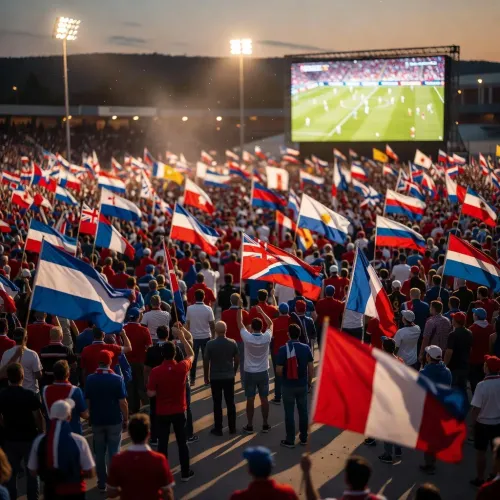
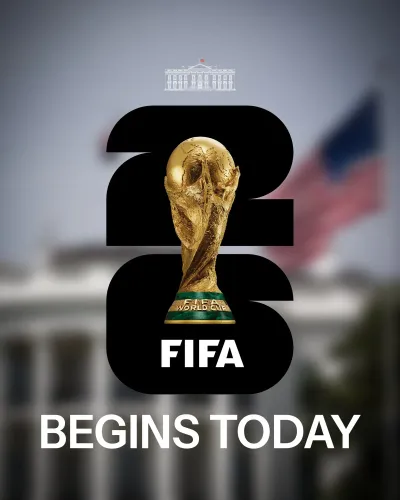
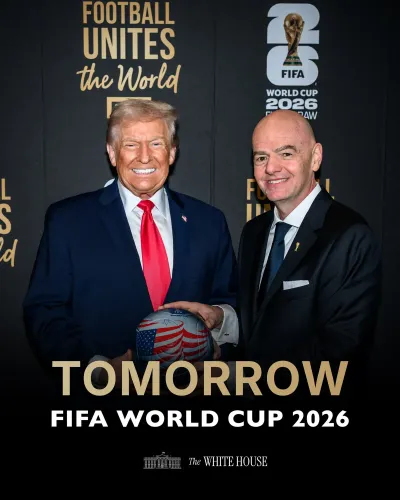
The White House cheered the US men's national soccer team on X as the opening round of the 2026 FIFA World Cup — the first 48-team edition, co-hosted by the United States, Canada, and Mexico — kicked off on June 15, 2026.
Key Takeaways
The White House posted a public rally cry on X on June 15, 2026 supporting the US national soccer team.
The 2026 FIFA World Cup is the first edition with an expanded 48-team format.
The tournament is co-hosted by the United States , Canada , and Mexico — the first tri-nation World Cup.
The North American joint bid was awarded hosting rights by FIFA in June 2018 .
This is the United States' first time hosting the World Cup since 1994 .
The US national team's progress through the group stage and knockout rounds will be watched through July 2026 .
The White House, the official communications account of the Executive Office of the President of the United States, on Monday, June 15, 2026, posted an enthusiastic message on X backing the United States men's national soccer team as the opening round of the 2026 FIFA World Cup got underway.
The post read: 'USA! USA! USA! The opening round is LIVE. LFG.' — a rallying cry that reflected the national excitement surrounding the tournament, which the United States is co-hosting alongside Canada and Mexico.
Context
The 2026 FIFA World Cup is the first edition to feature an expanded 48-team format, making it the largest in the tournament's history. The North American joint bid was awarded hosting rights by FIFA in June 2018, marking a major milestone for soccer's growth across the continent.
For the United States, the tournament carries particular significance — it is the country's first time hosting the World Cup since 1994, when the tournament helped accelerate the development of domestic soccer infrastructure and fan culture.
Policy Backdrop
The White House's amplification of the national team's campaign is consistent with a broader pattern of government accounts engaging with landmark sporting events, particularly those with national prestige and diplomatic undertones.
Co-hosting the World Cup across three nations — the United States, Canada, and Mexico — also carries geopolitical symbolism, reflecting North American cooperation on a global stage at a time when the region's ties have been subject to political scrutiny.
Stakeholders and Impact
The tournament's economic and cultural footprint is immense. US soccer fans, national team players, and host cities across the country stand to benefit from the influx of global attention, tourism, and broadcasting revenue that accompanies a FIFA World Cup.
The United States Soccer Federation (USSF), the governing body for the sport domestically, has spent years building toward this moment — investing in youth academies, stadium infrastructure, and professional league development to ensure the national team is competitive on home soil.
What's Next
All eyes will now follow the progress of the US national team through the group stage and into the knockout rounds, which are scheduled to run through July 2026. A deep run by the home side would galvanise domestic soccer interest and could have lasting implications for the sport's popularity in the country.
The White House's vocal support signals that the administration views the World Cup as a moment of national unity — and the team's performance will be watched closely not just by fans, but by policymakers keen to leverage the tournament's global platform.
Point of View
And the 2026 World Cup is an unusually potent vehicle for both. With geopolitical tensions surrounding North American relations, the tri-nation hosting arrangement also carries diplomatic weight that extends well beyond the pitch. The administration's vocal backing of the national team signals an intent to own the tournament's narrative from the very first whistle.
NationPress
13 Sept 2026
Frequently Asked Questions
Is the USA playing in the FIFA World Cup 2026?
Yes, the United States is participating in the 2026 FIFA World Cup as both a co-host nation and a competing team. The opening round began on June 15, 2026 .
Who is hosting the 2026 FIFA World Cup?
The 2026 FIFA World Cup is co-hosted by three countries: the United States , Canada , and Mexico . The hosting rights were awarded by FIFA in June 2018 .
How many teams are in the 2026 FIFA World Cup?
The 2026 FIFA World Cup features an expanded 48-team format, making it the largest edition in the tournament's history.
Why did the White House post about the FIFA World Cup 2026?
The White House posted on X on June 15, 2026 to rally support for the US national soccer team as the opening round went live, consistent with government accounts amplifying major national sporting events.
When was the last time USA hosted the FIFA World Cup?
The United States last hosted the FIFA World Cup in 1994 , a tournament that significantly boosted domestic soccer infrastructure and fan culture in the country.