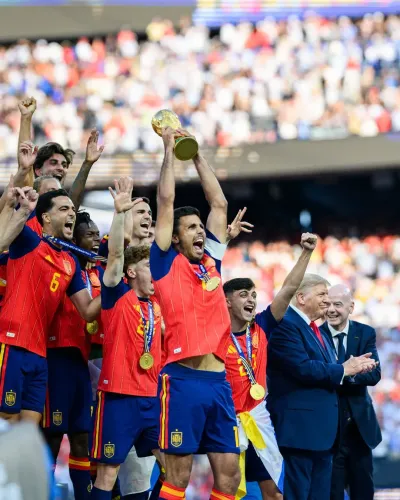
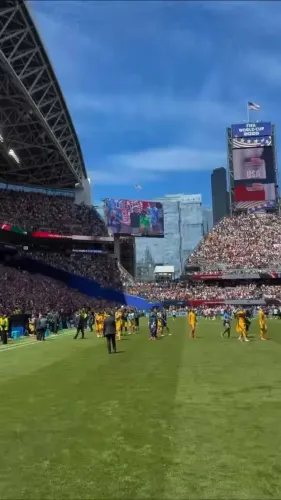
White House Marks 2026 FIFA World Cup Kickoff on US Soil
Synopsis
The White House on June 11, 2026 officially cheered the start of the 2026 FIFA World Cup, co-hosted by the United States, Canada, and Mexico. The expanded 48-team tournament marks the US's second time hosting the event, with the final set on American soil 39 days from opening day.
Key Takeaways
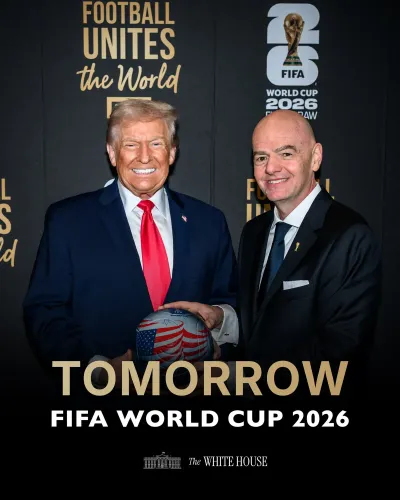
The White House posted on June 11, 2026 to mark the opening of the 2026 FIFA World Cup .
The tournament is co-hosted by the United States , Canada , and Mexico — a joint bid awarded by FIFA in 2018 .
This is the second time the US has hosted the World Cup, after 1994 ; the final will be played on American soil.
The 2026 edition is the first to feature an expanded 48-team format , up from the previous 32 teams.
The White House countdown places the championship final 39 days from the tournament's June 11 opening.
Mexico hosted the opening match, becoming the only nation to host a World Cup opener three times.
The White House, the official communications account of the Executive Office of the President of the United States, on Thursday, June 11, 2026, announced the start of the 2026 FIFA World Cup with a high-energy post declaring the tournament open and counting down 39 days to the championship match on American soil.
Context
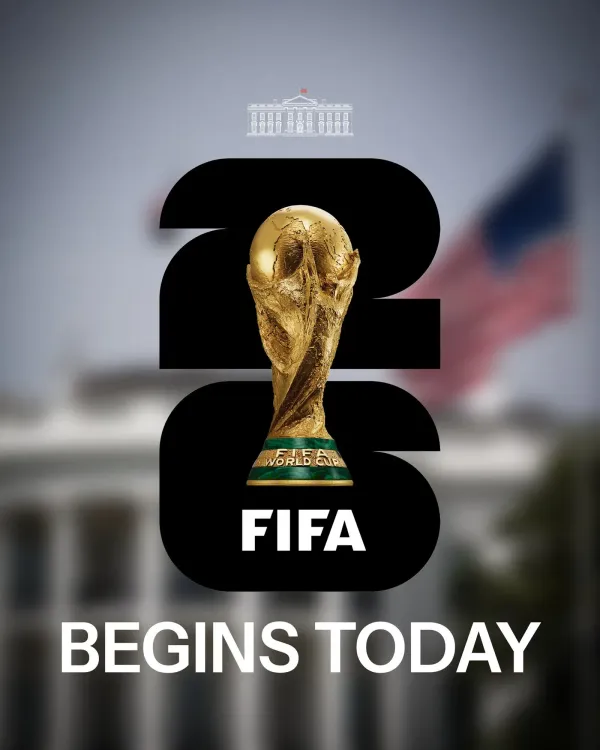
The White House post read: '39 days to crown a champion on American soil. THE 2026 FIFA WORLD CUP STARTS TODAY. LETS. GO.' The message signals the US government's enthusiastic backing of the tournament, which marks the second time the United States has hosted the FIFA World Cup, the first being in 1994. The tournament opened on June 11, 2026, with matches kicking off across the three co-host nations.
The 23rd edition of the FIFA World Cup is co-hosted by the United States, Canada, and Mexico — a joint bid that FIFA awarded in 2018, defeating a rival bid from Morocco. The United States is hosting the final match, cementing its role as the primary host nation with 11 venues spread across the country.
Policy Backdrop
This edition of the World Cup is the first to feature an expanded 48-team format, a structural change by FIFA designed to widen global participation and deepen commercial reach. The North American co-hosting arrangement reflects FIFA's strategy of leveraging the United States' massive market size, established infrastructure, and growing domestic interest in football.
Mexico hosted the tournament's opening match, making it the only nation to host a World Cup opening game three times, having previously done so in 1970 and 1986. Canada is a first-time World Cup host, with matches held in Toronto and other major cities, marking a historic milestone for Canadian football.
The US government's promotion of the event fits a broader pattern of leveraging major international sporting events to highlight economic and diplomatic dividends — a posture consistent with federal engagement around the 1994 World Cup and subsequent Olympic hosting efforts. Federal coordination on security, transport, and logistics across host cities has been a key area of administrative focus in the lead-up to the tournament.
Stakeholders and Impact
The tournament is expected to generate significant economic activity for host cities across all three nations, with the tourism and hospitality sectors positioned as primary beneficiaries. Sports fans across the world, and particularly across North America, are the most immediate stakeholders, with 48 nations represented on the pitch for the first time in World Cup history.
For the United States, the event also carries a soft-power dimension — projecting the country as a capable, welcoming host for the world's most-watched sporting event. The growth of domestic football leagues in the US has been closely tied to the country's recurring engagement with the global game at the highest level.
What's Next
With the tournament now underway, attention will shift to the group-stage matches playing out across the United States, Canada, and Mexico over the coming weeks. The countdown clock stands at 39 days from the White House's post, pointing to a final match on American soil in mid-July 2026. Federal agencies are expected to maintain close coordination on venue security and infrastructure as the tournament progresses toward its climax. The world will be watching whether the expanded 48-team format delivers the broader global drama FIFA and the host nations are banking on.
Point of View
Associating the US presidency with the world's most-watched event at a moment when Washington is keen to project openness and global engagement. The expanded 48-team format and the tri-nation hosting model are themselves diplomatic constructs, binding the US, Canada, and Mexico in a shared showcase even as the three nations navigate complex trade and immigration dynamics. For India, where football fandom is growing rapidly, the 2026 World Cup is a cultural inflection point — one that could accelerate domestic interest and sponsorship flows into the global game. The White House's vocal cheerleading signals that sport remains a primary instrument of American soft power.
NationPress
26 Oct 2026
Frequently Asked Questions
Where is the 2026 FIFA World Cup being held?
The 2026 FIFA World Cup is co-hosted by the United States, Canada, and Mexico. The United States is the primary host with 11 venues, and the final match will be played on American soil.
When did the 2026 FIFA World Cup start?
The 2026 FIFA World Cup officially started on June 11, 2026, with opening matches played across the three co-host nations.
How many teams are in the 2026 FIFA World Cup?
The 2026 FIFA World Cup features an expanded format of 48 teams, up from the 32-team format used in previous editions.
Why is the US hosting the 2026 FIFA World Cup?
FIFA awarded the 2026 hosting rights to the joint United States-Canada-Mexico bid in 2018, selecting it over a rival Moroccan bid. The US last hosted the World Cup in 1994.
What did the White House say about the 2026 FIFA World Cup?
The White House posted on June 11, 2026, declaring 'THE 2026 FIFA WORLD CUP STARTS TODAY' and counting down 39 days to the championship final on American soil.