White House Says 2026 FIFA World Cup 'Hits Different' in America
Synopsis
The White House marked the 2026 FIFA World Cup on June 26 with a video post declaring the tournament 'hits different in America,' spotlighting US pride as the primary host nation for the first time since 1994, alongside Canada and Mexico.
Key Takeaways
The White House posted a video on June 26, 2026 celebrating the 2026 FIFA World Cup in the United States.
The 2026 World Cup is jointly hosted by the United States , Canada , and Mexico , with the US as the primary host.
This is the second time the United States has hosted the FIFA World Cup, after 1994 .
Hosting rights were awarded by the FIFA Congress in 2018 to the joint North American bid.
The tournament is expected to boost the US tourism and hospitality sectors significantly.
The White House used an informal 'POV' social-media format to connect with younger audiences around the event.
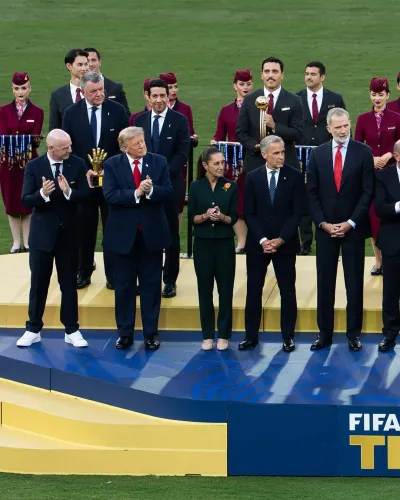
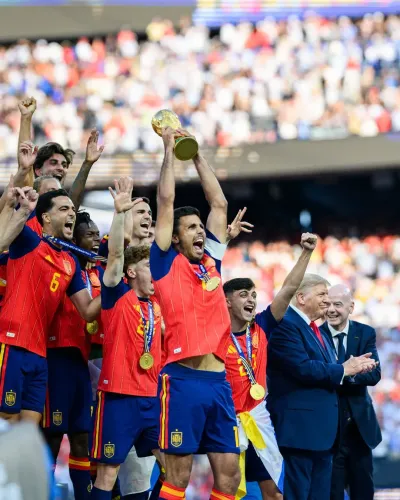
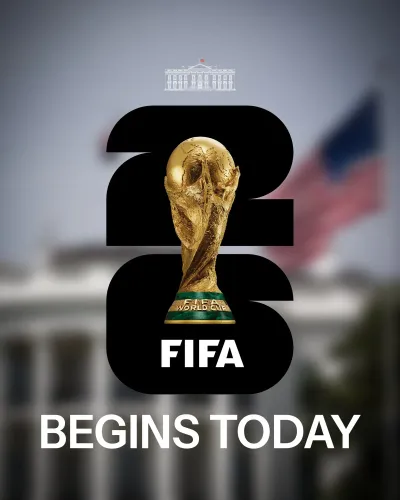
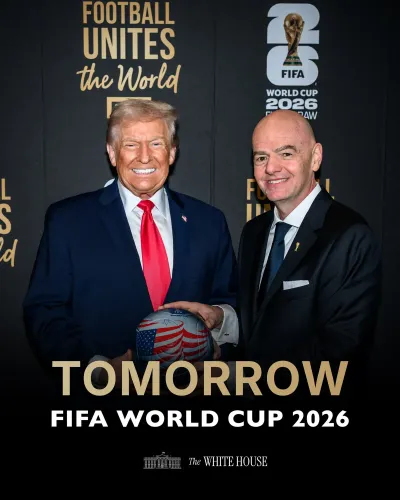
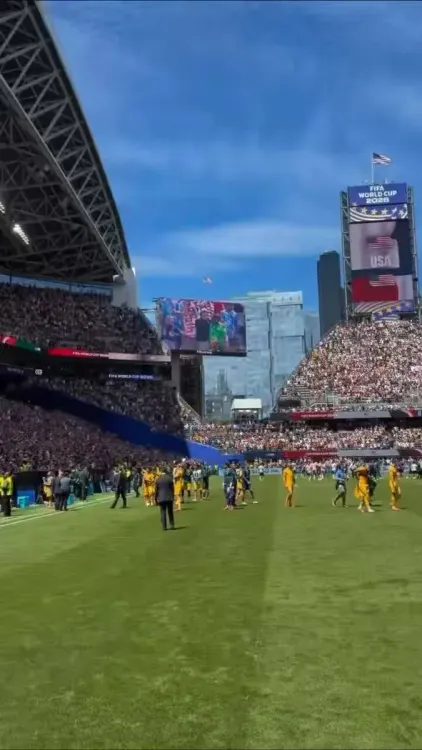
The White House, the official communications account of the Executive Office of the President of the United States, posted a video on Friday, June 26, 2026, celebrating the atmosphere of the 2026 FIFA World Cup being hosted on American soil, writing: 'POV: You realize the World Cup hits different in America.'
Context
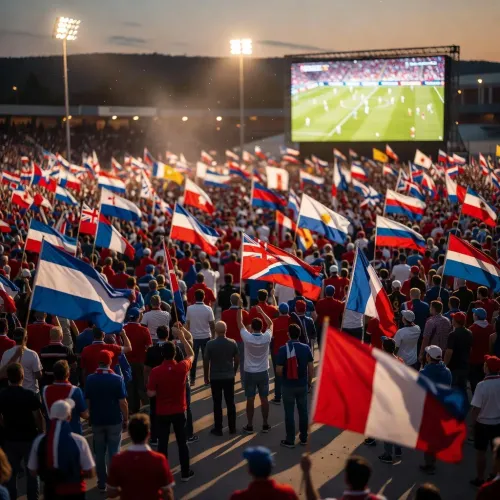
The post, accompanied by a video, captures the unique energy surrounding the 2026 FIFA World Cup, which is being jointly hosted by the United States, Canada, and Mexico. The United States is the primary host nation, with the majority of matches taking place across multiple American cities. This marks the second time the US has hosted the tournament, the first being 1994.
The informal 'POV' framing — a social-media storytelling device — signals the White House's effort to connect with younger, digitally native audiences and project national pride around the event.
Policy Backdrop
In 2018, the FIFA Congress awarded hosting rights for the 2026 World Cup to the joint United States-Canada-Mexico bid, reflecting both regional cooperation and confidence in North America's infrastructure capacity. The tournament schedule spans several weeks beginning in June 2026, with matches spread across multiple host cities requiring significant venue upgrades and fan-zone logistics.
The United States has steadily grown its engagement with global football since 1994, evidenced by the expansion of Major League Soccer (MLS) and investment in youth development programmes. White House engagement on the topic aligns with longstanding efforts to position the US as a capable host of large-scale international gatherings.
Stakeholders and Impact
The 2026 World Cup is expected to generate substantial economic activity across the United States, with the tourism and hospitality sectors among the primary beneficiaries. Sports fans across the globe — including a significant Indian diaspora in the US — are tracking the tournament closely.
FIFA, as the international governing body of association football, stands to benefit from the enormous American market and media reach. The joint hosting model with Canada and Mexico also underscores a broader pattern of North American regional cooperation on marquee international events.
What's Next
With the tournament already under way in June 2026, attention now turns to match results, fan experiences across host cities, and the broader cultural impact of bringing the world's most-watched sporting event to the United States for the second time. The White House's active social-media promotion of the event suggests continued high-level messaging around American hosting capacity and national celebration throughout the tournament's run.
Point of View
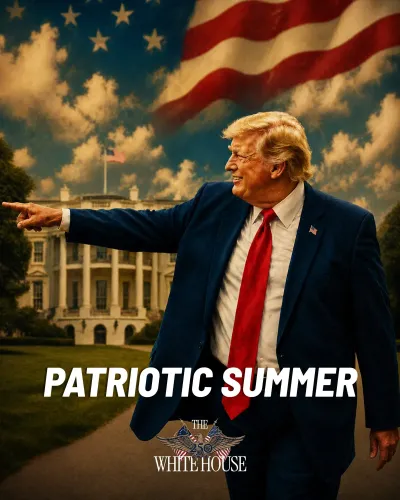
Meme-adjacent post is a deliberate choice to embed the federal government's voice into popular sports culture at a moment of genuine national spectacle. By framing the World Cup through a 'POV' lens, the administration signals cultural fluency while reinforcing the US's identity as a global event host. This fits a broader pattern of using major sporting moments as soft-power vehicles — projecting unity and openness to an international audience. For Indian observers, it is also a reminder of how deeply the diaspora in the US is woven into the World Cup's local colour.
NationPress
24 Sept 2026
Frequently Asked Questions
Where is the 2026 FIFA World Cup being held?
The 2026 FIFA World Cup is jointly hosted by the United States , Canada , and Mexico , with the majority of matches taking place across multiple cities in the United States .
Why did the White House post about the FIFA World Cup?
The White House posted a video on June 26, 2026 to celebrate the unique atmosphere of the 2026 World Cup being hosted in America, using the popular social-media 'POV' format to connect with fans.
Has the United States hosted the FIFA World Cup before?
Yes, the United States previously hosted the FIFA World Cup in 1994 , making 2026 the second time the country has hosted the tournament.
When were the 2026 World Cup hosting rights awarded?
The FIFA Congress awarded hosting rights for the 2026 World Cup to the joint United States-Canada-Mexico bid in 2018 .
What is the economic impact of the 2026 World Cup on the US?
The 2026 FIFA World Cup is expected to generate significant economic activity in the United States , particularly for the tourism and hospitality sectors across host cities.