FIFA World Cup 2026 ref cams explained: What referees' headgear actually does
Synopsis
At the 2026 FIFA World Cup, every referee is wired with a tiny HD camera that puts fans inside the official's sightline for the first time. Combined with an upgraded offside system that now alerts referees directly — bypassing the VAR room — Mexico 2026 is quietly the most technologically transformed World Cup in the tournament's history.
Key Takeaways
FIFA has deployed referee body cameras — known as ref cams — across all 104 matches of the 2026 World Cup .
The ref cam, earpiece, and microphone form a three-part system keeping referees connected to linesmen, the fourth official, and the VAR team.
The technology was first trialled at the FIFA Club World Cup 2025 and rolled out to domestic leagues during the 2025-26 season .
Lenovo developed stabilisation software that reduces motion blur, delivering sharper first-person footage for global broadcasts.
Next-generation Semi-Automated Offside Technology (SAOT) now sends clear offside calls directly to on-pitch officials, bypassing the VAR room — a change from Qatar 2022 .
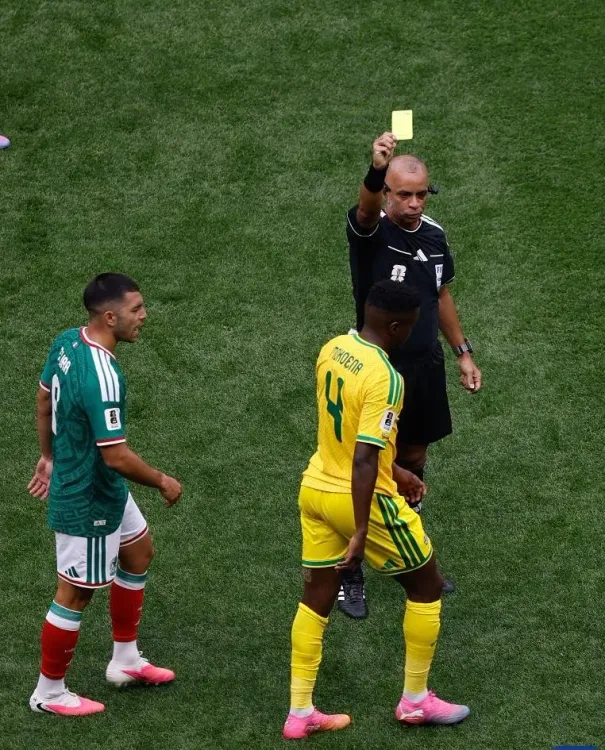
The 2026 FIFA World Cup kicked off in Mexico City on 12 June with a spectacular opening ceremony and a memorable victory for co-hosts Mexico over South Africa. But as the action unfolded at Mexico City Stadium, sharp-eyed viewers around the world found themselves fixated on something beyond the goals — the unusual futuristic headgear worn by match officials, including Brazilian referee Wilton Sampaio.
What Is the Ref Cam?
The device, formally known as a referee camera or ref cam, is a compact, high-definition stabilised camera mounted directly beside the referee's ear. It captures match action strictly from the official's point of view, giving broadcasters — and by extension, global audiences — an unprecedented first-person view of every tackle, goal-mouth scramble, and contentious decision.
Each match official at the tournament is equipped with three integrated pieces of audio-visual gear. The microphone keeps the central referee in constant communication with linesmen, the fourth official, and the Video Assistant Referee (VAR) team; it also enables live VAR explanations to be broadcast directly to fans inside the stadium. The earpiece channels real-time alerts and tactical audio from the wider officiating crew, allowing the referee to respond instantly to fast-moving flashpoints. The ref cam itself rounds out the system, delivering footage that can be shown live or woven into replays during a broadcast.
FIFA's Rollout Across All 104 Matches
FIFA has deployed referee body cameras for all 104 games of the 2026 tournament — a full-scale commitment rather than a selective trial. The technology was first introduced at the FIFA Club World Cup 2025, where the pilot exceeded expectations, and it subsequently appeared in various domestic leagues across the world during the 2025-26 season.
Since that initial rollout, Lenovo has developed stabilisation technology that significantly reduces motion blur caused by rapid movement. The result is a sharper, higher-quality first-person perspective that enhances transparency and viewer understanding of officiating decisions in real time.
Next-Generation Offside Technology Also Debuts
The ref cam is not the only technological leap at this tournament. The 2026 World Cup also marks the debut of an advanced, next-generation Semi-Automated Offside Technology (SAOT), designed to deliver faster offside rulings and reduce injury risk in the moments between an offside occurring and a flag being raised.
Notably, this iteration differs from the SAOT deployed at the FIFA World Cup 2022. At that tournament, offside data was routed exclusively to the VAR team. Under the upgraded system, clear offside calls are now transmitted directly to the match officials on the pitch, cutting the decision loop and minimising disruption to play.
What It Means for the Game
Together, the ref cam and next-generation SAOT represent a significant shift in how football officiating is communicated to fans and executed on the field. Broadcasters can now contextualise decisions with the referee's own sightline, while players benefit from faster, more accurate offside rulings. With 48 nations competing across the United States, Mexico, and Canada, the technology will be stress-tested at the highest level of the sport across every group stage and knockout fixture.
Point of View
But its deeper value may be accountability. When fans can see exactly what a referee saw, post-match controversy becomes harder to sustain — and harder to manufacture. The more significant shift, however, is in the upgraded SAOT: routing offside calls directly to on-pitch officials rather than through the VAR room shortens the decision chain and reduces the stop-start rhythm that has frustrated players and viewers alike. FIFA is not just adding cameras; it is quietly redesigning the information architecture of football officiating.
NationPress
29 Jul 2026
Frequently Asked Questions
What is a ref cam at the FIFA World Cup 2026?
A ref cam is a small, high-definition stabilised camera mounted on the referee's headset, capturing the match from the official's own point of view. FIFA has deployed it across all 104 games of the 2026 tournament so broadcasters can show fans exactly what the referee saw before making a decision.
When was referee body camera technology first used in football?
Referee body cameras were first used at the FIFA Club World Cup 2025, where the trial exceeded expectations. The technology then appeared in various domestic leagues during the 2025-26 season before being rolled out fully at the 2026 World Cup.
What company developed the ref cam technology for the 2026 World Cup?
Lenovo developed stabilisation technology that reduces motion blur from rapid referee movement, producing higher-quality first-person footage. The improved stabilisation was a direct response to lessons learned during the Club World Cup 2025 trial.
How is the 2026 offside technology different from Qatar 2022?
At the 2022 World Cup, Semi-Automated Offside Technology sent data exclusively to the VAR team. The upgraded 2026 system transmits clear offside calls directly to the match officials on the pitch, enabling faster decisions and reducing the injury risk in the window between an offside occurring and the flag being raised.
Who was the referee seen wearing the ref cam headgear at the opening match?
Brazilian referee Wilton Sampaio wore the ref cam system during the opening match of the 2026 World Cup, which saw co-hosts Mexico defeat South Africa at Mexico City Stadium on 12 June.