WTC 12-team expansion 'nearing reality', says Cricket Australia CEO
Synopsis
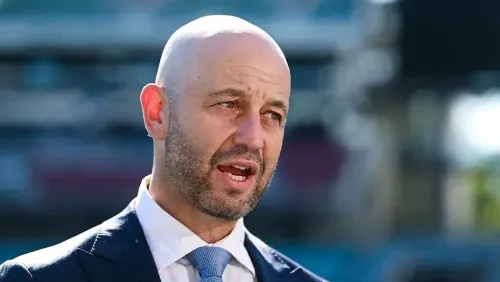
Cricket Australia CEO Todd Greenberg has signalled that a 12-team WTC — including one-off Tests for nations like Zimbabwe, Ireland and Afghanistan — could become official at the ICC's Bali meetings in November. The catch: he openly warned that the same financial logic that makes expansion attractive could eventually price smaller boards out of red-ball cricket altogether.
Key Takeaways
Cricket Australia CEO Todd Greenberg says a 12-team WTC is 'nearing reality', potentially from the 2029–31 cycle .
A final decision is expected at ICC meetings in Bali on 13–15 November .
The expanded format could include one-off Tests for full members Zimbabwe , Ireland , and Afghanistan .
Greenberg warned smaller boards may need to make 'hard decisions' if ICC revenues or bilateral FTP earnings fall short.
Cricket Australia wants a five-Test series against South Africa but faces scheduling conflicts in overlapping domestic summer windows.
Greenberg also called for a flexible ODI calendar — fewer games in non-World Cup years, rising volumes closer to tournaments.
Cricket Australia CEO Todd Greenberg has declared that expanding the World Test Championship (WTC) to a 12-team model is 'nearing reality', while warning that mounting financial pressures will compel smaller cricket boards to make 'hard decisions' about their continued participation in red-ball cricket. Greenberg made the remarks in Durban ahead of Australia's opening Test against South Africa beginning on Friday, 10 October 2026.
The 12-Team Framework
According to reports, the International Cricket Council (ICC) and its member boards are in the final stages of shaping the next Future Tours Programme (FTP), with the expanded WTC structure under active discussion. The proposed 12-team framework — expected to take effect from the 2029–31 WTC cycle — could include one-off Tests to accommodate full members such as Zimbabwe, Ireland, and Afghanistan.
A final decision is anticipated at the ICC meetings in Bali scheduled for 13–15 November. 'I think that's what will happen for the next two years. I think for the next iteration (of the WTC), I can understand why it is that number because they want to give every Test nation the opportunity,' Greenberg told reporters.
Financial Pressures on Smaller Boards
Greenberg was candid about the economic strains facing boards outside the top tier of Test cricket. 'Ultimately, countries are going to have to make hard decisions themselves because if revenues don't continue to come in from the ICC at the levels that we've enjoyed, or they can't generate their own FTP arrangements, then ultimately any business... you can't continue to distribute more than you earn every year. That's where global cricket finds itself in some parts,' he said.
He clarified that the cost burden is not simply about staging matches: 'When I say it's expensive, don't take that comment as being (about) putting on Test matches. It's the ability to invest in your system to create a structure for red-ball cricketers. You can't just magically find 11 players to play Test cricket.' Greenberg went as far as envisioning a scenario where some member nations 'don't play Test cricket' or shift to predominantly away schedules to keep the format viable.
Australia's Wish for Five-Test Series Against South Africa
Cricket Australia has expressed a strong desire to extend its bilateral series against South Africa to a five-Test format, but scheduling conflicts during peak domestic summer windows on both sides remain a significant obstacle. 'We would love to host South Africa for a five-Test series. (But) there's a real challenge in that between our organisations because they play in a similar period of the year,' Greenberg acknowledged. He nonetheless praised South Africa as 'a really strong Test-playing country' and reaffirmed CA's commitment to keeping them in the Test fold.
The Future of ODI Cricket
Greenberg also addressed the structure of ODI cricket amid global conversations around introducing multilateral events to inject greater context into bilateral fixtures. He called for a flexible approach across four-year cycles — potentially featuring fewer ODIs in non-World Cup years, with volumes rising closer to tournament windows. 'There might be a cycle of four years where we play slightly fewer ODIs, more coming into a World Cup cycle and maybe less in the outer years,' he said. He stressed that both high-performance teams and the ICC consider ODI cricket commercially and developmentally indispensable: 'If you anchor those two principles, then you've just got to find ways to make those games meaningful.'
What Comes Next
The ICC's Bali meetings on 13–15 November are widely expected to be the decisive forum for the WTC expansion decision. The outcome will set the structural template for global Test cricket through the 2031 horizon, with implications for scheduling, broadcast rights, and the financial viability of emerging Test nations. How the ICC balances commercial imperatives with the ideal of universal Test participation will be the defining question of those discussions.
Point of View
Yet the economic logic he outlines points in the opposite direction. Expanding to 12 teams while simultaneously warning that smaller boards may not afford red-ball cricket is not a coherent policy — it is a contradiction waiting to surface. The Bali meetings will tell us whether the ICC has a credible financial support mechanism for emerging Test nations or whether the 12-team model will be inclusion on paper and attrition in practice. The reciprocal scheduling model Greenberg critiques has been the bedrock of Test cricket's bilateral ecosystem; dismantling it without an alternative commercial framework could leave the format's growth story hollowed out.
NationPress
7 Oct 2026
Frequently Asked Questions
What is the proposed 12-team WTC expansion?
The proposal would expand the World Test Championship from its current format to include 12 teams, potentially from the 2029–31 cycle. It could incorporate one-off Tests to give full ICC members like Zimbabwe, Ireland, and Afghanistan a place in the championship structure.
When will the ICC decide on the 12-team WTC?
A final decision is expected at ICC meetings scheduled for 13–15 November in Bali. The outcome will also shape the next Future Tours Programme alongside the WTC structure.
Why did Todd Greenberg warn about 'hard decisions' for smaller boards?
Greenberg cautioned that boards which cannot generate sufficient ICC distributions or their own bilateral FTP revenues risk spending more than they earn. He suggested some nations may eventually stop playing Test cricket or shift to predominantly away schedules to keep the format alive in their countries.
Why can't Australia host South Africa for a five-Test series?
Both countries play their domestic cricket summers in the same period — roughly December to February — making it difficult to allocate a five-match bilateral window without one side sacrificing its peak home season. Greenberg acknowledged this scheduling conflict as a major logistical hurdle despite CA's desire for longer series.
What changes did Greenberg suggest for ODI cricket?
Greenberg proposed a flexible four-year ODI calendar, with fewer matches in non-World Cup years and a ramp-up of fixtures closer to World Cup cycles. He stressed that ODI cricket remains commercially and developmentally vital and should not be sidelined, but that match volume needs to better reflect the tournament calendar.