Zambia's yogasana rise: from stitched sacks to World Championship medals
Synopsis
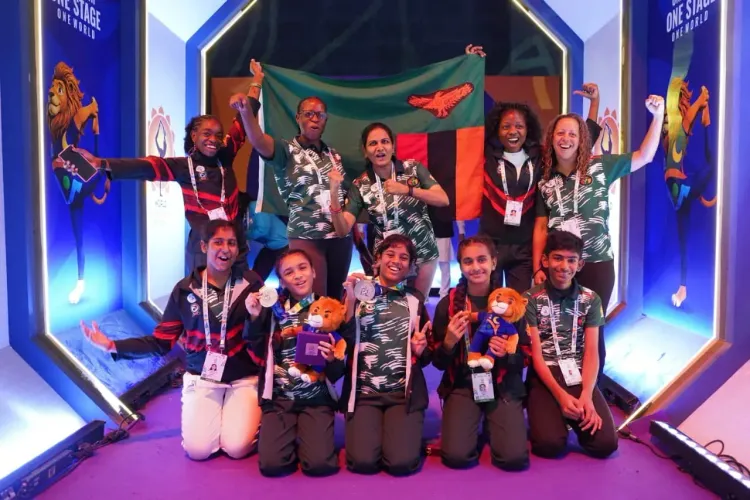
Zambia arrived at the inaugural World Yogasana Championship in Ahmedabad with a story no other team could match — yoga taught on stitched sacks, backed by Indian-origin sponsors, and built into a national federation in under a decade. Six medals later, the Copperbelt's unlikely yoga movement has become one of the most compelling origin stories in the sport's young competitive history.
Key Takeaways
Zambia won six medals at the inaugural World Yogasana Championship in Ahmedabad , with Niya Vijayvarjiya claiming three silver medals .
Vice-principal Chitula Albert launched yoga in Zambia's Copperbelt region using stitched sacks as mats, with only five students at the outset.
An Indian-origin woman donated yoga mats in 2020 , transforming the programme; six contingent members in Ahmedabad were sponsored by Indian-origin families.
Zambia's yoga body gained official recognition in 2022 and has held national championships annually since 2024 .
Athletes from Rwanda, Niger, Chad, Sierra Leone, Lesotho, Uganda , and Tanzania also competed, many introduced to yogasana while studying at Indian universities.
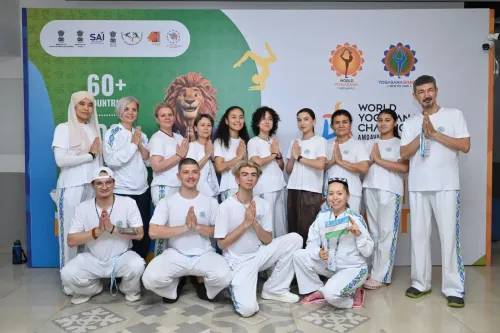
Zambia's Chitula Albert began teaching yoga in the country's Copperbelt region with no mats — stitching old sacks together so a handful of children could practise. Decades later, that same determination carried an 18-member Zambian contingent to the inaugural World Yogasana Championship in Ahmedabad, where the team collected six medals. The journey, powered in large part by Indian-origin communities across Africa, is now inspiring similar movements in Rwanda, Niger, Chad, Sierra Leone, Lesotho, Uganda, and Tanzania.
How It All Began
Albert's first encounter with yoga dates to the late 1980s, when an Indian resident living near his school in Zambia introduced him to basic practices. The lessons stayed with him for years. After rising to vice-principal, he saw yoga as a tool for improving children's health and discipline, and began weaving it into physical education sessions.
The early response was tentative — only five students attended the first sessions. Resistance ran deeper than numbers: because of yoga's Indian roots, many parents and community members associated it with religion rather than sport, making it difficult to build trust. Albert persisted, eventually turning to social media and regular live-streamed sessions to reach students across Zambia.
Indian-Origin Support Transforms the Movement
A pivotal moment came in 2020, when an Indian-origin woman sponsored yoga mats for schoolchildren — replacing the improvised sacks that had served as equipment for years. Indian-origin residents in Zambia continued to play a central role, providing financial backing and organisational support that helped the sport build a sustainable structure.
Six members of the Ahmedabad-bound contingent were sponsored by Indian-origin families living in Zambia. Their support, according to Albert, was instrumental in making international competition possible for athletes drawn from different regions and communities, including participants from the Tonga tribe in southern Zambia.
Institutional Recognition and National Championships
The grassroots momentum eventually drew official attention. Zambia's yoga body secured recognition from national sports authorities in 2022. From 2024 onwards, the country began holding regular national Yogasana championships. Officials from the country's sports ministry attended the 2025 national championships, reinforcing institutional confidence in the federation's work and strengthening its standing with government bodies.
Six Medals at the Inaugural World Championship
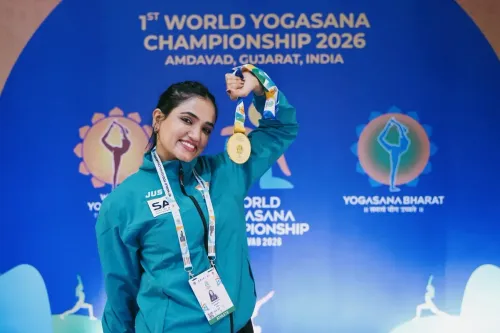
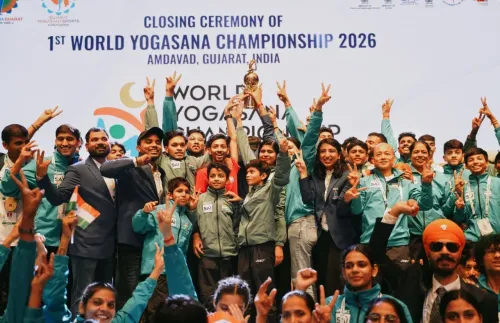
At the inaugural World Yogasana Championship held at EKA Arena, Ahmedabad, Zambia's contingent delivered results that would have seemed improbable just a few years earlier. The team won six medals on Sunday, with Niya Vijayvarjiya emerging as a standout performer, claiming three silver medals.
The championship also spotlighted yoga's expanding footprint across Africa, with athletes from multiple nations competing — many of them students currently enrolled at Indian universities who were first introduced to yogasana during their time in India.
Africa's Wider Yogasana Moment
Mahamadou Sanoussi Issia, Niger's sole representative at the championship, said yoga is steadily gaining ground in his country. According to him, Yoga Day celebrations in Niger begin on 7 June and build toward the International Day of Yoga on 21 June, with competitions marking the occasion. For many African participants, the World Championship was their first international exposure to competitive yogasana. For others, it was a chance to learn from global practitioners and carry those experiences home.
For Albert — who reportedly split his attention between managing the Zambian contingent in Ahmedabad and monitoring his students back home via social media — the scene at the World Championship was, by his own account, almost unimaginable just a few years ago.
Point of View
One donor in 2020, a handful of sponsoring families in 2025. That informal chain produced a national federation, annual championships, and international medals faster than most state-backed programmes manage. What it also reveals is how the World Yogasana Championship's decision to include emerging nations, not just established yoga markets, is shaping a genuinely diverse competitive field. The risk is that without sustained institutional investment from both India and host governments, these movements remain dependent on diaspora goodwill rather than durable public infrastructure.
NationPress
25 Sept 2026
Frequently Asked Questions
What is the World Yogasana Championship and where was it held?
The inaugural World Yogasana Championship was held at EKA Arena in Ahmedabad, India, bringing together competitive yogasana athletes from across the globe. It is the first world-level championship dedicated to yogasana as a competitive sport.
How many medals did Zambia win at the inaugural World Yogasana Championship?
Zambia won six medals at the championship. Niya Vijayvarjiya was the standout performer, winning three silver medals as part of an 18-member contingent.
Who is Chitula Albert and why does he matter to Zambia's yoga story?
Chitula Albert is a vice-principal from Zambia's Copperbelt region who introduced yoga in his school using stitched sacks as mats after learning basic practices from an Indian resident in the late 1980s. His decades-long effort built the foundation for Zambia's national yogasana movement.
How did Indian-origin communities contribute to yoga's growth in Zambia?
Indian-origin residents provided yoga mats in 2020, replacing improvised equipment, and sponsored six members of the Ahmedabad contingent. Their ongoing financial and organisational support helped Zambia's yoga body gain official recognition and establish regular national championships.
Which other African nations competed at the World Yogasana Championship?
Athletes from Rwanda, Niger, Chad, Sierra Leone, Lesotho, Uganda, and Tanzania participated. Many of these competitors were introduced to yogasana while studying at Indian universities and represented their countries at an international level for the first time.