133 Eco Task Force plants 4,000 saplings at Chandigarh's Daddu Majra dump
Synopsis
A historically polluted dumping ground in Chandigarh became the site of a large-scale green push on 10 July, as the 133 Eco Task Force planted nearly 4,000 saplings in a single day. Punjab Governor Gulab Chand Kataria, who inaugurated the drive, made a pointed call: judge plantation drives by survival rates, not headcounts.
Key Takeaways
The 133 Eco Task Force planted nearly 4,000 saplings at four locations in Chandigarh on 10 July .
The primary site was the Daddu Majra dumping ground , historically burdened by waste management challenges.
Punjab Governor Gulab Chand Kataria inaugurated the drive under the national Van Mahotsav theme 'Healing the Earth through Greener Initiatives'.
Government school students and multiple administration departments joined defence personnel in the plantation effort.
The Chandigarh Forest Department and 133 Eco Task Force have put monitoring plans in place to maximise sapling survival through the monsoon season.
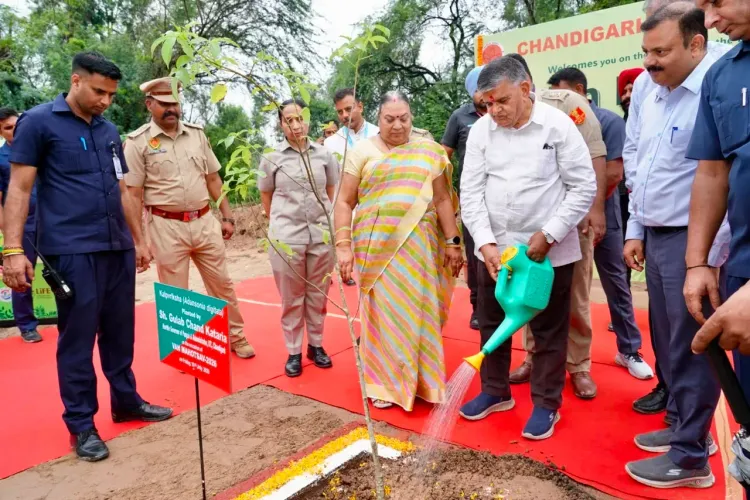
The 133 Eco Task Force, operating under the TA Group Headquarters Western Command, on Friday, 10 July participated in a mega sapling plantation drive at the Daddu Majra dumping ground in Chandigarh, planting nearly 4,000 saplings across four locations in a single day. The drive, organised as part of the Van Mahotsav celebration in collaboration with the Chandigarh administration, was inaugurated by Punjab Governor Gulab Chand Kataria.
Key Developments
The Daddu Majra dumping ground — long associated with the city's waste management challenges — served as the focal point of the ecological reclamation effort. Beyond the dumping ground, sapling plantation was carried out at three additional sites, including the Chandimandir military station. The event drew participation from multiple administration departments and students from several government schools, who planted saplings alongside defence personnel.
The Van Mahotsav Theme and Its Significance
This year's national Van Mahotsav theme, 'Healing the Earth through Greener Initiatives', guided the campaign's focus on converting ecological blind spots into urban green zones. The transformation of a historically degraded dumping site into a plantation zone was highlighted as a model of scientific land reclamation. Notably, this is among the larger single-day military-led plantation efforts in the Western Command region in recent years.
What Governor Kataria Said
Punjab Governor Gulab Chand Kataria commended the 133 Eco Task Force for its disciplined approach, stating that Territorial Army involvement brings the structural rigour necessary for long-term sapling survival. 'Van Mahotsav is not just a one-day photo opportunity, it is a lifelong commitment to nature,' the Governor said during the inauguration. He stressed that the success of plantation drives must be measured by the survival rate of trees, not merely the number planted, and called for scientific plantation methods, regular monitoring, and sustained maintenance.
Monitoring Plans and What Happens Next
With the monsoon now setting in across the region, the Chandigarh Forest Department and the 133 Eco Task Force have put structural monitoring plans in place to ensure a high survival rate for the 4,000 newly planted saplings. Officials indicated that long-term nurturing protocols — rather than a one-time planting exercise — will define the initiative's success. The drive underscores a broader push to integrate military discipline into urban environmental restoration efforts across Indian cities.
Point of View
Measurable urban ecology work Indian cities need more of. But Governor Kataria's own caveat is the real headline: survival rate, not sapling count, is the metric that matters. India has a long history of plantation drives that generate impressive numbers on day one and poor canopy cover a year later. Whether the 133 Eco Task Force's monitoring framework actually delivers a high survival rate will determine if this is a genuine ecological intervention or another well-photographed tree-planting exercise.
NationPress
9 Oct 2026
Frequently Asked Questions
What is the 133 Eco Task Force?
The 133 Eco Task Force is a unit of the Territorial Army operating under the TA Group Headquarters Western Command. It is tasked with environmental restoration and ecological initiatives, including large-scale plantation drives.
How many saplings were planted at the Chandigarh Van Mahotsav drive?
Nearly 4,000 saplings were planted in a single day across four locations, including the Daddu Majra dumping ground and the Chandimandir military station, on 10 July.
Who inaugurated the Van Mahotsav plantation drive in Chandigarh?
Punjab Governor Gulab Chand Kataria inaugurated the sapling plantation drive, commending the Eco Task Force and calling for scientific plantation and long-term monitoring over one-time photo opportunities.
Why was the Daddu Majra dumping ground chosen for the plantation drive?
Daddu Majra has historically been associated with waste management challenges in Chandigarh. Officials described its transformation into a green plantation zone as an example of reclaiming degraded land for ecological benefit.
What steps are being taken to ensure the saplings survive?
The Chandigarh Forest Department and the 133 Eco Task Force have put structural monitoring plans in place, timed to coincide with the monsoon season, to maximise the survival rate of the 4,000 newly planted saplings.