22 US states oppose $100,000 H-1B fee, call it unlawful tax
Synopsis
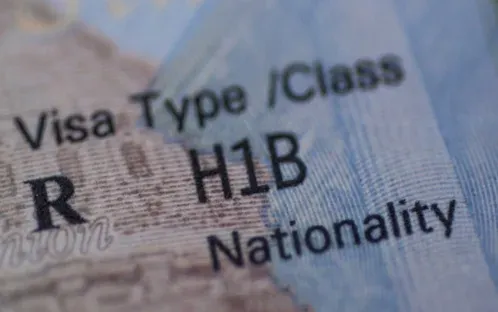
Twenty-two US attorneys general have formally moved to block a Trump administration proposal that would slap a $103,265 fee on H-1B visa petitions — calling it an unconstitutional tax imposed without Congress. The pushback spans coastal and swing states and invokes a prior court ruling that struck down a similar attempt, signalling a legal battle that could define H-1B access for Indian professionals and US employers alike.
Key Takeaways
A coalition of 22 US attorneys general has filed a formal comment letter demanding USCIS withdraw its proposed $103,265 H-1B visa fee .
The proposed rule was published on 25 August with a 30-day comment period criticised as unusually short.
The coalition argues the charge amounts to an unlawful tax imposed without Congressional authorisation .
States warn the fee would worsen shortages in healthcare , education , and other essential services.
A previous administration attempt to impose a similar charge was struck down by a court , the coalition noted.
Virginia AG Jay Jones led the charge, vowing to use every legal tool to block the proposal.
A coalition of 22 US attorneys general has formally opposed the Trump administration's proposal to impose a fee exceeding $100,000 on certain H-1B visa petitions, arguing the measure is unlawful and would deepen shortages of teachers, doctors, and nurses across American states. The challenge carries significant consequences for Indian professionals and US companies that depend heavily on the H-1B programme to secure highly skilled workers.
The Proposed Rule and What It Would Cost
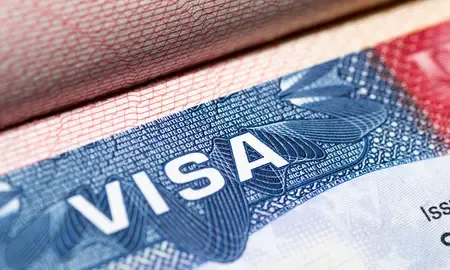
US Citizenship and Immigration Services (USCIS) issued its notice of proposed rulemaking on 25 August, seeking to impose a charge of $103,265 on H-1B petitions filed by employers that fall outside the annual visa cap exemption. The 30-day public comment window was itself criticised by the coalition as unusually short and insufficiently justified for a rule of this magnitude.
The attorneys general characterised the proposed charge as a tax — and argued that the executive branch cannot levy such a tax without explicit authorisation from Congress. They further contended the rule would exceed USCIS's authority under the Immigration and Nationality Act and violate the Administrative Procedure Act.
Who Is Leading the Legal Challenge
Virginia Attorney General Jay Jones was among those who joined the coalition in filing a formal comment letter demanding that USCIS withdraw the proposed rule. Jones accused the administration of overreaching its executive authority with little regard for the communities that rely on H-1B professionals.
'Individuals in this class are more than just names on papers — they are our teachers, doctors, nurses, caretakers, and more. They are our neighbors and friends and family,' Jones said. He added that these individuals 'have filled out every form and met every government demand to come here and be part of the American Dream.'
Jones was pointed in his criticism of the administration: 'Donald Trump is trying to close the door by pushing the boundaries of executive power, indifferent to the burden this proposed rule will put on Virginians,' he said, vowing to use 'every legal tool' to block the proposal.
Which States Have Joined the Coalition
Beyond Virginia, the coalition includes the attorneys general of California, Massachusetts, Arizona, Colorado, Connecticut, Delaware, Hawaii, Illinois, Maine, Maryland, Michigan, and Minnesota. Also joining are Nevada, New Jersey, New Mexico, New York, North Carolina, Oregon, Washington, Wisconsin, and the District of Columbia — spanning both Democratic-leaning coastal states and several battleground territories.
Why the H-1B Fee Would Hit States Hard
The coalition warned that the proposed charge would make it significantly harder for state and local institutions to recruit skilled foreign professionals, citing acute shortages in primary and secondary education, healthcare, and other essential public services. The attorneys general also said USCIS had failed to justify the burden the charge would impose on states and had not adequately considered less damaging alternatives.
Notably, the coalition flagged that a previous administration attempt to impose a similar charge had already been struck down by a court — arguing the new proposal repeats the same constitutional flaw of treating an administrative fee as a de facto tax.
What the H-1B Programme Does
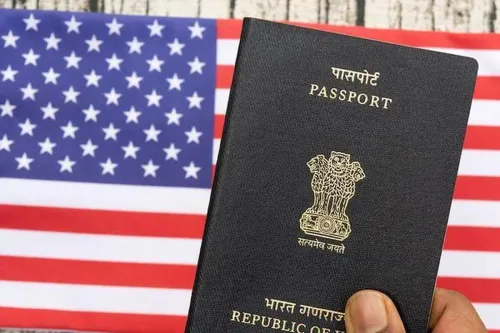
The H-1B programme allows US employers to hire foreign nationals in specialty occupations that typically require specialised knowledge and at least a bachelor's degree. While technology companies are among its largest users, hospitals, schools, universities, and research institutions also rely on H-1B workers — making the proposed fee a broad-based concern well beyond the tech sector. Indian nationals have historically been the largest beneficiaries of the programme.
With the comment period now closed, the next step lies with USCIS — and potentially the courts — as the coalition has signalled it will pursue all available legal avenues to block the rule from taking effect.
Point of View
265 H-1B fee proposal is being framed by the Trump administration as a revenue measure, but the 22-state coalition has exposed its deeper structural problem: it is functionally a tax dressed as a regulatory fee, and courts have struck down that manoeuvre before. What mainstream coverage underplays is the breadth of the coalition — this is not just tech-sector lobbying, but state governments warning of real public-service failures in schools and hospitals. For Indian professionals, who have historically been the largest H-1B beneficiaries, the stakes extend well beyond Silicon Valley. If upheld, the fee would effectively price out non-profit institutions, state universities, and public health systems — the very employers least able to absorb a six-figure surcharge per hire.
NationPress
26 Sept 2026
Frequently Asked Questions
What is the proposed H-1B fee that 22 US states are opposing?
The Trump administration's USCIS has proposed a charge of $103,265 on H-1B visa petitions filed by employers not exempt from the annual cap. A coalition of 22 attorneys general filed a formal comment letter on 26 September opposing the rule, calling it an unlawful tax that requires Congressional approval.
Why do the attorneys general call the H-1B charge an unlawful tax?
The coalition argues that the executive branch cannot impose such a large financial charge without authorisation from Congress, meaning it constitutes a tax rather than a regulatory fee. They also contend the rule exceeds USCIS's authority under the Immigration and Nationality Act and violates the Administrative Procedure Act.
Which US states have joined the coalition against the H-1B fee?
The 22-member coalition includes California, Virginia, Massachusetts, Arizona, Colorado, Connecticut, Delaware, Hawaii, Illinois, Maine, Maryland, Michigan, Minnesota, Nevada, New Jersey, New Mexico, New York, North Carolina, Oregon, Washington, Wisconsin, and the District of Columbia.
How would the $103,265 H-1B fee affect Indian professionals?
Indian nationals are historically the largest beneficiaries of the H-1B programme. A six-figure fee per petition would make it significantly harder for employers — especially public institutions, hospitals, and schools — to sponsor Indian professionals, potentially cutting off a primary pathway to US employment.
Has a similar H-1B fee been challenged in court before?
Yes. The coalition noted that a previous administration attempt to impose a similar charge was struck down by a court on comparable grounds. The attorneys general argue the new proposal repeats the same constitutional flaw of imposing a tax through administrative action rather than through Congress.