Market Crash: Top 7 Indian Firms Bleed Rs 2 Lakh Crore in One Week
Synopsis
Seven of India's top-10 companies lost over Rs 2.05 lakh crore in market cap in a single week, with TCS shedding Rs 66,699 crore and Reliance losing Rs 50,670 crore. The Sensex crashed 1,829 points as West Asia tensions and IT sector weakness triggered a broad market selloff — snapping two weeks of gains.
Key Takeaways
Seven of India's top-10 companies lost a combined Rs 2,05,343.06 crore in market capitalisation during the week ending April 26, 2025 .
TCS recorded the sharpest single-week decline, losing Rs 66,699.44 crore to close at a market cap of Rs 8,67,364.12 crore .
Reliance Industries shed Rs 50,670.34 crore but retained its rank as India's most valued company at Rs 17,96,647.50 crore .
The BSE Sensex fell 1,829.33 points (2.33%) and the Nifty 50 dropped 455.6 points (1.87%) , snapping two consecutive weeks of gains.
Hindustan Unilever and State Bank of India bucked the trend, gaining Rs 20,652.91 crore and Rs 19,522.76 crore respectively.
Rising crude oil prices linked to the West Asia geopolitical crisis and weak IT sector earnings guidance were identified as the primary drivers of the market decline.
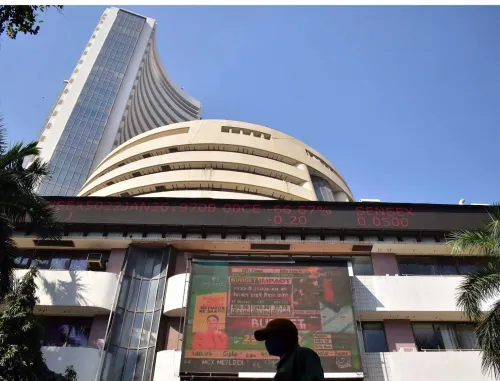
India's stock market witnessed a brutal week as the combined market capitalisation of seven of the country's top-10 most valued companies collapsed by over Rs 2,05,343 crore, with Tata Consultancy Services (TCS) and Reliance Industries bearing the heaviest losses. The selloff, recorded during the week ending April 26, 2025, came as Dalal Street buckled under mounting geopolitical pressure and disappointing commentary from India's IT sector giants.
Sensex and Nifty Tumble as Bearish Wave Sweeps Dalal Street
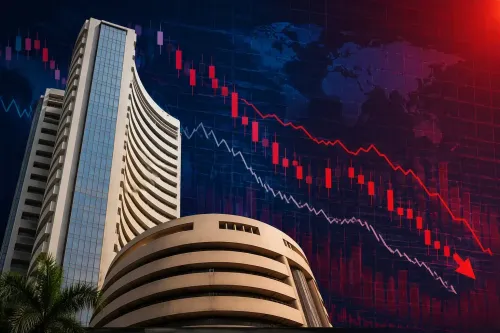
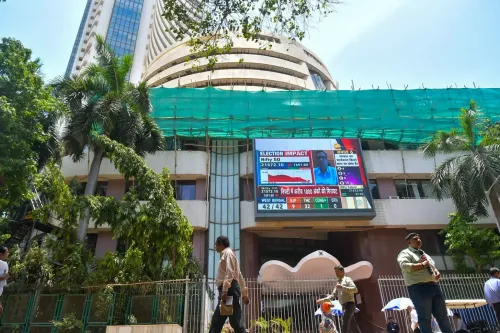
The broader market decline was sharp and swift. The BSE Sensex plunged 1,829.33 points, or 2.33 per cent, while the NSE Nifty 50 dropped 455.6 points, or 1.87 per cent, snapping two consecutive weeks of gains.
Market analysts attributed the reversal to a toxic mix of global geopolitical uncertainty, particularly the escalating West Asia crisis, and weak forward guidance from Indian IT companies. Elevated crude oil prices, driven by fears of supply disruptions, added further strain on investor sentiment.
This downturn is part of a broader pattern — Indian equities have repeatedly been vulnerable to global risk-off episodes, especially when domestic earnings disappoint simultaneously. The IT sector, which accounts for a significant share of the Nifty 50's weighting, has been under sustained pressure amid global tech spending slowdowns and client budget freezes in the US and Europe.
TCS and Reliance Lead the Losers — Detailed Breakdown
Tata Consultancy Services (TCS) suffered the steepest erosion, with its market valuation falling by Rs 66,699.44 crore to Rs 8,67,364.12 crore. The decline followed muted earnings commentary and concerns about deal pipeline visibility in a slowing global tech environment.
Reliance Industries, India's most valued company, shed Rs 50,670.34 crore, bringing its market cap down to Rs 17,96,647.50 crore. Despite the weekly loss, Reliance retained its top position in India's market cap rankings.
HDFC Bank saw its valuation shrink by Rs 23,090.05 crore to Rs 12,08,225.48 crore, while Life Insurance Corporation of India (LIC) lost Rs 19,670.75 crore, closing at Rs 5,13,020.56 crore.
Bharti Airtel declined by Rs 19,406.59 crore to Rs 11,05,718.62 crore. ICICI Bank dropped Rs 14,663.27 crore to Rs 9,50,345.40 crore, and infrastructure conglomerate Larsen & Toubro (L&T) lost Rs 11,142.62 crore, ending at Rs 5,52,171.88 crore.
Three Companies Buck the Trend With Gains
Not every blue-chip ended the week in negative territory. Hindustan Unilever Limited (HUL) emerged as a standout gainer, adding Rs 20,652.91 crore to reach a market valuation of Rs 5,47,219.80 crore. The FMCG giant benefited from defensive buying as investors rotated away from growth-sensitive sectors.
State Bank of India (SBI) gained Rs 19,522.76 crore, pushing its market cap to Rs 10,16,752.53 crore, while Bajaj Finance added Rs 8,253.64 crore to close at Rs 5,73,690.81 crore.
The gains in SBI and HUL reflect a classic flight-to-safety pattern — investors favouring domestic consumption and public-sector banking over globally exposed IT and energy stocks during periods of geopolitical stress.
Market Cap Rankings: Who Stands Where
Despite the carnage, the hierarchy among India's most valued firms remained largely intact. Reliance Industries continues to lead as India's most valuable company, followed by HDFC Bank, Bharti Airtel, State Bank of India, ICICI Bank, TCS, Bajaj Finance, Larsen & Toubro, Hindustan Unilever, and LIC.
Notably, TCS slipping behind ICICI Bank in the rankings is a significant marker — it underscores how the IT sector's valuation premium is being challenged as growth concerns mount. Just a year ago, TCS was firmly among the top three most valued Indian companies.
What This Means for Investors and the Broader Economy
The Rs 2 lakh crore single-week wipeout is a stark reminder of how swiftly global headwinds can erode domestic wealth. For retail investors, who have flooded Indian markets via SIPs (Systematic Investment Plans) in record numbers over the past three years, such volatility tests long-term conviction.
The West Asia conflict remains the wildcard. Sustained high crude prices directly impact India's import bill, widen the current account deficit, and put pressure on the Indian rupee — a cascading effect that could dampen corporate earnings further in the coming quarters.
With the Q4 FY25 earnings season now underway, investors will closely watch results from banking, FMCG, and infrastructure sectors for signals of domestic economic resilience. Any further deterioration in global conditions or an escalation in the Middle East crisis could trigger another round of selling pressure on Indian equities in the weeks ahead.
Point of View
Particularly in IT and energy, remain disproportionately exposed to geopolitical volatility thousands of kilometres away. While retail investor participation via SIPs has surged to record highs, creating an illusion of market resilience, the structural dependency on global crude prices and Western tech spending remains unresolved. The real question policymakers must answer: how long can India's growth narrative sustain itself against a world that is increasingly fragmented and unpredictable?
NationPress
24 Sept 2026
Frequently Asked Questions
Which companies lost the most market cap in India last week?
TCS lost the most, with its market cap falling by Rs 66,699.44 crore, followed by Reliance Industries which shed Rs 50,670.34 crore. Together, seven top-10 companies lost over Rs 2,05,343 crore in combined market valuation during the week ending April 26, 2025.
Why did Indian stock markets fall this week?
Indian markets declined due to rising geopolitical tensions, particularly the West Asia crisis, which kept crude oil prices elevated. Weak earnings commentary from major IT companies also dampened investor sentiment, causing the Sensex to fall 1,829 points and the Nifty to drop 455 points.
Which companies gained market cap despite the market fall?
Hindustan Unilever gained Rs 20,652.91 crore, State Bank of India added Rs 19,522.76 crore, and Bajaj Finance rose by Rs 8,253.64 crore during the week. These gains reflected defensive buying by investors seeking stability amid broader market weakness.
What is Reliance Industries' current market capitalisation?
As of the week ending April 26, 2025, Reliance Industries' market capitalisation stands at Rs 17,96,647.50 crore after losing Rs 50,670.34 crore during the week. Reliance continues to hold its position as India's most valued company.
How does the West Asia crisis affect Indian stock markets?
The West Asia crisis raises fears of oil supply disruptions, pushing crude prices higher and increasing India's import costs since the country imports over 85% of its oil needs. This widens India's current account deficit, pressures the rupee, and raises inflation risks — all of which weigh on corporate earnings and investor confidence.