Can African Leaders Forge a Regional Solution to the Congo Conflict?
Synopsis
African leaders gathered in Entebbe to discuss the escalating crisis in the DRC, calling for regional solutions to lead peace efforts while international initiatives support. This summit highlights the urgency of collaboration among East African nations to stabilize the region and restore peace.
Key Takeaways
African leaders advocate for regional solutions to the DRC conflict.
East African Community (EAC) and Southern African Development Community (SADC) tasked with leading peace efforts.
Current peace frameworks deemed sufficient by Rwanda.
Implementation of existing agreements remains a significant challenge.
M23 rebel group is taking steps towards withdrawal as part of peace negotiations.
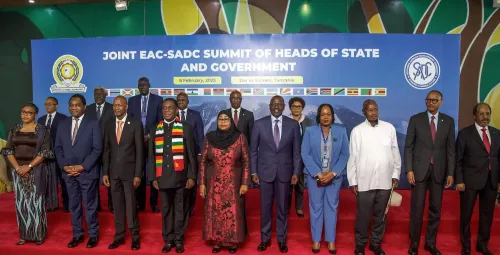
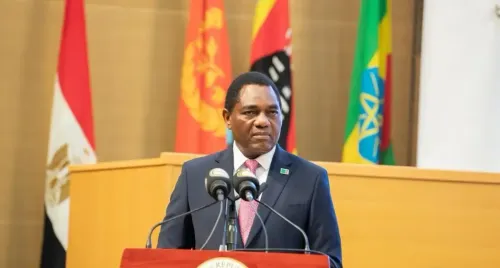
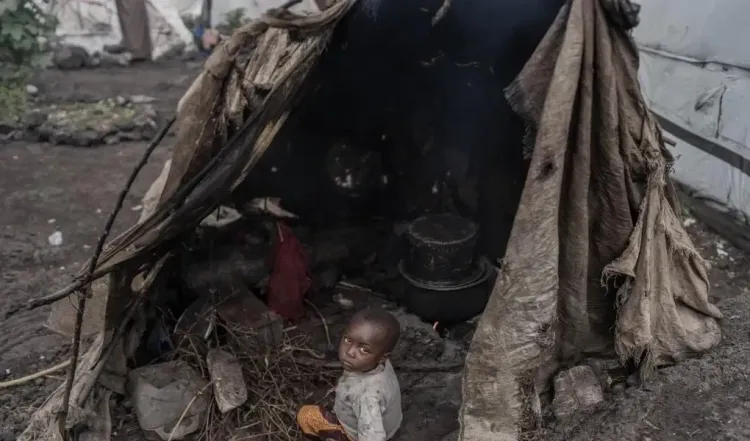
Entebbe (Uganda), Dec 22 (NationPress) Leaders from Africa have urged for a regionally-led approach to tackle the ongoing crisis in the Democratic Republic of the Congo (DRC), emphasizing that international interventions should play a supportive role.
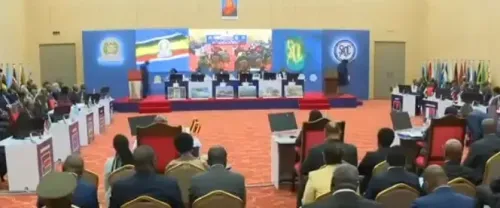
This call was voiced during a one-day summit held on Sunday in Entebbe, Uganda, where leaders and representatives convened to discuss the escalating security issues in eastern DRC and the subsequent effects on the Great Lakes region.
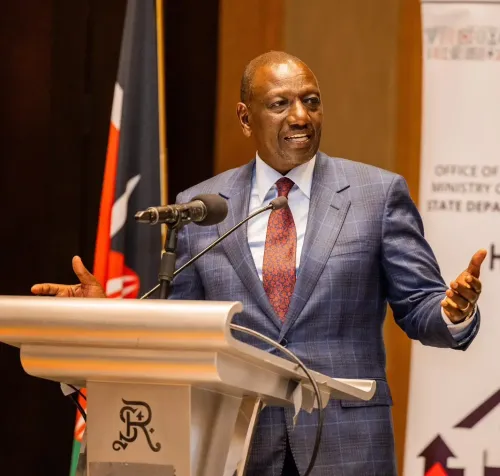
John Mulimba, Uganda's Minister of State for Foreign Affairs, indicated that attendees concurred that both the East African Community (EAC) and the Southern African Development Community (SADC) must take the lead in peace efforts aimed at curbing the rising conflict.
“We have recognized that while initiatives like the Doha and Washington peace processes exist, the region must assume central responsibility, specifically the EAC and SADC,” Mulimba stated.
The summit also mandated that its communiqué be revised within ten days, and a follow-up meeting be held within two weeks to integrate a proposed regional peace framework.
During the summit, Rwanda expressed that there is no necessity to create new peace mechanisms, asserting that existing frameworks can sufficiently address the prolonged conflict.
Vincent Biruta, Rwanda's Foreign Minister, pointed out that the primary issue lies in the implementation of prior agreements. He labeled the Washington accord and Doha initiatives as the most effective frameworks to tackle both internal and regional aspects of the conflict, as reported by Xinhua news agency.
Biruta also reiterated Rwanda's alarm regarding the presence of the Democratic Forces for the Liberation of Rwanda, a dissident faction tied to the 1994 Genocide against the Tutsi, warning that neglecting this matter “erodes trust and continues to pose a significant threat to regional security.”
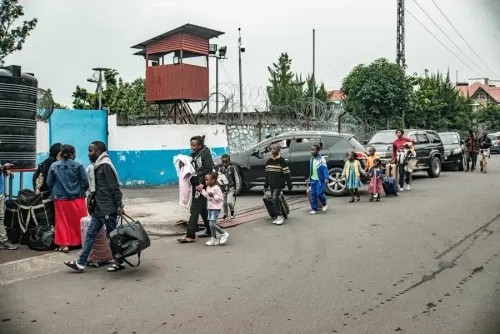
Earlier this month, Rwanda and the DRC reached a US-mediated peace agreement in Washington aimed at concluding decades of conflict. However, violence has escalated in eastern DRC, with the March 23 Movement (M23) rebel group making significant advancements.
This week, M23 announced its withdrawal from Uvira, a crucial eastern Congolese city it had recently taken control of, stating that the decision was made at the request of US mediators as a confidence-building step to bolster the peace process.
Point of View
It is evident that the call for regional leadership in resolving the DRC conflict is both a timely and strategic approach. The involvement of local communities in peace initiatives is critical for the long-term stability of the region. By prioritizing regional frameworks over external solutions, leaders are fostering a sense of ownership and responsibility that is essential for sustainable peace.
NationPress
11 Oct 2026
Frequently Asked Questions
What was the main purpose of the summit in Entebbe?
The summit aimed to address the worsening security situation in eastern DRC and to promote regional-led solutions for resolving the ongoing conflict.
Which organizations are expected to lead peace efforts?
The East African Community (EAC) and the Southern African Development Community (SADC) are expected to spearhead the peace initiatives.
What is the stance of Rwanda regarding new peace mechanisms?
Rwanda believes that existing frameworks are sufficient to address the conflict and that new mechanisms are unnecessary.
What recent agreement was signed between Rwanda and the DRC?
A US-brokered peace agreement was signed earlier this month aimed at ending decades of conflict in the DRC.
What action did the M23 rebel group recently take?
The M23 announced its withdrawal from Uvira, a strategic city in eastern Congo, as a confidence-building measure to support the peace process.