How AI and Drones Are Revolutionizing Heritage Conservation in India
Synopsis
Discover how the Archaeological Survey of India is leveraging AI and drone technology to enhance the preservation of its rich cultural heritage, currently safeguarding over 3,600 monuments.
Key Takeaways
ASI protects 3,686 monuments using advanced technologies.
Technologies like AI and drones enhance conservation efforts.
India has 44 UNESCO World Heritage Sites.
Digitization plays a crucial role in preserving heritage.
Collaborations with scientific institutions strengthen conservation strategies.
New Delhi, April 18 (NationPress) - The Archaeological Survey of India (ASI) is currently responsible for the protection of 3,686 centrally protected monuments, bolstered by enhanced conservation strategies, scientific restoration techniques, and cutting-edge technologies such as Artificial Intelligence (AI), according to an official fact-sheet released on Saturday.
India has significantly expanded its global heritage profile with 44 UNESCO World Heritage Sites, including the recent inclusion of the Maratha Military Landscapes.
“The preservation of heritage and monuments has evolved through extensive digitization, the establishment of national heritage databases, and a broader implementation of scientific and digital tools for documentation and conservation,” stated the fact-sheet.
Notably, technology has emerged as a vital component in India’s conservation ecosystem, enhancing ASI’s traditional methodologies with tools designed to improve documentation, diagnostics, and sustainable preservation.
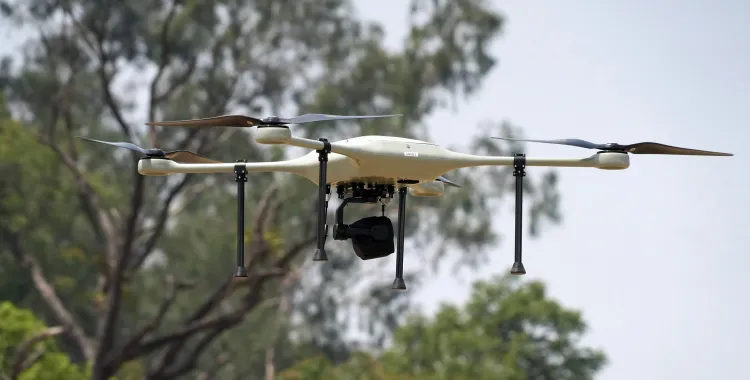
Modern technologies such as LiDAR scanning, GIS-based mapping, and drone surveys are employed as needed for thorough documentation. An increasing reliance on scientific laboratory techniques has been observed to analyze heritage materials, comprehend deterioration patterns, and identify the most effective conservation treatments.
“At the same time, India has broadened the use of digital and spatial technologies that facilitate precise recording and proactive conservation planning,” the statement added.
Essential tools currently utilized in heritage documentation and evaluation include 3D laser scanning, photogrammetry, drone surveys, and Geographic Information Systems (GIS).
In conjunction with these advancements, the government has initiated the integration of AI into the wider cultural and heritage framework, particularly focusing on digitization, documentation, and the accessibility of cultural assets. AI-powered platforms are being employed to process and organize vast amounts of heritage data, encompassing manuscripts and cultural knowledge systems, thereby improving public access through digital interfaces and language technologies.
Importantly, drone surveys have been conducted in partnership with institutions like the National Institute of Science Education and Research (NISER), showcasing the collaborative efforts of scientific institutions in heritage conservation.
“India’s increasing stature on the global heritage map is a testament to the country’s capability to present its cultural legacy with renewed assurance,” the statement concluded.
Point of View
It is evident that the integration of technology in heritage conservation marks a significant milestone for India. This approach not only enhances the documentation and preservation efforts but also positions India prominently on the global heritage landscape. The collaborative involvement of various scientific institutions is commendable and indicates a promising future for cultural preservation.
NationPress
19 Sept 2026
Frequently Asked Questions
What is the role of AI in heritage conservation?
AI is used to process and organize large volumes of heritage data, improving documentation, and enhancing public access to cultural assets.
How many monuments are protected by ASI?
The Archaeological Survey of India currently safeguards 3,686 centrally protected monuments.
What technologies are being used for documentation?
Technologies such as LiDAR scanning, GIS-based mapping, and drone surveys are employed for accurate documentation of heritage sites.
How does digitization help in heritage preservation?
Digitization facilitates the creation of national heritage databases and supports proactive conservation planning.
Which institution collaborates with ASI for drone surveys?
The National Institute of Science Education and Research (NISER) collaborates with ASI for drone-based surveys.