Is There a Formal Policy for Adopting AI Tools in Judicial Processes?
Synopsis
As AI continues to permeate various sectors, the legal domain remains cautious. A recent statement from the Law Minister reveals the absence of formal guidelines for AI integration in judicial processes, highlighting both potential benefits and significant challenges. Discover how the judiciary is navigating this complex landscape.
Key Takeaways
AI Committee formed by the Supreme Court to study AI use.
No formal policies yet for AI adoption in judiciary.
AI tools like LegRAA and Digital Courts 2.1 are in limited use.
Concerns about algorithmic bias and data privacy .
Judiciary is addressing manipulated digital content .
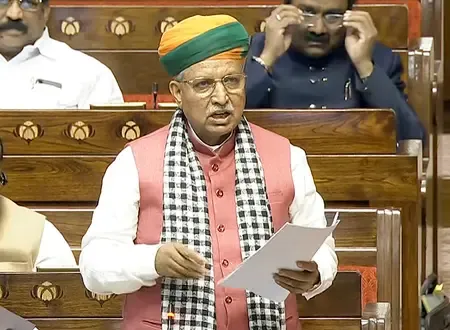
New Delhi, Dec 5 (NationPress) The Supreme Court has established an Artificial Intelligence (AI) Committee to investigate the application of AI in the judicial sector. However, as of now, there is no formal policy or guidelines in place for the integration of AI tools within judicial processes, as these AI-driven solutions are still undergoing a controlled pilot phase, according to statements made in Lok Sabha on Friday.
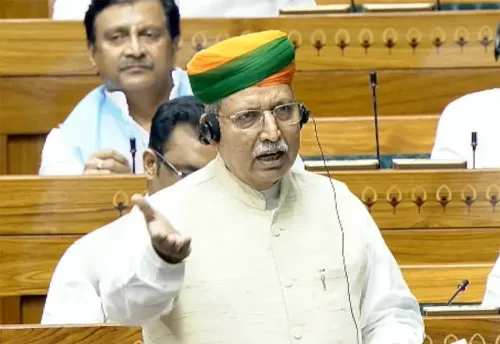
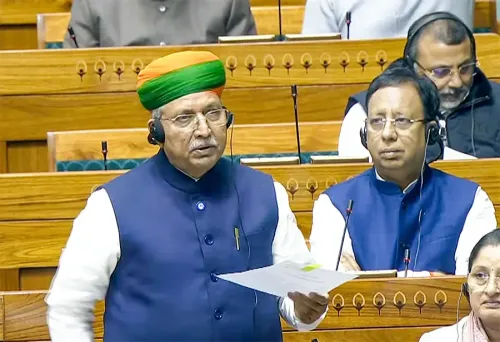
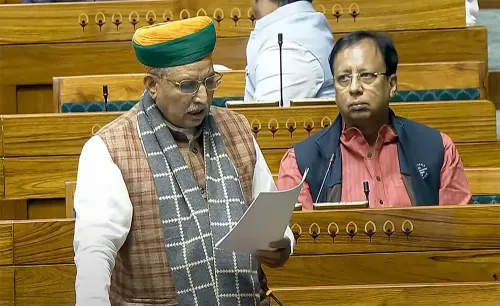
Minister of State (Independent Charge) for Law and Justice, Arjun Ram Meghwal, highlighted that AI is currently utilized only in areas sanctioned within the detailed project report of eCourts Phase III.
In response to a query, he mentioned that the judiciary is cognizant of the challenges associated with incorporating AI into judicial processes, including algorithmic bias, issues with language and translation, concerns regarding data privacy and security, and the necessity for manual verification of AI-generated outputs.
MoS Meghwal noted that the chairperson of the e-committee of the Supreme Court has formed a Sub-Committee comprising six High Court judges alongside technical experts. Their objective is to propose secure connectivity and authentication mechanisms for data protection and privacy, while also evaluating the digital infrastructure and service delivery systems encompassed within the eCourts Project to bolster data security.
Regarding the limited deployment of AI in legal tasks, the MoS stated that an AI-driven software tool named Legal Research Analysis Assistant (LegRAA) has been created to assist judges with legal research and document analysis.
Additionally, another AI tool called Digital Courts 2.1 has been developed to aid Judges and Judicial Officers by offering a unified platform to manage all case-related information and tasks. This platform features voice-to-text (ASR-SHRUTI) and translation (PANINI) capabilities to support judges in dictating orders and judgments.
Currently, during the pilot phase of these AI solutions, the eCommittee of the Supreme Court indicates no systemic bias, unintended content, or other significant issues, MoS Meghwal added.
Furthermore, he pointed out the challenges arising from manipulated or fabricated digital content presented in courts. He acknowledged that the judiciary is aware of the increasing risks associated with falsified digital material and its potential effects on public opinion.
According to him, the fabricated digital content presented in courts, governed by the Information Technology Act, 2000, includes offenses such as identity theft (Section 66C), cheating by personation using computer resources (Section 66D), and the publication or transmission of obscene or harmful digital material (Sections 67, 67A, and 67B).
Moreover, cases have also been registered under the Bharatiya Nyaya Sanhita, 2023, addressing offenses related to cheating by personation (Section 319), electronic forgery, and related falsification of records (Section 336), as well as forgery of electronic records (Section 340).
Point of View
The absence of formal policies raises concerns regarding ethical implications and data security. A balanced approach is essential to harness the benefits of technology while safeguarding the integrity of our legal system. The Nation will continue to monitor these developments closely.
NationPress
3 Oct 2026
Frequently Asked Questions
What is the current status of AI in the judiciary?
AI tools are being explored but remain in a pilot phase without formal adoption policies.
What challenges does AI integration pose for the judiciary?
Challenges include algorithmic bias, data privacy concerns, and the need for manual verification.
What AI tools are being introduced in legal processes?
Tools like Legal Research Analysis Assistant (LegRAA) and Digital Courts 2.1 have been developed.
How is the judiciary addressing digital content manipulation?
The judiciary recognizes the risks of fabricated digital content and is taking steps to mitigate these issues.
What legal frameworks govern digital content in courts?
The Information Technology Act, 2000, and the Bharatiya Nyaya Sanhita, 2023, address offenses involving digital content.