Is a Rs 7,210 Crore Initiative Transforming Courts with AI and Technology?
Synopsis
Discover how a massive investment of Rs 7,210 crore in the eCourts Mission Mode project is set to revolutionize the Indian judicial system through the integration of cutting-edge technologies like AI and Blockchain. This initiative aims to enhance efficiency, accessibility, and transparency in the justice delivery system.
Key Takeaways
Significant investment in judicial technology.
Integration of AI and Blockchain for better efficiency.
Addressing key challenges such as algorithmic bias .
Development of tools like LegRAA for legal research.
Focus on enhancing data security and privacy.
New Delhi, Dec 19 (NationPress) In a bid to improve judicial efficiency both in quality and quantity, the third phase of the eCourts Mission Mode project, which has a budget of Rs 7,210 crore, is currently underway to enhance the integration of Information and Communication Technology (ICT) within the judicial system, as revealed in Parliament on Friday.
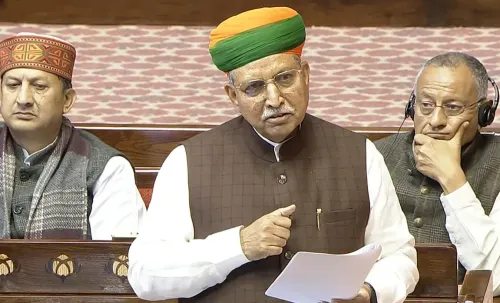
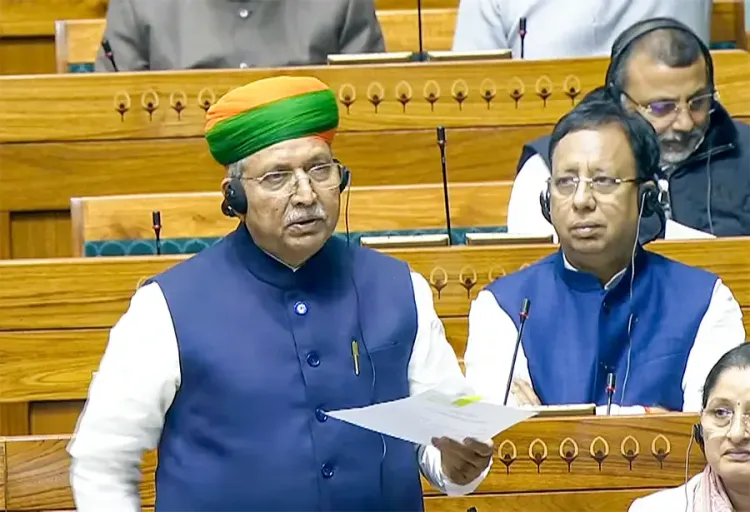
Arjun Ram Meghwal, Minister of State for Law and Justice, shared in his Lok Sabha response that this project, part of the National eGovernance Plan, is designed to make the delivery of justice accessible, cost-efficient, reliable, and transparent.
For the eCourts Project Phase III, an allocation of Rs 53.57 crore has been set aside for the initiative titled “Future Technological Advancements (AI, Blockchain, etc.)”, aimed at incorporating modern technologies for a more seamless user experience.
He further mentioned that the Supreme Court has established an Artificial Intelligence Committee to investigate the potential of AI within the judiciary. However, the adoption of AI tools in judicial processes is still in the pilot phase without any formal policies or guidelines, with AI applications restricted to areas sanctioned in the eCourts Phase III Detailed Project Report (DPR).
Moreover, the development and regulation of operational frameworks will follow the rules of business and policies set by the respective High Courts, he noted.
Meghwal acknowledged that the integration of AI into judicial processes presents significant challenges, including algorithmic bias, language and translation complications, data privacy and security issues, and the necessity for manual verification of outputs generated by AI.
The Supreme Court of India's eCommittee has formed a Sub-Committee consisting of six High Court judges and technical specialists to recommend a secure connectivity and authentication mechanism to ensure data and privacy protection, as well as to evaluate the digital infrastructure and service delivery systems under the eCourts Project to enhance data security.
An AI-driven software tool known as the Legal Research Analysis Assistant (LegRAA) has been created to support judges in legal research and document analysis. An updated platform, termed Digital Courts 2.1, has been developed to provide Judges and Judicial Officers with a centralized interface for managing case-related information and tasks.
This platform features AI-powered voice-to-text (ASR-SHRUTI) and translation (PANINI) capabilities to assist judges with dictating orders and judgments. Currently, during the pilot phase of AI solutions, the eCommittee of the Supreme Court of India reports no systemic bias, unintended content, or other significant issues, stated Meghwal.
Point of View
It is essential to recognize the significance of the eCourts Mission Mode project. With a considerable financial commitment, this initiative not only aims to modernize the judicial system but also addresses crucial challenges in accessing justice. As we move forward, it is vital to ensure that technology enhances the judicial process without compromising fairness or transparency.
NationPress
14 Oct 2026
Frequently Asked Questions
What is the budget for Phase-III of the eCourts project?
The budget for Phase-III of the eCourts project is Rs 7,210 crore .
What technologies are being integrated into the judicial system?
The project focuses on integrating AI , Blockchain , and other modern technologies to improve the judicial process.
Is there any formal policy for AI adoption in judicial processes?
Currently, there are no formal policies or guidelines for adopting AI tools in judicial processes.
What challenges does AI integration present?
Challenges include algorithmic bias, language issues, data privacy concerns, and the need for manual verification of AI outputs.
What is the purpose of the Legal Research Analysis Assistant (LegRAA)?
The LegRAA tool is designed to assist judges with legal research and document analysis.