How is CJI Kant Restructuring the SC’s Artificial Intelligence Committee?
Synopsis
In a significant move, CJI Surya Kant has restructured the Supreme Court’s Artificial Intelligence Committee to enhance the judiciary's efficiency and transparency. With a focus on modern technologies, the committee aims to address concerns surrounding AI deployment in the legal framework.
Key Takeaways
AI Committee Restructured: The Supreme Court's AI Committee has been restructured for enhanced governance.
Focus on Efficiency: The new committee aims to improve justice delivery through AI technologies.
Expert Leadership: Chaired by Justice P.S.
Narasimha, it includes leading judges from various high courts.
AI Tools Development: Limited-use AI tools have been created to assist judges in their work.
Addressing Concerns: The committee will tackle issues like algorithmic bias and data security.
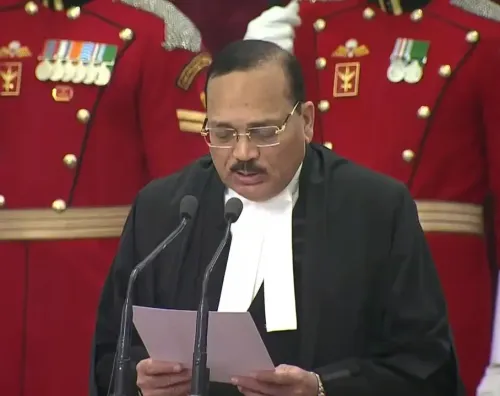
New Delhi, Dec 10 (NationPress) Chief Justice of India (CJI) Surya Kant has restructured the Supreme Court’s Artificial Intelligence Committee, tasked with leading the integration, advancement, and implementation of AI technologies within the higher judiciary and lower courts, as per an official announcement made on Wednesday.
The statement reveals that the newly formed committee will be chaired by Justice P.S. Narasimha from the apex court, alongside members including Justice Sanjeev Sachdeva, the Chief Justice of the Madhya Pradesh High Court; Justice Raja Vijayaraghavan V. from the Kerala High Court; Justice Anoop Chitkara of the Punjab & Haryana High Court; and Justice Suraj Govindaraj from the Karnataka High Court.
Anupam Patra, OSD (Registrar) (Technology), Supreme Court, will act as the Committee’s Member-Secretary and Convenor, while Ashish J. Shiradhonkar, a member of the eCommittee of the Supreme Court, is invited as a Special Invitee.
The CJI has directed the Committee to maintain its role in “guiding and supervising initiatives concerning the integration, development, and deployment of artificial intelligence tools and systems” within the Supreme Court and subordinate judiciary. This initiative aims to improve efficiency, accessibility, and transparency within the justice delivery framework.
This reorganization comes shortly after the government updated the Lok Sabha on the establishment of an AI Committee to investigate the utilization of emerging technologies in the judicial sector, noting that no formal guidelines or policies have been established as AI tools are still in a controlled pilot phase.
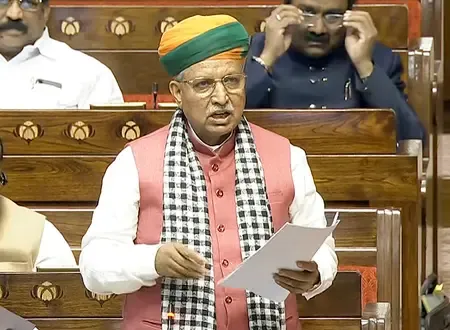
Minister of State for Law and Justice Arjun Ram Meghwal informed Parliament that the judiciary is exercising caution, addressing concerns related to algorithmic bias, language and translation barriers, data privacy and security, as well as the necessity for manual verification of AI-generated outputs.
Currently, during the AI pilot phase, the eCommittee of the Supreme Court reports no systemic bias or unintended content issues, he added.
MoS Meghwal emphasized that the e-Committee has already developed limited-use AI tools such as the Legal Research Analysis Assistant (LegRAA) and Digital Courts 2.1, featuring voice-to-text capabilities (ASR-SHRUTI) and translation options (PANINI), designed to assist judges in research, documentation, and case management.
Additionally, the minister pointed out the increasing issue of fabricated and altered digital content being presented in courts, indicating that such offenses are prosecuted under relevant sections of the Information Technology Act, 2000 and the Bharatiya Nyaya Sanhita, 2023.
Point of View
It's essential to recognize the pivotal role of technology in modernizing our judicial processes. The reconstitution of the Supreme Court's AI Committee reflects a proactive approach to integrating AI responsibly while addressing critical concerns. This balanced strategy is vital for fostering trust and transparency in the justice system.
NationPress
30 Sept 2026
Frequently Asked Questions
What is the main purpose of the restructured AI Committee?
The restructured AI Committee is tasked with guiding the adoption, development, and deployment of AI tools across the judiciary to enhance efficiency, accessibility, and transparency in the justice delivery system.
Who are the members of the newly formed committee?
The committee is chaired by Justice P.S. Narasimha and includes Justice Sanjeev Sachdeva, Justice Raja Vijayaraghavan V., Justice Anoop Chitkara, and Justice Suraj Govindaraj as members.
What AI tools have been developed by the Supreme Court's e-Committee?
The e-Committee has developed limited-use AI tools like the Legal Research Analysis Assistant (LegRAA) and Digital Courts 2.1, which include voice-to-text and translation features to assist judges.
What concerns did MoS Arjun Ram Meghwal highlight regarding AI?
MoS Arjun Ram Meghwal highlighted concerns about algorithmic bias, data privacy, and the need for manual verification of AI-generated outputs within the judiciary.
How does the government plan to address fabricated digital content in courts?
The government prosecutes offenses involving fabricated digital content under the Information Technology Act, 2000, and the Bharatiya Nyaya Sanhita, 2023.