CJI Surya Kant calls for 24x7 judiciary, rural tech outreach in Jabalpur
Synopsis
Chief Justice Surya Kant's Jabalpur address was more than a ceremonial appearance — it was a blueprint. His call for 24x7 courts, AI-driven case disposal, and paralegal volunteers in villages signals a fundamental rethink of who India's justice system is actually built to serve.
Key Takeaways
CJI Surya Kant called for a 24x7 judiciary at a digital justice seminar in Jabalpur on 16 May .
He stressed that new judicial apps must use simple language and that paralegal volunteers must be trained at the local level for rural outreach.
A Supreme Court technology committee constituted after the CJI assumed office will disclose its findings within days.
A separate AI committee has been formed to fast-track disposal of pending cases.
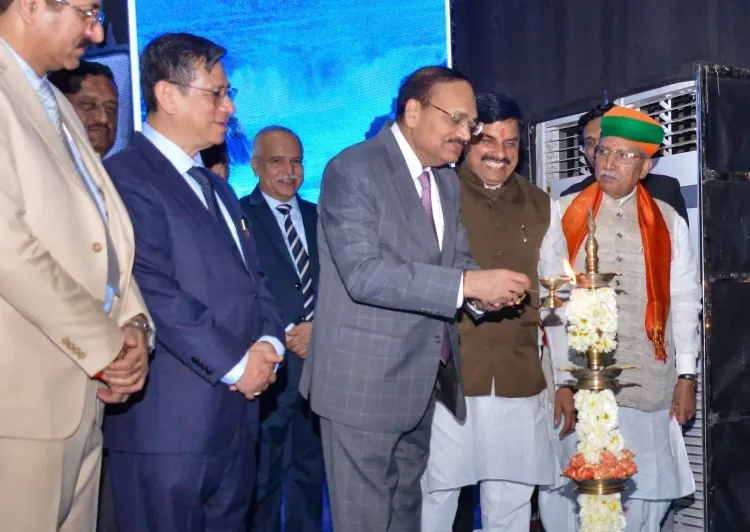
The event was attended by nine Supreme Court judges , Chief Minister Mohan Yadav , and Union Law Minister Arjun Ram Meghwal .
The Madhya Pradesh High Court was held up as a national model for digital justice innovation.
Chief Justice of India Surya Kant on Saturday, 16 May called for the judiciary to move towards 24x7 operations, stressing that as digital tools reshape justice delivery, maintaining the trust of ordinary citizens — particularly in rural areas — must remain central to every reform. He was speaking at a seminar on digital integration in justice delivery held in Jabalpur, Madhya Pradesh.
Key Developments at the Seminar
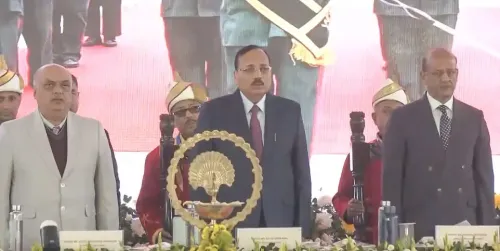
The seminar, titled 'Fragmentation to Fusion: Empowering Justice via United Digital Platform Integration', brought together nine Supreme Court judges, Chief Justice Sanjeev Sachdeva of the Jabalpur High Court, Chief Minister Mohan Yadav, and Union Law Minister Arjun Ram Meghwal. The Madhya Pradesh High Court was commended by the CJI as a model for other states.
What the CJI Said
Justice Surya Kant emphasised that new software applications must use simple language, and that paralegal volunteers should be trained at the local level to bridge the digital gap. He noted that more than half the population of Madhya Pradesh — and India — lives in villages and often lacks adequate awareness of available digital tools.
Drawing on a striking metaphor, he likened small judicial tech reforms to the Narmada River: just as the modest stream originating from Amarkantak grows into a mighty river by the time it reaches Jabalpur, incremental technical changes within the justice system will prove catalysts for transformative outcomes.
He also shared a personal anecdote of an accused who remained incarcerated for an extended period simply because a bail order failed to reach the prison authorities in time — underscoring the human cost of administrative and digital gaps.
Supreme Court Committees on Technology and AI
The CJI disclosed that immediately after assuming office, he constituted a committee to oversee the Supreme Court's technological systems, with details of its work set to be made public within a few days. A separate committee has also been formed to explore the application of Artificial Intelligence (AI) in the justice system, specifically to expedite the disposal of pending cases. Further details on both initiatives are expected shortly.
What Government Leaders Said
Chief Minister Mohan Yadav highlighted the pivotal role of science and technology in simplifying human life, calling the justice system the single most critical pillar of a robust democracy. Union Law Minister Arjun Ram Meghwal described the innovations as far from ordinary, pointing to the Madhya Pradesh High Court's efforts to deliver justice even to those who cannot hear or speak. 'From this day forward, we shall cite Madhya Pradesh as the exemplary model,' Meghwal affirmed.
What Comes Next
The CJI's call for round-the-clock judicial operations and grassroots digital outreach signals a broader push to make India's court system more accessible and responsive. With AI committees now in place and the Supreme Court's tech overhaul nearing disclosure, the next few weeks are likely to bring concrete announcements on the shape of India's digital justice architecture.
Point of View
But the real challenge lies in the last mile — and he knows it. Pointing to villages, paralegal volunteers, and a bail order that never reached a prison tells you where the system actually fails. The AI committee is a promising signal, but India's pendency crisis is structural, not merely technological; courts are understaffed and under-resourced in ways no algorithm fixes overnight. Madhya Pradesh being held up as a model is notable, but the test will be replicability in states with weaker high-court infrastructure.
NationPress
20 Sept 2026
Frequently Asked Questions
What did CJI Surya Kant say about a 24x7 judiciary?
CJI Surya Kant called for the judiciary to move towards round-the-clock operations, arguing that digital reforms must be accompanied by sustained efforts to maintain public trust, especially among rural citizens unfamiliar with technology. He made the remarks at a seminar in Jabalpur on 16 May.
What committees has CJI Surya Kant formed on technology and AI?
After assuming office, CJI Surya Kant constituted a committee to oversee the Supreme Court's technological systems, with its findings expected to be made public within days. A separate committee has been formed to explore the use of Artificial Intelligence to expedite the disposal of pending cases.
Why did the CJI stress rural outreach in digital justice reforms?
The CJI noted that more than half the population of Madhya Pradesh — and India — lives in villages and often lacks sufficient awareness of digital tools available through the justice system. He called for software in simple language and training of paralegal volunteers at the local level to bridge this gap.
What was the significance of the Jabalpur seminar?
The seminar, titled 'Fragmentation to Fusion: Empowering Justice via United Digital Platform Integration', was held at the Madhya Pradesh High Court and attended by nine Supreme Court judges, Union Law Minister Arjun Ram Meghwal, and Chief Minister Mohan Yadav. The CJI described the Madhya Pradesh High Court's digital initiatives as a model for the rest of India.
What did Union Law Minister Arjun Ram Meghwal say at the event?
Meghwal said the digital innovations at the Madhya Pradesh High Court are 'by no means ordinary' and highlighted its efforts to deliver justice to those who cannot hear or speak. He declared that Madhya Pradesh would henceforth be cited as the exemplary model for digital justice in India.