AIADMK factional war hits district units across Tamil Nadu, police step in
Synopsis
The AIADMK's internal war has moved off the stage and into the streets — district offices locked, police called in, and rival camps collecting signatures for a general council showdown. With more than 1,000 members reportedly backing the rebel faction and 25 MLAs facing disciplinary action, the battle for Tamil Nadu's principal opposition party is accelerating toward a decisive — and potentially court-decided — confrontation ahead of the 2026 elections.
Key Takeaways
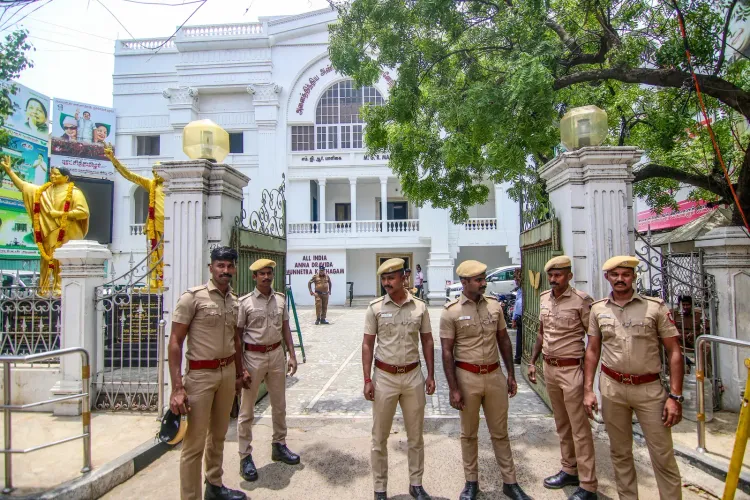
AIADMK factional clashes spread to Dindigul on 18 May , with police sealing the district party office to prevent a confrontation.
Former ministers Natham Viswanathan (rebel camp) and Dindigul Srinivasan (EPS camp) are at the centre of the Dindigul dispute.
The Velumani-Shanmugham rebel faction claims support from more than 1,000 general council and executive committee members.
The EPS camp is pressing for action against 25 rebel MLAs accused of defying the party whip during the Assembly trust vote .
District offices in Villupuram , Cuddalore , Pudukkottai , Karur , and Dindigul have all been flashpoints in the widening crisis.
The AIADMK's internal power struggle escalated sharply on 18 May, spreading from state headquarters to district offices across Tamil Nadu as rival camps clashed for control of party units, prompting police intervention in multiple locations. The crisis marks one of the most visible fractures in the party since Edappadi K. Palaniswami consolidated his hold on the general secretary post.
Key Developments
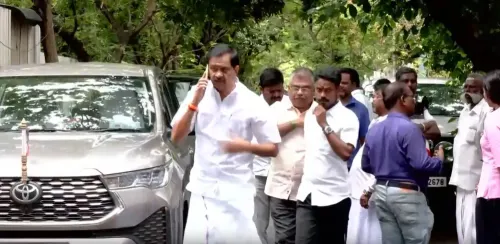
Following earlier flashpoints in Villupuram, Cuddalore, Pudukkottai, and Karur, the dispute spread to Dindigul, where police sealed the district party office to prevent a direct confrontation between supporters of the two factions. Officers barred both groups from entering the premises to avert a law-and-order breakdown.
The Dindigul standoff pitted former minister Natham Viswanathan — aligned with the rebel camp led by former ministers S.P. Velumani and C.Ve. Shanmugham — against former minister Dindigul Srinivasan, who has remained firmly with the EPS camp. Viswanathan's supporters sought police protection to access the district office; Srinivasan's supporters opposed the move, forcing authorities to seal entry.
What the EPS Camp Said
Dindigul Srinivasan held a meeting with his supporters after the standoff and reiterated that the AIADMK general council had unanimously recognised Edappadi K. Palaniswami as the party's general secretary and undisputed leader. On the question of rebel MLAs, Srinivasan indicated that action against them was inevitable and would follow legal procedures.
The EPS leadership has also been pressing for disciplinary action against 25 rebel MLAs accused of defying the party whip during the Assembly trust vote.
The Rebel Faction's Counter-Move
The Velumani-Shanmugham faction has intensified efforts to convene an emergency general council meeting aimed at challenging the existing leadership structure. Supporters of the rebel camp have reportedly begun collecting signatures from general council and executive committee members across the state, claiming they have already secured backing from more than 1,000 members.
This comes amid a broader pattern of district-level offices being locked and placed under security watch — a visible sign that the factional battle has moved beyond rhetoric and into a contest for physical control of party infrastructure.
Background and What Is at Stake
The AIADMK has been navigating internal turbulence since its 2021 Assembly election defeat and the subsequent exit of O. Panneerselvam from the party. Palaniswami's consolidation of the general secretary role was contested in courts, and the current rebellion represents a fresh challenge to his authority from within the former ministerial class. With the 2026 Tamil Nadu Assembly elections on the horizon, control of district units is critical for candidate selection, booth management, and voter outreach. The outcome of this factional contest could reshape the party's electoral viability.
What Happens Next
Legal proceedings around the rebel MLAs' disqualification and the validity of any emergency general council meeting are expected to be the next battleground. Both factions appear to be preparing for a prolonged institutional and legal fight over the party's legitimate leadership structure.
Point of View
With police now routinely sealing offices to prevent violence. That is a qualitative escalation. The rebel camp's signature-collection drive is a calculated move to establish numerical legitimacy before any court or Election Commission proceeding; the EPS camp's counter-push on the 25 rebel MLAs is equally tactical, aimed at shrinking the opposition's headcount before a formal challenge materialises. What mainstream coverage underplays is the electoral consequence: with 2026 approaching, whichever faction controls district units controls the ground machinery. A party split at this level, even if legally resolved at the top, could fragment booth-level organisation in ways that take years to repair — and that fragmentation benefits the ruling DMK more than any court verdict.
NationPress
3 Oct 2026
Frequently Asked Questions
What is the current AIADMK factional crisis about?
The AIADMK is split between the faction led by general secretary Edappadi K. Palaniswami and a rebel group led by former ministers S.P. Velumani and C.Ve. Shanmugham. The dispute centres on control of the party's leadership structure and has spread to district offices across Tamil Nadu, with police intervening in multiple locations.
What happened in Dindigul?
Police sealed the Dindigul district party office on 18 May to prevent a clash between supporters of rival factions. Former minister Natham Viswanathan, backing the rebel camp, sought police protection to enter the office, while supporters of former minister Dindigul Srinivasan, aligned with EPS, opposed the move.
How many members does the rebel faction claim to have secured?
The Velumani-Shanmugham rebel faction has reportedly begun collecting signatures from general council and executive committee members across Tamil Nadu and claims support from more than 1,000 members. The figure has not been independently verified.
What action is the EPS camp seeking against rebel MLAs?
The EPS camp is pressing for disciplinary action against 25 rebel MLAs accused of violating the party whip during the Assembly trust vote. Dindigul Srinivasan indicated that action against them was inevitable and would follow legal procedures.
Why does this crisis matter ahead of the 2026 Tamil Nadu elections?
Control of district party units is critical for candidate selection and booth-level voter outreach. A prolonged factional split risks fragmenting the AIADMK's ground organisation at precisely the moment it needs to rebuild as the principal opposition to the ruling DMK ahead of the 2026 Assembly elections.