AIADMK rebellion deepens: EPS faces bylaw challenge from Shanmugam-Velumani faction
Synopsis
The AIADMK's internal war has moved from backroom grievance to constitutional confrontation. Rebel leaders C.V. Shanmugam and S.P. Velumani are invoking party bylaws to force a special general council meeting — a direct challenge to EPS's grip on the party after its worst election result since 1996. With rebel MLAs set to join the rival Cabinet and an anti-defection petition still pending, the AIADMK faces a split that could redraw Tamil Nadu's opposition landscape.
Key Takeaways
AIADMK dissident leaders C.V.
Velumani are collecting signatures to invoke a party bylaw forcing a special general council meeting within 30 days .
The rebels accuse general secretary Edappadi K.
Palaniswami (EPS) of 'unilateral decisions' that led to the party's worst result since 1996 .
The AIADMK won only 47 seats in the 2026 Tamil Nadu Assembly elections , slipping to third place and losing the Leader of the Opposition status.
Some rebel MLAs are expected to join Chief Minister C.
Joseph Vijay's Cabinet next week, even as an anti-defection petition filed by EPS remains pending before the Assembly Speaker.
The rebel camp is operating from former minister Shanmugam's office in Chennai's MRC Nagar .
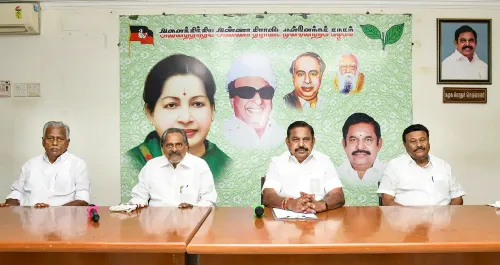
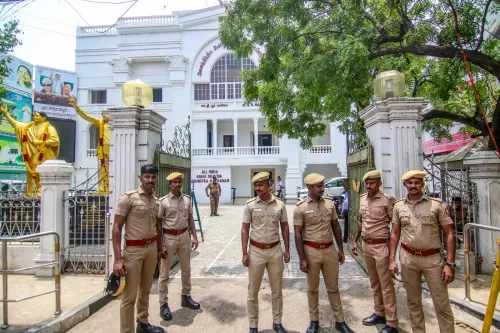
A powerful dissident faction within the All India Anna Dravida Munnetra Kazhagam (AIADMK) is intensifying its push to unseat party general secretary Edappadi K. Palaniswami (EPS), with senior rebel leaders C.V. Shanmugam and S.P. Velumani now exploring party bylaws to force an organisational showdown, according to senior party sources. The rebellion, operating out of Shanmugam's office in Chennai's MRC Nagar, has entered a critical new phase as of 16 May.
The Bylaw Gambit
The dissident camp is reportedly considering invoking a provision in the AIADMK constitution that compels the general secretary to convene a special general council meeting within 30 days if at least one-fifth of the council members submit a formal request. Leaders aligned with the rebel faction have reportedly begun collecting signatures from general council members across Tamil Nadu to initiate this process. If successful, the move would force a direct confrontation over Palaniswami's leadership on the party's own constitutional terms.
The Electoral Reckoning Behind the Revolt
The rebellion draws its energy from the AIADMK's historically poor performance in the 2026 Tamil Nadu Assembly elections, in which the party won only 47 seats and slipped to the third position in the Assembly — its worst showing since 1996, according to several leaders within the party. The setback also cost the party the Leader of the Opposition status for the first time in decades. Rebels accuse EPS of taking 'unilateral decisions' that allegedly weakened the party ahead of the polls, a charge Palaniswami's camp has not publicly addressed in detail.
A Generational Argument
Leaders backing the rebellion argue that Tamil Nadu's political landscape is undergoing a generational shift, with younger figures — including Chief Minister C. Joseph Vijay, Deputy Chief Minister Udhayanidhi Stalin, Pattali Makkal Katchi (PMK) president Anbumani Ramadoss, Bharatiya Janata Party (BJP) state president K. Annamalai, and Naam Tamilar Katchi chief Seeman — emerging as dominant forces. They contend the AIADMK must undergo a similar leadership transition to remain politically relevant. The rebels are also reportedly unhappy that Palaniswami had refused to step aside from his chief ministerial ambitions when talks were reportedly underway to project Viduthalai Chiruthaigal Katchi (VCK) leader Thol. Thirumavalavan as a possible consensus chief ministerial candidate with outside backing from the Dravida Munnetra Kazhagam (DMK).
Cabinet Entry and Anti-Defection Threat
The crisis has acquired a sharper political edge, with some rebel MLAs expected to join Chief Minister Vijay's Cabinet in the coming week. This comes even as a petition filed by EPS seeking their disqualification under the anti-defection law remains pending before Assembly Speaker J.C.D. Prabhakar. A rebel leader defended the faction's decision to support the Tamilaga Vettri Kazhagam (TVK) government during the recent trust vote, stating that remaining in the Opposition for another five years would benefit neither the public nor the party.
What Comes Next
The coming weeks will be decisive for the AIADMK's organisational future. If the signature drive meets the constitutional threshold, Palaniswami will be obligated to call a special general council meeting — a forum where his leadership could be formally contested. Whether the EPS camp can hold its ground against the bylaw challenge, while simultaneously pursuing disqualification proceedings against rebel MLAs, will determine the party's trajectory ahead of local body elections and beyond.
Point of View
One that could take years to reverse regardless of who controls the AIADMK letterhead.
NationPress
6 Oct 2026
Frequently Asked Questions
What is the AIADMK internal rebellion about?
A dissident faction led by senior leaders C.V. Shanmugam and S.P. Velumani is challenging the leadership of party general secretary Edappadi K. Palaniswami (EPS), accusing him of unilateral decisions that contributed to the AIADMK's worst electoral performance since 1996. The rebels are now invoking party bylaws to force a special general council meeting where his leadership could be formally contested.
How are the AIADMK rebels using party bylaws to challenge EPS?
The dissident camp is reportedly invoking a provision in the AIADMK constitution that requires the general secretary to convene a special general council meeting within 30 days if at least one-fifth of council members submit a formal request. Rebel leaders have begun collecting signatures from general council members across Tamil Nadu to meet this threshold.
How badly did the AIADMK perform in the 2026 Tamil Nadu elections?
The AIADMK won only 47 seats in the 2026 Tamil Nadu Assembly elections, slipping to the third position in the House and losing the Leader of the Opposition status for the first time in decades. Several party leaders have privately described it as the party's worst result since 1996.
Are rebel AIADMK MLAs joining the Tamil Nadu government?
Yes, some rebel MLAs are expected to join Chief Minister C. Joseph Vijay's Cabinet in the coming week. A disqualification petition filed by EPS against these MLAs under the anti-defection law remains pending before Assembly Speaker J.C.D. Prabhakar.
Why do the rebels want a leadership change in the AIADMK?
Beyond the 2026 election defeat, rebel leaders argue that Tamil Nadu politics is undergoing a generational shift, with younger figures like Chief Minister C. Joseph Vijay, Udhayanidhi Stalin, Anbumani Ramadoss, K. Annamalai, and Seeman rising to prominence. They believe the AIADMK needs a similar leadership transition to remain politically relevant.