How Will AI Transform India's Consumer-Centric Power Sector?
Synopsis
Discover how AI and ML are set to reshape India's power sector, enhancing consumer experiences and operational efficiencies. Union Power Minister Manohar Lal highlights transformative technologies at a national conference.
Key Takeaways
AI and ML are pivotal for a consumer-centric power sector.
Smart technologies can significantly enhance operational efficiency.
Collaboration with stakeholders is essential for effective transition.
Engaging consumers is crucial to counter misinformation.
Innovative solutions can lead to significant energy management improvements.
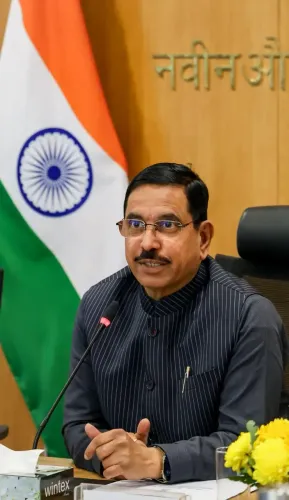
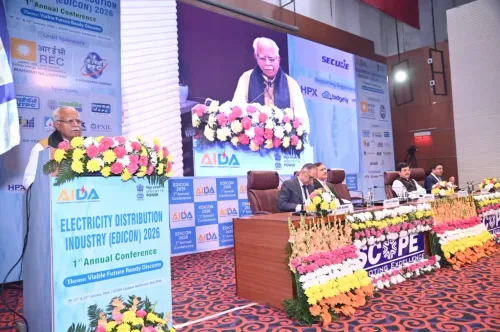
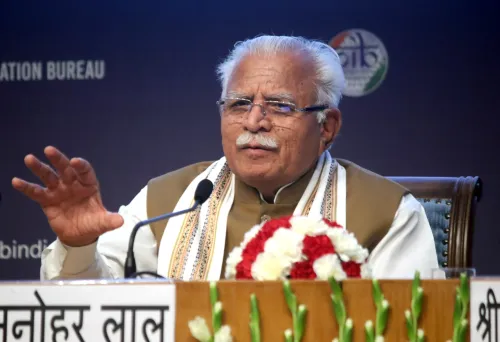
New Delhi, Dec 7 (NationPress) The integration of Artificial Intelligence (AI) and Machine Learning (ML) technologies is set to revolutionize the development of intelligent, consumer-focused, and self-optimizing distribution networks, stated Union Power Minister Manohar Lal on Sunday.
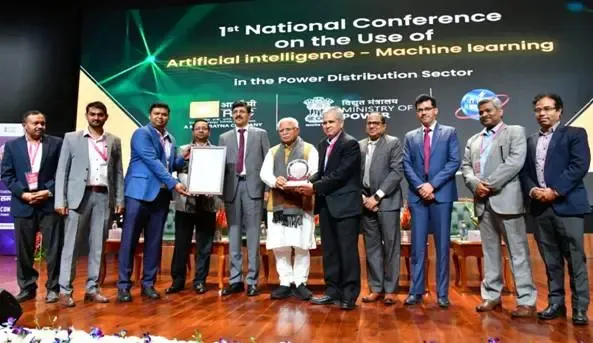
While addressing attendees at a two-day national conference focused on the application of AI/ML technologies in the power distribution sector, the minister emphasized that AI/ML solutions, including smart meter analytics, digital twins, predictive maintenance, theft detection, appliance-level consumer insights, automated outage prediction, and GenAI-based decision support, could significantly enhance both consumer experience and operational efficiency.
These AI/ML solutions showcase a compelling narrative of technology rebuilding trust, enabling households to manage their energy usage more effectively, preempting outages, shielding honest consumers from theft, and allowing distribution companies (discoms) to lower losses, optimize power procurement costs, and invest in robust infrastructure. This positions India as a frontrunner in digital electricity reform and future-ready grid governance, he added.
The minister called on all discoms to collaborate closely with ecosystem stakeholders to transition to smart, reliable, and consumer-centered distribution systems. He noted the necessity of engaging with consumers to counter misinformation surrounding new technologies and gain their valuable support for technology adoption within the sector.
The minister recognized the AI/ML innovations presented by discoms, advanced metering infrastructure service providers (AMISPs), technology solution providers (TSPs), and home automation solution providers (HASPs).
Furthermore, the minister unveiled the STELLAR (Strategic Expansion for Long Term Load Adequacy and Resilience), developed by the Central Electricity Authority (CEA), which will enable discoms to conduct resource adequacy studies and formulate long-term adequacy plans. In addition, the India Smart Grid Forum (ISGF) presented a Handbook on AI, ML, AR/VR, and Robotics Solutions and Roadmap for Electric Utilities, showcasing 174 use cases, including 45 from Indian utilities.
During the conference, Power Secretary Pankaj Agarwal emphasized the significance of capacity building, secure data-sharing frameworks, and interoperability to ensure that the innovations presented can be scaled across the nation, facilitating the energy transition.
The conference also featured a national call for innovation, receiving 195 applications from discoms, AMISPs, TSPs, and HASPs. After an initial review, 51 solutions were shortlisted for detailed evaluation on Day 1 (December 6) of the conference.
After thorough evaluation, winners were declared in various categories: TNPDCL (Tamil Nadu) and MP East (MP) for discoms, Tata Power and Apraava for AMISPs, Pravah and Flock Energy for TSPs, and Tata Power for HASPs.
The winners presented various data-driven innovations, such as Tamil Nadu's advanced smart meter analytics for revenue protection and MP East's accurate consumer indexing to minimize losses. AMISPs like TP Power Plus and Apraava Energy illustrated behavioral demand response and AI-powered operational automation, while TSPs like Pravah and Flock Energy showcased unified real-time grid intelligence and consumer appliance analytics. Tata Power also displayed a user-friendly solution for monitoring and controlling energy usage.
Point of View
It's clear that the integration of AI and ML in India's power sector is not just a technological advancement but a strategic shift towards a more consumer-oriented approach. The emphasis on collaboration with stakeholders and consumer engagement is pivotal for a successful transition. This aligns with India's broader vision of becoming a global leader in digital reforms in the energy sector.
NationPress
29 Sept 2026
Frequently Asked Questions
What role does AI play in the power sector?
AI enhances operational efficiency, consumer engagement, and predictive maintenance, transforming electricity distribution.
What are the benefits of AI/ML solutions in power distribution?
They improve consumer experience, reduce outages, and enable better energy management for households.
How does the STELLAR initiative contribute to power distribution?
STELLAR assists discoms in conducting resource adequacy studies and creating long-term energy plans.
What innovations were recognized at the conference?
Several data-driven innovations were showcased, highlighting effective energy management and consumer analytics.
Why is consumer engagement important in adopting new technologies?
Engaging consumers helps dispel misinformation and fosters support for technology adoption in the energy sector.