Ahmedabad AMC maps 1,050 sites in SC stray dog compliance drive
Synopsis
Ahmedabad's civic body has mapped 1,050 public sites — from schools to railway stations — in one of the most detailed municipal responses to the Supreme Court's stray dog order. With over two lakh strays citywide, shelter capacity at just 480-550, and a 2030 rabies-free target on the horizon, the AMC's compliance drive reveals both the ambition and the hard limits of urban animal management in India.
Key Takeaways
AMC has surveyed 1,050 locations across 5 categories — educational institutions, health facilities, sports complexes, bus depots, and railway stations — under Supreme Court directives.
Approximately 5,000 to 5,500 stray dogs are distributed across identified campuses, part of a citywide population estimated at over two lakh .
48 dogs have been removed from institutional settings so far; 84 aggressive dogs are currently in shelters for behavioural assessment.
Current shelter capacity is 480–550 dogs , set to expand to 1,180 with new facilities at Naroda , Vastral , and Lambha .
Institutions face fines of ₹1,000 to ₹5,000 for waste management violations that attract strays.
The drive is part of Ahmedabad's rabies elimination strategy targeting 2030 , combining sterilisation, vaccination, and GPS-based census mapping.
The Ahmedabad Municipal Corporation (AMC) has rolled out a structured compliance framework across 1,050 locations in the city, acting on Supreme Court directives on stray dog management in public spaces. The drive covers educational institutions, health facilities, sports complexes, bus depots, and railway stations, with enforcement balanced against shelter capacity limits and the Animal Birth Control Rules, 2023.
Scale of the Survey
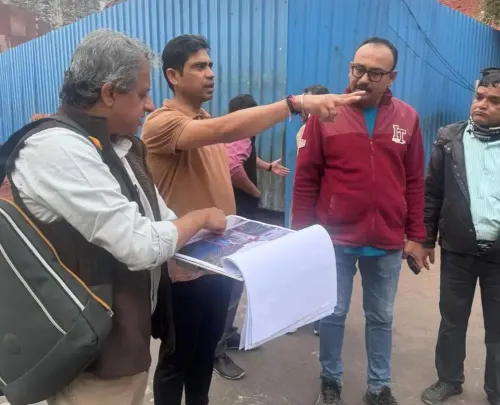
Naresh Rajput, Head of Department at AMC's Cattle Nuisance Control Department (CNCD), confirmed that all 1,050 sites across the five mandated categories have been identified and surveyed under the directive framework. The survey recorded approximately 5,000 to 5,500 stray dogs distributed across identified campuses, averaging two to three dogs per campus, with larger open institutions reporting counts of up to 10.
This institutional population forms part of a broader urban stray count estimated at over two lakh dogs citywide — a figure first assessed in 2019 surveys. A current scientific census is updating those numbers using GPS-enabled mobile applications and ward-wise mapping.
What Institutions Are Required to Do
Under the Supreme Court-mandated framework, each institution must appoint a nodal officer responsible for preventing stray dog entry, sensitising security personnel, securing boundary walls, and ensuring proper waste disposal. Rajput stated that the nodal officer is responsible for ensuring 'no dog enters from outside, that security guards are sensitised, and that boundary walls are secured so dogs cannot jump in.'
Institutions have also been directed to eliminate open food dumping, which is a primary driver of stray congregation on campuses. Fines ranging from ₹1,000 to ₹5,000 may be levied under public health by-laws where waste management norms are violated.
Removals, Sterilisation and Shelter Capacity
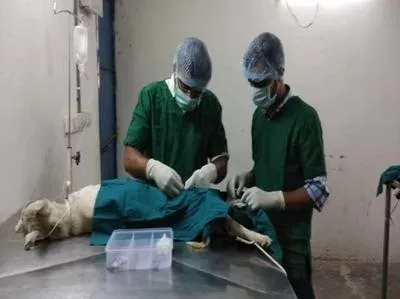
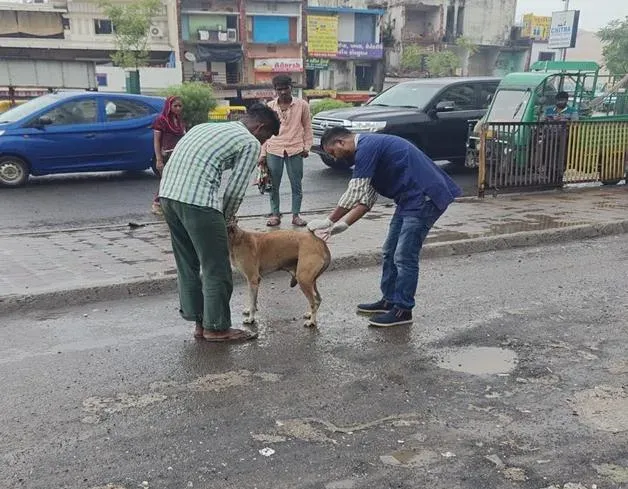
Approximately 48 dogs have been removed from institutional settings so far under the category-based intervention. Unsterilised dogs found within campuses are captured and sent for sterilisation, while aggressive or biting animals are transferred to shelters for observation and treatment. AMC data indicates that around 84 aggressive dogs are currently housed in shelters for behavioural assessment.
Current shelter capacity stands at approximately 480 to 550 dogs across various facilities. This is expected to expand to around 1,180 dogs once new shelters under development at Naroda, Vastral, and Lambha — each with a capacity of around 200 dogs — are operational. AMC maintains separate shelter categories for animal birth control centres, sick dog shelters, aggressive dog shelters, and community dog shelters, a categorisation officials describe as unique among Indian municipal corporations.
Rajput acknowledged the operational constraints: 'We work within capacity constraints. It is not practically possible to remove all dogs, so we prioritise biting and aggressive cases.'
Dog Bite Response and Public Awareness
AMC has implemented a dedicated dog bite management system in which complaints trigger on-site verification by a team comprising a veterinary doctor, a sanitary inspector, and an animal catcher. The team identifies the dog involved, checks vaccination history, and determines whether capture or treatment is required.
Awareness campaigns on rabies prevention, animal behaviour, and safe human-animal interaction are being conducted through schools, colleges, LED displays, and public outreach programmes as part of a broader Information, Education and Communication (IEC) initiative. Staff engaged in dog capture, shelter management, and veterinary care are also receiving training, with regular vaccination of animal-exposed workers in line with zoonotic disease prevention protocols.
The Bigger Picture: Rabies-Free Ahmedabad by 2030
The institutional and shelter-based measures are being implemented alongside Ahmedabad's citywide rabies elimination strategy targeting 2030, which integrates sterilisation, vaccination, census mapping, and public space management under a unified municipal framework. The compliance drive represents one of the more operationally detailed municipal responses to the Supreme Court's stray dog management directives seen in any Indian city to date.
Point of View
050-site survey is administratively impressive, but the shelter capacity figure — capped at 480 to 550 animals against a citywide population of over two lakh — exposes a structural gap that no nodal officer circular can bridge. The Supreme Court's directive to remove strays from public institutions is sound in intent, but without a proportionate expansion of infrastructure, enforcement will remain triage rather than policy. Ahmedabad's 2030 rabies-free target is ambitious; the real test is whether shelter expansion at Naroda, Vastral, and Lambha keeps pace with the census numbers the GPS mapping is about to surface.
NationPress
21 Oct 2026
Frequently Asked Questions
What has the Ahmedabad Municipal Corporation done to comply with the Supreme Court stray dog order?
AMC has surveyed 1,050 locations across educational institutions, health facilities, sports complexes, bus depots, and railway stations, assigning a nodal officer to each site. The framework requires boundary securing, controlled waste disposal, and periodic inspections to prevent stray dog entry.
How many stray dogs are there in Ahmedabad?
The citywide stray dog population is estimated at over two lakh, based on surveys first conducted in 2019. A current scientific census using GPS-enabled mobile applications and ward-wise mapping is underway to update these figures.
What happens to aggressive or biting dogs found on campuses?
Aggressive or biting dogs are transferred to dedicated shelters for observation and treatment. As of the latest AMC data, approximately 84 aggressive dogs are housed in shelters for behavioural assessment, while unsterilised dogs are captured and sent for sterilisation before release.
What is AMC's current shelter capacity and how will it expand?
AMC's current shelter capacity stands at approximately 480 to 550 dogs. This is expected to rise to around 1,180 dogs once new facilities at Naroda, Vastral, and Lambha — each with a capacity of about 200 dogs — are completed.
What is Ahmedabad's 2030 rabies elimination target?
Ahmedabad is pursuing a citywide rabies elimination strategy targeting 2030, which integrates stray dog sterilisation, vaccination, GPS-based census mapping, and institutional public space management under a unified AMC framework. Awareness campaigns on rabies prevention are being conducted across schools, colleges, and public spaces.