What Are the Key Highlights of the Andaman & Nicobar Islands Draft Electoral Roll?
Synopsis
The Chief Electoral Officer of Andaman & Nicobar Islands has released the Draft Electoral Roll as part of a significant revision initiative aimed at ensuring an accurate and inclusive voter list. This move is crucial for upcoming elections and aims to enhance voter engagement while maintaining transparency in the electoral process.
Key Takeaways
Draft Electoral Roll published as part of SIR exercise.
79.38% participation rate during enumeration.
Collaborative efforts from political parties and local officers.
Claims and objections period from December 23, 2025 to January 22, 2026 .
Focus on transparency and inclusivity .
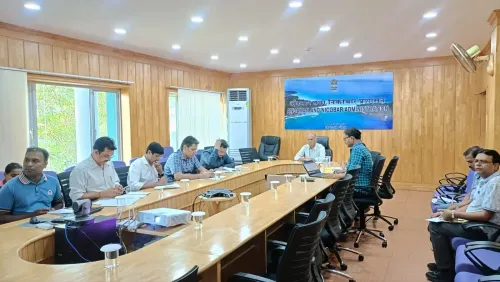
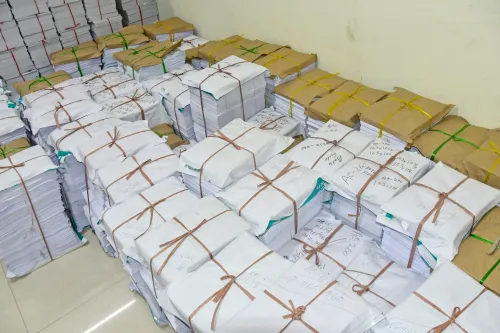
Sri Vijaya Puram, Dec 23 (NationPress) The Chief Electoral Officer (CEO) of Andaman & Nicobar Islands has unveiled the Draft Electoral Roll following the Special Intensive Revision (SIR) initiative, a vital move aimed at establishing a clean and inclusive voter registry ahead of upcoming elections.
This effort, in line with the Election Commission of India's (ECI) protocols, seeks to enhance voter involvement and remove ineligible entries with complete transparency.
The enumeration process, which took place from November 4 to December 18, 2025, experienced remarkable participation, with over 246,390 voters submitting their Enumeration Forms (EF) out of 310,404 registered by October 27, 2025—yielding a participation rate of 79.38 percent.
The CEO, L Kumar, attributed this achievement to the collaborative efforts of District Election Officers (DEOs), one Electoral Registration Officer (ERO), 12 Assistant EROs (AEROs), and Booth Level Officers (BLOs) across 411 polling stations.
Political parties significantly contributed by appointing 678 Booth Level Agents (BLAs), a rise from 435 initially, to support the endeavor. Awareness campaigns, numerous meetings with parties, and continuous updates ensured all eligible voters were accounted for. BLOs conducted at least three home visits, while BLAs were able to submit up to 50 forms daily. Special measures included camps at polling stations, help desks at CEO, DEO, and AERO offices, and the deployment of 189 volunteers alongside 132 additional staff, with support from Anganwadi and ASHA workers.
Challenges in remote areas were addressed by providing internet hotspots for digital processes and special boats for BLOs in isolated islands to ensure the completion of the enumeration.
Outstanding BLOs were honored, with 48 recognized at district and tehsil levels. Capacity-building efforts, including training and video tutorials, maintained high performance levels.
Efforts to engage young voters encouraged those reaching the age of 18 by January 1, 2026, to apply using Form-6.
Booth-wise lists of deceased, relocated, or duplicate electors were shared with BLAs for validation. Special support was provided to senior citizens, Persons with Disabilities (PwD), and vulnerable groups.
The draft electoral roll excludes 64,014 names due to uncollectible forms: 9,191 deceased, 51,906 relocated/absent, and 2,917 multiple registrations. Tehsil-wise data indicates that South Andaman District faced the highest exclusions (51,801), reducing its roll from 205,127 to 153,326. North & Middle Andaman decreased to 71,268 from 79,985, and Nicobar fell to 21,796 from 25,292.
Authentic electors can regain inclusion during the claims and objections period from December 23, 2025, to January 22, 2026. No deletions will occur without notice and a speaking order; appeals may be made to the District Magistrate or CEO under the RP Act, 1950.
The notice phase will continue until February 14, 2026, with final publication scheduled for February 21, 2026.
Lists are accessible on the CEO's website (ceoandaman.nic.in) and at local offices. Kumar reaffirmed ECI's commitment: "No eligible voter will be excluded, and no ineligible name will remain."
This SIR, with a qualifying date of January 1, 2026, emphasizes transparency and inclusiveness in the electoral process within the archipelago.
Point of View
It is essential to recognize the importance of this initiative by the Chief Electoral Officer in ensuring that the electoral process in the Andaman & Nicobar Islands remains transparent and inclusive. This drive not only aims to engage voters but also to uphold the integrity of the electoral system. The commitment to leaving no eligible voter behind is a fundamental aspect of a thriving democracy.
NationPress
30 Sept 2026
Frequently Asked Questions
What is the purpose of the Draft Electoral Roll?
The Draft Electoral Roll aims to create a clean and inclusive voter list ahead of upcoming elections, ensuring maximum voter participation and transparency.
How many electors participated in the enumeration phase?
Over 246,390 electors participated in the enumeration phase, reflecting a participation rate of 79.38%.
What is the timeline for claims and objections?
The claims and objections period runs from December 23, 2025, to January 22, 2026.
How can voters verify their details in the electoral roll?
Voters can access the electoral roll details on the CEO's website or at local offices.
What measures were taken to assist vulnerable groups?
Special assistance was provided to senior citizens, Persons with Disabilities (PwD), and other vulnerable groups during the enumeration process.