Is the Rebuilding Process of Andhra Pradesh Truly on Track?
Synopsis
Andhra Pradesh Governor Justice S. Abdul Nazeer (retd) has expressed confidence that the state's rebuilding process is well underway. He emphasized the importance of reforms and public engagement in achieving lasting outcomes.
Key Takeaways
Governor Abdul Nazeer asserts that Andhra Pradesh's rebuilding process is on track.
Economic growth is evident, with the state's GDP rising significantly.
Public participation is essential for effective reform implementation.
The government is focused on transparency and accountability.
The vision for a prosperous Andhra Pradesh aligns with national goals.
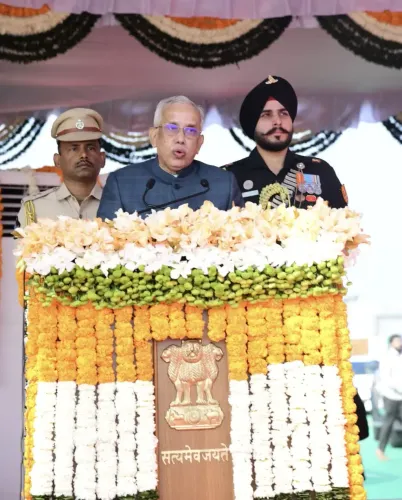
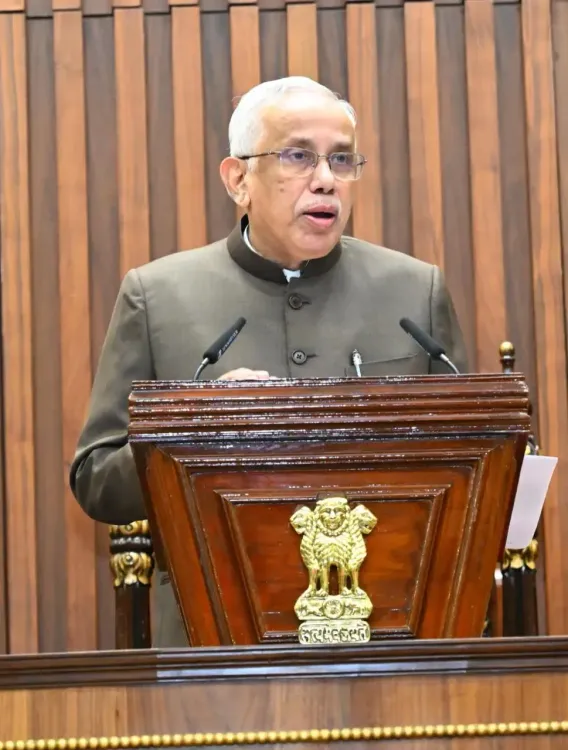
Amaravati, Feb 11 (NationPress) The Governor of Andhra Pradesh, Justice S. Abdul Nazeer (retd), asserted on Wednesday that the initiative to rebuild the state is securely progressing.
He emphasized that despite facing financial challenges, the state is regaining its growth trajectory through prudent prioritization and reform.
Speaking during the opening session of the Budget meeting of the legislature, he highlighted that in the past 21 months, the government has achieved essential reforms, with visible proof of progress across various sectors.
The Governor stated that the populace has entrusted the government with the mission to rejuvenate the state through welfare, advancement, and efficient governance. "In one year and nine months, this initiative is on a solid path. Foundational reforms are complete, and evidence of progress is evident across sectors. Guided by the Swarna Andhra vision, each year enhances the previous one," he mentioned.
He acknowledged the considerable challenges posed by years of fiscal strain that resulted in significant imbalances and liabilities across the board. He informed legislators that measures have been implemented to stabilize finances, lower borrowing costs, and secure support for revival while rebuilding trust.
The Governor expressed that the government’s approach to establishing the state’s foundations is characterized by determination, clarity, and persistence, fostering renewed confidence in Andhra Pradesh.
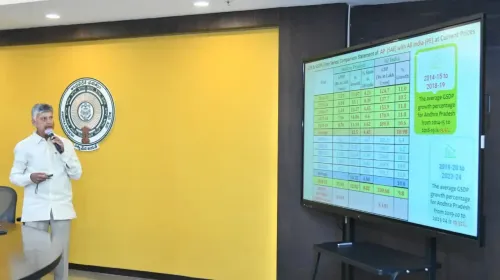
"These initiatives are already translating into positive economic outcomes. According to the First Advance Estimates for 2025–26, Andhra Pradesh’s Gross State Domestic Product has surged to Rs 17.62 lakh crore, up from Rs 15.91 lakh crore last year, reflecting a nominal growth of 10.75 percent. The per capita income has increased to Rs 2.95 lakh, compared to Rs 2.66 lakh previously. This growth has been fueled by robust performances in the agriculture sector at 7.83 percent, the industrial sector at 9.53 percent, and the services sector at 12.94 percent," he stated.
Governor Abdul Nazeer pointed out that the government is dedicated to closely monitoring outcomes, energizing institutions, and maintaining momentum. Public collaboration and constructive interaction will facilitate quicker and more equitable results from reforms. Active citizen participation will accelerate progress, he added.
He reaffirmed that this journey is in line with national goals and the vision of a developed India by 2047, urging every citizen to engage actively in this collective transformation mission.
"This shared journey aims to create a state that is 'Wealthy, Healthy, and Happy', and among the most livable in the nation, by converting the aspirations of the people of Andhra Pradesh into lasting achievements. With faith in our strengths, confidence in our institutions, and unity in our objectives, Andhra Pradesh advances with resilience, competitiveness, and a commitment to a future where every citizen can live with dignity, opportunity, and hope," he remarked.
The Governor noted that the government has strategically navigated from revival towards ascendance. Shortly after taking office, an interim financial plan was established to stabilize governance and address immediate obligations. This was succeeded by the first budget, prepared swiftly, which concentrated on delivering 'Super Six' and other welfare measures while reinitiating development activities.
"In the ensuing nine months, adjustments were made in policies, systems, and expenditure priorities. We then presented a comprehensive budget rooted in a long-term vision. Today, governance has evolved beyond mere revival, aligning welfare, development, and governance with models that are future-ready," he stated.
The government prioritized transparency by publishing seven White Papers that objectively highlighted misgovernance in public finances, derailment of the Polavaram Project, degradation of the power sector, misappropriation of natural resources, flawed excise policies, deterioration of law and order, and the misguided three-capital proposal that aimed at undermining the futuristic Amravati, hindering the state’s overall progress.
Point of View
It is essential to recognize the significance of Andhra Pradesh's rebuilding process under Governor Abdul Nazeer. This initiative reflects a broader commitment to welfare and development, crucial for the state’s future. The emphasis on public engagement is vital, as active citizen participation can drive meaningful change. The journey aligns with national aspirations, and its success is pivotal for India's progress.
NationPress
19 Sept 2026
Frequently Asked Questions
What are the key reforms mentioned by the Governor?
The Governor highlighted foundational reforms that have been completed, which are evident across various sectors in the state.
How has the economic performance of Andhra Pradesh changed?
The state's Gross State Domestic Product has increased to Rs 17.62 lakh crore, showing a nominal growth of 10.75 percent from the previous year.
What role does public engagement play in this process?
Public cooperation and constructive engagement are crucial for faster and more equitable results from reforms, as active participation accelerates progress.
What are the future aspirations for Andhra Pradesh?
The Governor envisions a 'Wealthy, Healthy, and Happy' state, aiming to align with the national goal of a developed India by 2047.
What steps has the government taken to stabilize finances?
The government has implemented measures to stabilize finances, reduce borrowing costs, and secure revival support to rebuild credibility.