Arab Coalition Denounces Iranian Aggressions and Backs Lebanon's Security

Synopsis
In a decisive meeting, Arab nations condemned Iran's attacks on civilian infrastructure and expressed unwavering support for Lebanon's security. This strong stance highlights the regional commitment to sovereignty and stability amidst escalating tensions.
Key Takeaways
Arab nations unite against Iranian aggression.
Support for Lebanon's security reaffirms regional stability.
Emphasis on international law and good neighborliness.
Call for Iran to halt attacks and respect sovereignty.
Ongoing tensions in West Asia require diplomatic solutions.
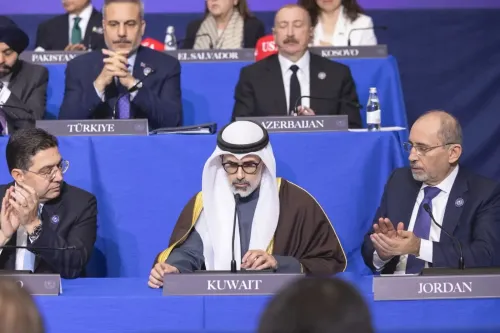
Riyadh, March 19 (NationPress) A coalition of Arab countries has strongly condemned the Iranian assaults on civilian zones, including critical infrastructure such as oil facilities, desalination plants, airports, residential complexes, and diplomatic sites. They emphasized the right of nations to defend themselves in line with Article 51 of the United Nations Charter.
During a consultative ministerial conference in Riyadh on Wednesday, the Foreign Ministers of Qatar, Azerbaijan, Bahrain, Egypt, Jordan, Kuwait, Lebanon, Pakistan, Saudi Arabia, Syria, Turkey, and the United Arab Emirates reiterated their commitment to Lebanon's security, stability, and territorial integrity, advocating for the sovereignty of the Lebanese state over its complete territory. They also voiced their disapproval of Israel's aggression against Lebanon and its expansionist actions in the region.
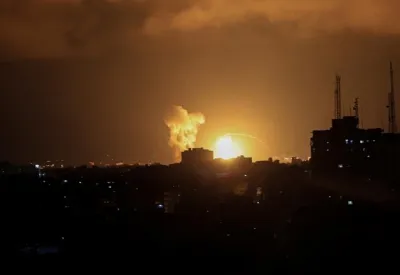
A joint declaration issued post-meeting stated, "The Ministers deliberated on the Iranian assaults targeting the Gulf Cooperation Council nations, Jordan, Azerbaijan, and Turkey, and they firmly condemned these intentional Iranian attacks utilizing ballistic missiles and drones that struck residential areas and civilian infrastructures, including oil facilities, desalination plants, airports, residential buildings, and diplomatic premises. They stressed that such actions are inexcusable under any pretext or circumstance."
The ministers called upon Iran to cease its attacks immediately and to adhere to international and humanitarian laws, as well as principles of good neighborliness. They urged Iran to refrain from any actions or threats that might impede international navigation in the Strait of Hormuz.
The Ministers pressed for an immediate end to Iranian hostilities and highlighted the importance of upholding international law and humanitarian principles as a foundational step towards de-escalation, achieving security, stability, and fostering diplomacy as a means to addressing the crisis. They underscored that future relations with Iran hinge upon its respect for state sovereignty and non-interference in domestic affairs, as well as a commitment to not misuse or develop military capabilities to threaten regional countries.
"The Ministers emphasized the necessity for Iran to comply with Security Council Resolution 2817 (2026), which demands an immediate cessation of all attacks and an unconditional halt to provocative actions or threats against neighboring nations, as well as ceasing support, financing, and arming affiliated militias in Arab states, which Iran employs to further its objectives against the interests of those states. Moreover, they called for Iran to refrain from measures or threats that could obstruct international navigation in the Strait of Hormuz or jeopardize maritime security in Bab al-Mandab," the statement concluded.
This declaration arises amidst the ongoing conflict in West Asia, which intensified following the US-Israeli strikes on Iran on February 28, resulting in the deaths of Iran's Supreme Leader Ayatollah Ali Khamenei and senior military officials. In retaliation, Iran initiated drone and missile strikes targeting US and Israeli installations, along with regional capitals and allied forces.
The joint statement reiterated, "The Ministers express their commitment to ongoing consultations and coordination, monitoring developments and evaluating emerging issues to ensure the formation of unified stances and the adoption of necessary legitimate measures and actions to safeguard their security, stability, and sovereignty, while stopping Iranian attacks on their territories."
Point of View
Indicating a strategic pivot towards cooperative security measures.
NationPress
19 Sept 2026
Frequently Asked Questions
What prompted the Arab nations' condemnation of Iran?
The condemnation arose from Iranian attacks on civilian areas and critical infrastructure in the region, including oil facilities and airports.
Which countries participated in the ministerial meeting?
The meeting included Foreign Ministers from Qatar, Azerbaijan, Bahrain, Egypt, Jordan, Kuwait, Lebanon, Pakistan, Saudi Arabia, Syria, Turkey, and the UAE.
What actions did the Ministers propose regarding Iran?
The Ministers urged Iran to cease its attacks immediately and adhere to international laws, emphasizing the need for good neighborly relations.
What is the significance of Article 51 of the UN Charter in this context?
Article 51 allows states the right to self-defense, which the Arab nations invoked to justify their stance against Iranian aggression.
How does this situation impact Lebanon's security?
The Arab nations' support for Lebanon aims to strengthen its sovereignty and stability amid external threats, particularly from Iran.