Assam evictions to continue, says CM Sarma; 650 bighas cleared in Dhubri

Synopsis
Assam CM Himanta Biswa Sarma has drawn a firm line: evictions continue, community be damned. With 650 bighas cleared in Dhubri on 1 November, 638-plus hectares reclaimed in October, and 1,098 families displaced in a single January operation, Assam's land-reclamation campaign is the most aggressive in the BJP's tenure — and shows no sign of slowing despite mounting legal and humanitarian challenges.
Key Takeaways
Assam CM Himanta Biswa Sarma reaffirmed on Monday that eviction drives will continue with no relaxation, regardless of the religious identity of encroachers.
A major drive in Dhubri district on 1 November 2026 cleared approximately 650 bighas (nearly 215 acres ); notices were served to around 700 families .
Operations in Golaghat , Hojai , and Nagaon in October 2026 cleared more than 638 hectares , affecting around 1,000 families .
In January 2026 , 1,098 families were evicted and approximately 700 hectares reclaimed in Hojai's Jamuna-Maudanga Reserved Forest , according to reports.
Opposition parties and civil society groups allege disproportionate impact on Bengali-speaking Muslim families and have demanded transparent due process and rehabilitation plans.
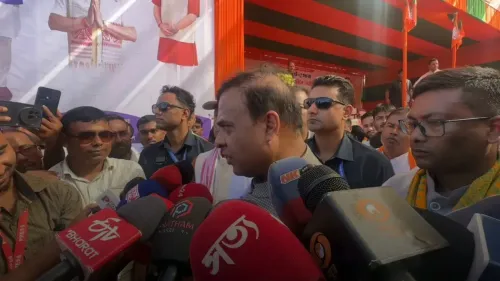
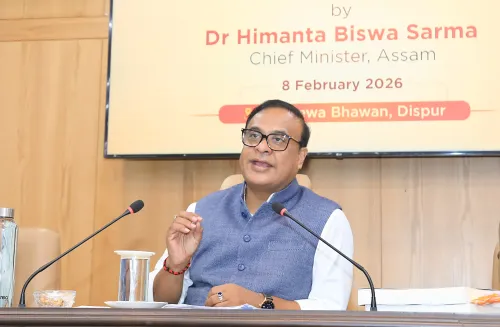
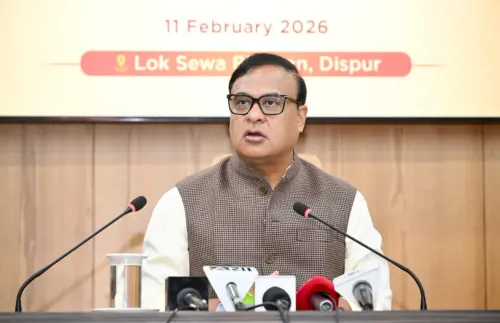
Assam Chief Minister Himanta Biswa Sarma on Monday declared that the state's anti-encroachment eviction drives will face no let-up, stressing that the campaign targets illegal occupants regardless of religious identity. Speaking at a public gathering during his visit to Lahowal in Dibrugarh district, Sarma sought to counter criticism that the operations disproportionately affect minority communities.
What the Chief Minister Said
'Not only minorities, but Hindus have also been evicted,' Sarma said, reiterating that the government's objective is the reclamation of government and protected forest land — not action against any particular community. He maintained that action had been taken against encroachers from both Hindu and Muslim communities across the state.
The Dhubri Operation and Its Scale
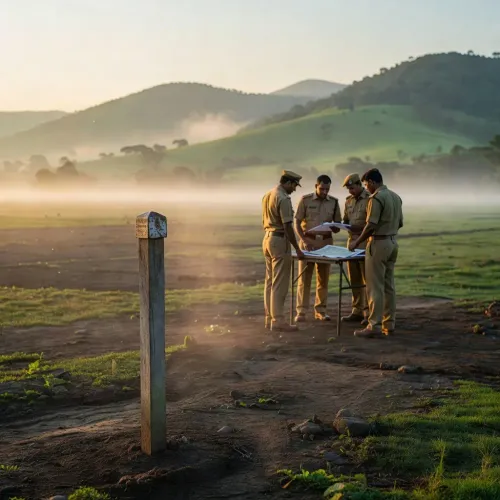
Sarma's remarks follow a major eviction drive in Dhubri district on 1 November 2026, when the district administration moved into Alamganj locality under Gauripur circle to clear approximately 650 bighas (nearly 215 acres) of allegedly encroached government land. Officials had served notices to around 700 families occupying close to 800 bighas. However, the administration excluded approximately 150 bighas from the drive after affected residents obtained court relief.
Earlier Operations Across Districts
The Dhubri drive follows large-scale evictions in Golaghat, Hojai, and Nagaon in October 2026, during which the government claimed to have cleared more than 638 hectares of encroached land, displacing around 1,000 families. In Hojai district, authorities also resumed operations in the Jamuna-Maudanga Reserved Forest, targeting 152 families and seeking to reclaim around 525 bighas. This followed an earlier operation in January 2026, when 1,098 families were evicted and approximately 700 hectares of land were reclaimed, according to reports.
Opposition and Civil Society Pushback
Eviction has been a persistent political flashpoint in Assam since the Bharatiya Janata Party (BJP) government came to power in 2021. Opposition parties and civil society organisations have raised concerns over humanitarian consequences, the adequacy of rehabilitation arrangements, and what they describe as a disproportionate impact on Bengali-speaking Muslim families. Critics have also demanded greater transparency over land ownership claims and stricter adherence to due process before families are displaced.
What Comes Next
Sarma has consistently argued that allowing government and forest land to remain under unauthorised occupation undermines both ecological resources and indigenous Assamese land interests. The campaign has expanded beyond Lower Assam, and the government has signalled it will press ahead. The central question — whether land-reclamation goals can be pursued while guaranteeing legal safeguards and humane treatment — is likely to keep the issue politically charged in the months ahead.
Point of View
Not a rebuttal — it sidesteps the structural question of whether notice periods, legal access, and rehabilitation are uniformly applied across communities. The scale is striking: over 638 hectares cleared in a single month, more than 1,000 families displaced, yet the government has not published a comprehensive rehabilitation framework. Assam's land politics are inseparable from its demographic anxieties, and the BJP has made reclamation a core identity plank. The real accountability test is not who was evicted, but whether due process was equal — and on that, the government's transparency record remains thin.
NationPress
9 Nov 2026
Frequently Asked Questions
Why is Assam carrying out eviction drives?
The Assam government says the drives are aimed at reclaiming government and protected forest land that has been illegally occupied. Chief Minister Himanta Biswa Sarma has argued that allowing unauthorised occupation undermines ecological resources and indigenous land interests.
How much land has been cleared in Assam's eviction drives?
In October 2026 alone, operations across Golaghat, Hojai, and Nagaon cleared more than 638 hectares, affecting around 1,000 families. A further 650 bighas (nearly 215 acres) were cleared in Dhubri on 1 November 2026.
Who has been affected by the evictions?
Sarma says evictions have targeted both Hindu and Muslim encroachers. However, opposition parties and civil society groups allege a disproportionate impact on Bengali-speaking Muslim families, a claim the government disputes.
What has the opposition said about the eviction campaign?
Opposition parties and civil society organisations have raised concerns about humanitarian consequences, rehabilitation arrangements, and alleged due-process violations. They have demanded greater transparency on land ownership claims and proper resettlement of displaced families.
How long has this eviction policy been in place in Assam?
Eviction has been a major administrative and political issue in Assam since the BJP government came to power in 2021. The campaign has intensified over successive years, expanding from Lower Assam to reserved forests and multiple districts across the state.