Assam panchayats get ₹525 crore Finance Commission funds: CM Sarma
Synopsis
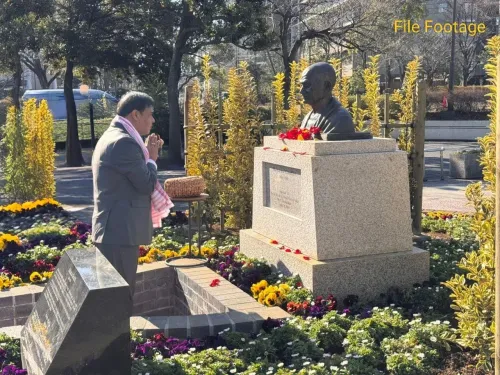
On Gandhi Jayanti, Assam CM Himanta Biswa Sarma revealed that the Finance Commission channelled over ₹525 crore to Assam's Panchayats in 2025 — framing the allocation as both a Gandhian tribute and a concrete step toward grassroots self-reliance. The announcement spotlights how constitutional devolution mechanisms are being used to push development to Assam's village level.
Key Takeaways
Assam CM Himanta Biswa Sarma announced on 2 October 2025 (Gandhi Jayanti) that the Finance Commission allocated more than ₹525 crore to Assam's Panchayats in 2025 .
The funds are directed at grassroots welfare initiatives including wage employment, rural housing, livelihoods, infrastructure, and social security.
The Assam Economic Survey 2025-26 notes Finance Commission grants have supported decentralised planning at the Gram Panchayat level.
CM Sarma linked the initiative to Mahatma Gandhi's vision of village self-reliance and the government's Swadeshi and Atmanirbharta approach.
Assam's Panchayat and Rural Development Department is the primary implementing body for these programmes.
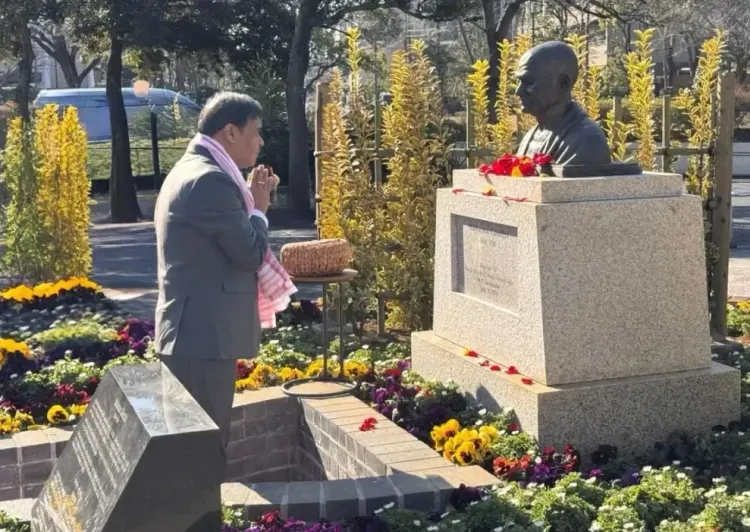
Assam Chief Minister Himanta Biswa Sarma on Friday, 2 October 2025, announced that the Finance Commission allocated more than ₹525 crore to Assam's Panchayats in 2025, as part of the state government's push to strengthen grassroots governance and rural self-reliance. The announcement came on the occasion of Gandhi Jayanti, marking the birth anniversary of Mahatma Gandhi.
Key Announcement
Chief Minister Sarma said the ₹525 crore Finance Commission allocation is directed at carrying forward welfare initiatives at the grassroots level across Assam. The funds are channelled through Panchayati Raj institutions, which the state has positioned as the primary vehicles for decentralised development delivery.
'The nation, guided by his vision, is forging ahead in a new era of Swadeshi and Atmanirbharta, ensuring growth reaches the last man standing,' CM Sarma said in his Gandhi Jayanti message.
What the State Government Said
Sarma emphasised that the government would continue to empower villages and Panchayats to become more resilient and self-reliant. 'We will continue to follow his footsteps, empowering our villages and panchayats to become more resilient and Atmanirbhar,' he said.
The Chief Minister noted that strengthening Panchayati Raj institutions forms part of a broader rural development strategy, with the state's Panchayat and Rural Development Department implementing programmes spanning wage employment, rural housing, livelihoods, infrastructure development, and social security.
Finance Commission Grants and Rural Development
According to the Assam Economic Survey 2025-26, Finance Commission grants have supported decentralised planning and infrastructure development at the Gram Panchayat level. This aligns with a national framework that devolves funds directly to local bodies for community-level spending, bypassing multiple layers of bureaucracy.
Notably, the emphasis on Swadeshi and Atmanirbharta echoes the Union government's broader policy vocabulary, signalling Assam's alignment with the Centre's rural governance priorities. The allocation underscores how Finance Commission devolution — a constitutionally mandated mechanism — translates into on-ground development capacity for states like Assam.
Broader Context
Gandhi Jayanti has increasingly become a platform for state governments to announce or highlight rural welfare and Panchayati Raj initiatives, given Gandhi's advocacy for village-based economic self-sufficiency. Assam's invocation of Atmanirbharta on this occasion reflects the convergence of Gandhian philosophy with contemporary policy framing around local self-governance.
With the Finance Commission grants now formally acknowledged, attention will turn to how effectively Assam's Panchayats deploy the funds — and whether independent monitoring mechanisms are in place to measure outcomes at the village level.
Point of View
But the more important question is how effectively Assam's Panchayats will deploy it. Finance Commission devolution is constitutionally guaranteed — announcing the receipt of funds is not the same as demonstrating their impact. Assam's Panchayati Raj institutions have historically struggled with capacity constraints and audit compliance. Framing the allocation through Gandhi Jayanti optics risks obscuring the need for robust outcome measurement at the village level, which the state has yet to detail publicly.
NationPress
2 Oct 2026
Frequently Asked Questions
How much did the Finance Commission allocate to Assam's Panchayats in 2025?
The Finance Commission allocated more than ₹525 crore to Assam's Panchayats in 2025, as announced by Chief Minister Himanta Biswa Sarma on Gandhi Jayanti, 2 October 2025. The funds are intended to support welfare and development initiatives at the grassroots level.
Why did CM Sarma make this announcement on Gandhi Jayanti?
CM Sarma chose Gandhi Jayanti to highlight the allocation as it aligns with Mahatma Gandhi's philosophy of village self-reliance and grassroots development. The occasion provided a symbolic backdrop to underscore the government's Swadeshi and Atmanirbharta development approach.
What programmes will the ₹525 crore Panchayat funds cover in Assam?
The funds are channelled through Assam's Panchayat and Rural Development Department, covering wage employment, rural housing, livelihoods, infrastructure development, and social security programmes at the Gram Panchayat level.
What does the Assam Economic Survey 2025-26 say about Finance Commission grants?
The Assam Economic Survey 2025-26 notes that Finance Commission grants have supported decentralised planning and infrastructure development at the Gram Panchayat level, reinforcing the role of local bodies in direct welfare delivery.
How does this relate to the broader national Panchayati Raj framework?
Finance Commission devolution to Panchayats is a constitutionally mandated mechanism that gives local bodies direct access to funds, bypassing multiple bureaucratic layers. Assam's allocation reflects this national framework, with the state aligning its rural governance priorities with Centre-level policy goals around Atmanirbharta.