CM Himanta Invokes Gandhi Jayanti, Cites ₹525cr Panchayat Fund
Synopsis
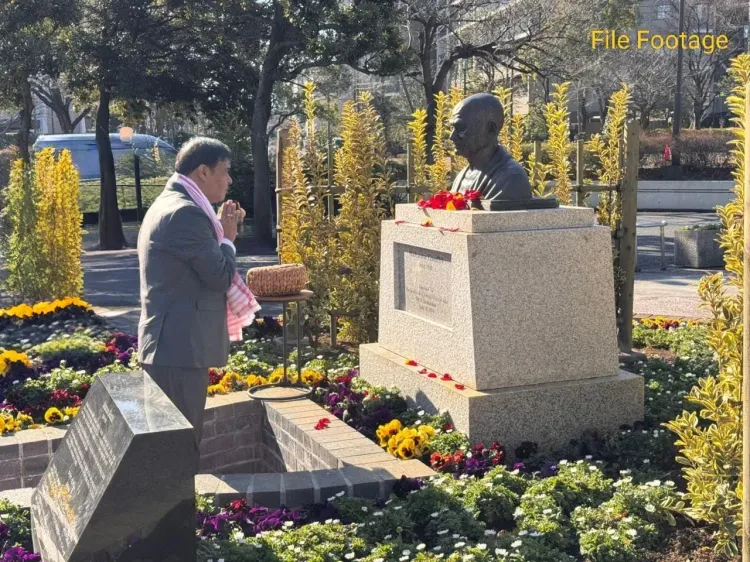
Assam Chief Minister Himanta Biswa Sarma marked Gandhi Jayanti on 2 October 2026 by linking Mahatma Gandhi's Swadeshi vision to a ₹525 crore Finance Commission allocation for Assam's Panchayats in 2025, pledging to deepen rural self-reliance.
Key Takeaways
Gandhi Jayanti, 2 October 2026: CM Himanta Biswa Sarma paid tribute to Mahatma Gandhi, connecting his philosophy to current governance priorities.
Over ₹525 crore was allocated by the Finance Commission to Assam's Panchayats in 2025 for grassroots welfare initiatives.
The CM framed the allocation as an expression of Swadeshi and Atmanirbharta — self-reliance at the village level.
Sarma pledged to continue empowering villages and Panchayats to become more resilient and self-sufficient.
The announcement underlines Assam's strategy of decentralising welfare delivery to local bodies in a state with challenging geography.
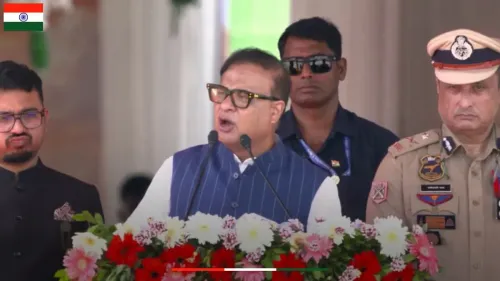
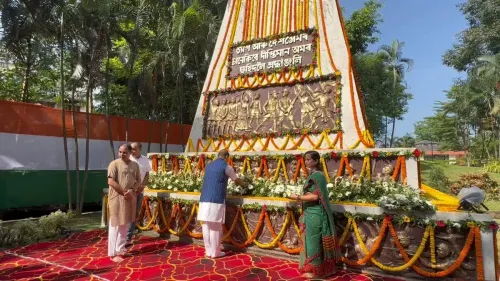
On the occasion of Gandhi Jayanti, 2 October 2026, Assam Chief Minister Himanta Biswa Sarma tied Mahatma Gandhi's enduring philosophy of self-reliance directly to a concrete fiscal commitment — over ₹525 crore allocated by the Finance Commission to Assam's Panchayats in 2025 — framing grassroots empowerment as the living expression of Gandhian ideals in the modern era.
₹525 Crore for Assam's Villages: Translating Philosophy into Fiscal Policy
CM Sarma's post moved beyond ceremonial tribute, anchoring the commemoration in a specific number. 'In 2025, over ₹525 crore was allocated by the Finance Commission to Assam's Panchayats to carry forward welfare initiatives at the grassroots,' he wrote, framing the fund as a direct inheritance of Gandhi's vision of village self-governance. The figure signals the state's continued push to decentralise welfare delivery — getting resources out of Dispur and into district and village councils.
Finance Commission devolution to Panchayati Raj institutions is a constitutionally mandated mechanism designed to ensure local bodies have untied funds for community needs. For a state like Assam — with a large rural population spread across plains, hills, and flood-prone riverine zones — the capacity of Gram Panchayats to spend these funds effectively is a direct determinant of last-mile welfare outcomes.
Swadeshi and Atmanirbharta: Gandhi's Language in a 21st-Century Frame
Sarma invoked two keywords that straddle the Gandhian lexicon and contemporary national policy: Swadeshi (self-reliance through local production) and Atmanirbharta (the Modi government's signature self-reliance framework). The pairing is deliberate — it draws a philosophical throughline from Gandhi's 1920s Swadeshi movement to the Atmanirbhar Bharat initiative, positioning the BJP-led dispensation as a legitimate custodian of that inheritance.
The Chief Minister pledged to 'continue to follow his footsteps, empowering our villages and panchayats to become more resilient and Atmanirbhar.' It is a promise that is simultaneously ideological and administrative — Gandhi Jayanti as a moment not just of remembrance, but of policy renewal.
Why Assam's Panchayat Empowerment Carries Outsized Weight
Assam's geography makes centralised welfare delivery genuinely difficult. Flooding, remote hill districts, and a dispersed tribal population mean that empowered, funded local bodies are not a governance nicety — they are an operational necessity. A well-resourced Panchayat in Barpeta or Karbi Anglong that can act without waiting for state-level clearance can respond faster to flood relief, health emergencies, and rural infrastructure gaps. The ₹525 crore figure, if deployed efficiently, represents meaningful capacity at that level.
For CM Sarma — who also convenes the North-East Democratic Alliance (NEDA) — aligning Assam's rural governance story with the national Atmanirbhar narrative also serves a broader political purpose: demonstrating that the BJP's development model translates into real resource flows for the North-East's villages, not just headline pledges.
Gandhi's dream was a self-governing village republic. Whether Assam's Panchayats are funded and free enough to fulfil that dream in 2026 is the question every rupee of that allocation will have to answer.
Point of View
Demonstrating tangible resource flows to Assam's villages strengthens the argument that BJP governance in the region delivers at the grassroots. The real test, however, is whether Panchayat-level institutions in Assam have the administrative capacity to absorb and deploy these funds effectively.
NationPress
2 Oct 2026
Frequently Asked Questions
How much did the Finance Commission allocate to Assam's Panchayats in 2025?
Over ₹525 crore was allocated by the Finance Commission to Assam's Panchayats in 2025, as stated by Chief Minister Himanta Biswa Sarma on Gandhi Jayanti 2026.
What did Himanta Biswa Sarma say on Gandhi Jayanti 2026?
CM Sarma paid tribute to Mahatma Gandhi, highlighted a ₹525 crore Panchayat allocation for grassroots welfare, and pledged to empower Assam's villages through the principles of Swadeshi and Atmanirbharta.
What is the Finance Commission's role in funding Panchayats?
The Finance Commission is a constitutional body that recommends devolution of central funds to states and local bodies, including Panchayati Raj institutions, to enable grassroots welfare and development spending.
What is Atmanirbharta and how does it relate to Gandhi's Swadeshi?
Atmanirbharta, meaning self-reliance, is a key plank of national economic policy. CM Sarma linked it to Gandhi's Swadeshi philosophy — both emphasising local production, self-sufficiency, and reducing dependence on external resources.
Who is Himanta Biswa Sarma?
Himanta Biswa Sarma is the Chief Minister of Assam and a senior BJP leader. He also serves as the convenor of the North-East Democratic Alliance (NEDA), a coalition of BJP-aligned parties in India's North-East.