How is CM Yogi Adityanath Shaping the Ayodhya Master Plan?
Synopsis
Uttar Pradesh’s CM Yogi Adityanath reviews the ambitious Ayodhya Master Plan 2031, focusing on sustainable development and cultural heritage, aiming to transform Ayodhya into a global spiritual hub. Discover how Ayodhya will blend tradition with modernity.
Key Takeaways
Ayodhya's Master Plan 2031 aims for sustainable growth.
Focus on cultural heritage and environmental balance .
Projected population growth necessitates infrastructure development.
Significant investment is expected to boost the local economy.
Plans include pilgrim-friendly facilities and modern amenities.
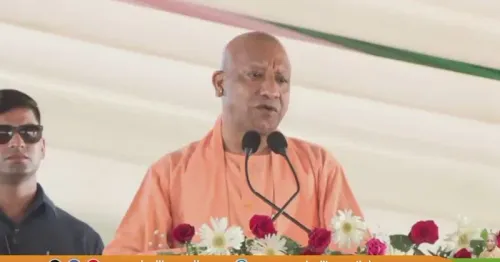
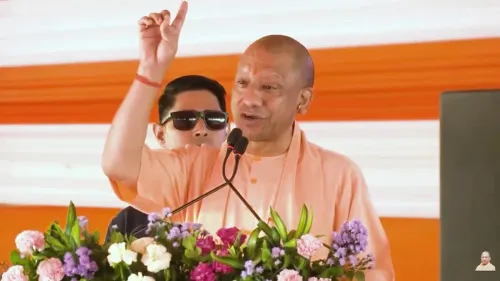
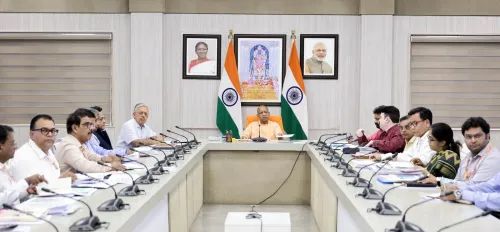
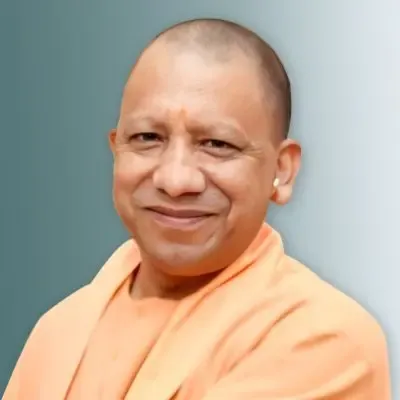
Lucknow, Oct 28 (NationPress) The Chief Minister of Uttar Pradesh, Yogi Adityanath, recently assessed the proposals for the Ayodhya Master Plan 2031, asserting that the city's growth must harmoniously combine grandeur, faith, and modernity.
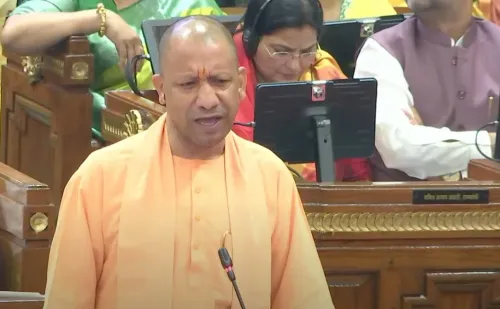
He remarked, "The Master Plan aims to position Ayodhya as the spiritual capital of the world, promoting organized, systematic, and sustainable development."
The Chief Minister underscored that Ayodhya's cultural heritage, religious significance, and environmental integrity should take precedence in all development efforts.
While discussing the Master Plan with departmental officials, he noted that under Ayodhya Vision 2047, the city will be presented as a global spiritual center, a hub of knowledge, a city of festivals, alongside being a green, solar-powered urban environment equipped with contemporary amenities.
Plans include pilgrim-friendly infrastructure, diverse tourism options, historical circuits, and heritage trails. He stated that this Master Plan will pave the way for Ayodhya's orderly and sustainable growth.
Officials revealed that the Ayodhya Master Plan 2031 aims to transform the city into a worldwide center for spirituality and tourism. The Ayodhya Development Area has been divided into 18 zones to ensure balanced land utilization.
Based on an estimated population of 23.94 lakh, the land-use allocation comprises 52.56% for residential, 5.11% for commercial, 4.65% for industrial, 10.28% for public use, 12.20% for transport, and 14.31% for green spaces.
The Chief Minister instructed an increase in the allocation for mixed-use and industrial land, reserving areas for various activities along Panchkosi and 14 Kosi Parikrama Marg.
It was highlighted that Ayodhya's current population of approximately 1.1 million is projected to reach 2.4 million by 2031 and 3.5 million by 2047.
Keeping this growth in mind, the Master Plan includes the creation of new residential townships, a majestic entrance gate, multi-level parking, the 84 Kosi Parikrama Marg, a Greenfield Expressway, a ring road, an airport, a temple museum, a solar power facility, hotels, and other modern civic amenities.
The Chief Minister asserted that these initiatives will ensure Ayodhya is smart, safe, and self-sufficient.
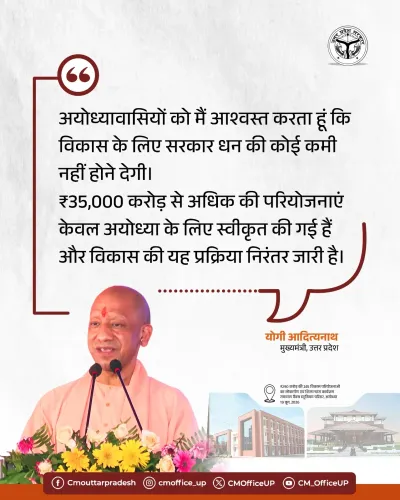
It was also mentioned that 159 projects worth Rs 8,594 crore have been sanctioned in the Ayodhya Development Area. The Chief Minister emphasized that these projects will generate job opportunities for local youth and stimulate the regional economy.
Highlighting the robust road, rail, and air connectivity of Ayodhya, he stated that enhancing transport and hospitality infrastructure will provide world-class amenities for pilgrims and tourists.
He directed officials to establish parking facilities, including bus and truck terminals, on routes connecting Lucknow, Prayagraj, Gonda, and Ambedkar Nagar.
Moreover, he instructed that land be allocated for sewage treatment and solid waste management, promoting innovative and indigenous solutions in these sectors.
The Chief Minister stressed that Ayodhya's development should serve as a model for not only religious tourism but also for economic, cultural, and social progress.
All projects must prioritize environmental sustainability, with strict measures to safeguard the Saryu riverbanks and green zones.
Referring to Ayodhya as a representation of India’s essence, the Chief Minister remarked that it should evolve into a convergence of faith, beauty, and prosperity for future generations.
He cautioned that with rapid development, incidents of unplanned plotting and settlements have surfaced, which need to be firmly controlled. All future projects, he noted, must adhere to the Master Plan and regulatory guidelines.
Point of View
I acknowledge the significant ambition behind the Ayodhya Master Plan 2031. While it aims to elevate Ayodhya as a spiritual and tourist destination, the emphasis on sustainable development and cultural preservation must be balanced with the rapid urbanization that comes with such projects. The initiative reflects the government's commitment to not only enhance religious tourism but also to foster economic growth and social welfare, which is crucial for the region's overall progress.
NationPress
30 Sept 2026
Frequently Asked Questions
What is the Ayodhya Master Plan 2031?
The Ayodhya Master Plan 2031 is a comprehensive development plan aimed at transforming Ayodhya into a global spiritual and tourism hub, incorporating modern urban amenities, cultural heritage, and environmental sustainability.
What are the key features of the Master Plan?
Key features include residential townships, a grand entrance gate, multi-level parking, a Greenfield Expressway, an airport, and a focus on pilgrim-friendly infrastructure.
How will the Master Plan affect the local economy?
The Master Plan is expected to create job opportunities for local youth and stimulate the regional economy through various approved projects worth Rs 8,594 crore.
What measures are being taken for environmental sustainability?
The Master Plan emphasizes environmental protection, including measures for safeguarding the Saryu riverbanks and ensuring adequate green spaces in Ayodhya.
How is the population growth projected to impact development?
With a projected increase in population from 1.1 million to 2.4 million by 2031, the Master Plan includes provisions for adequate infrastructure and services to accommodate this growth.