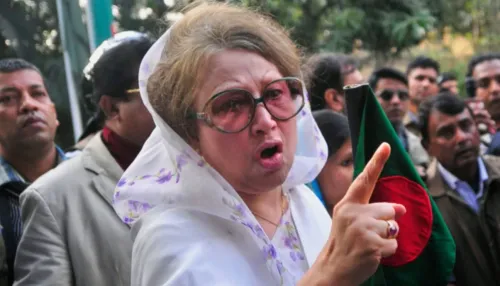
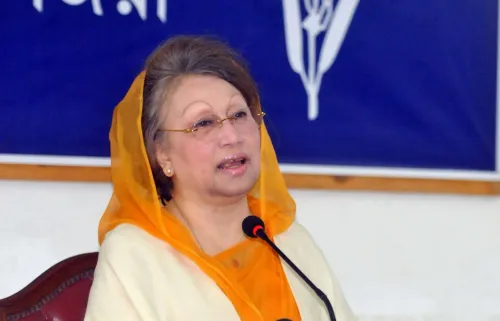
Will Bangladesh's Election Campaign Lead to a Tough BNP-Jamaat Battle?

Synopsis
As Bangladesh's election campaign wraps up, political parties make last-minute pledges ahead of the February 12 national elections. A range of opinion polls predict varying outcomes for the BNP and Jamaat alliances, stirring discussions about their credibility and influence on voter behavior. What lies ahead for Bangladesh's political landscape?
Key Takeaways
Bangladesh's election campaign concluded on February 10.
National elections are set for February 12.
Campaigning restrictions were enforced 48 hours prior to voting.
Diverse opinion polls reflect contrasting electoral forecasts.
Analysts caution about the reliability of these surveys.
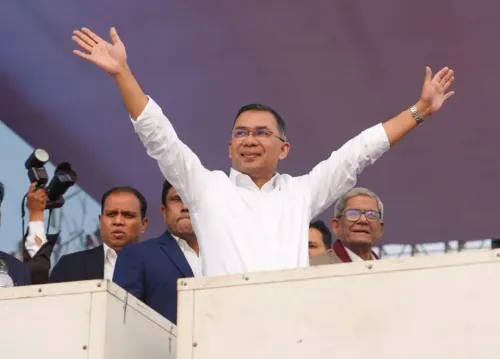
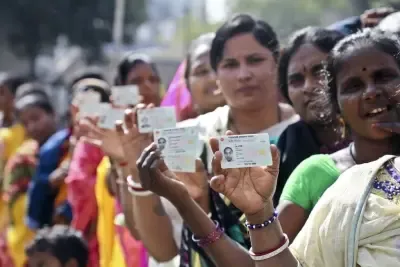
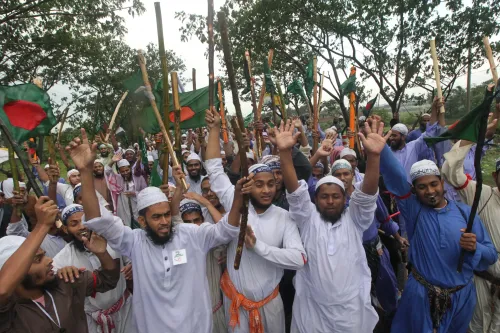
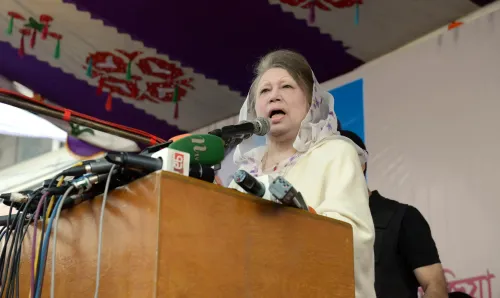
Dhaka, February 10 (NationPress) With the conclusion of Bangladesh's election campaign on Tuesday, political factions wrapped up weeks of rigorous campaigning in anticipation of the national elections set for February 12, as reported by local media.
In the final hours, leaders made numerous promises and commitments, urging voters to evaluate their pledges before the polls scheduled for Thursday.
Campaigning restrictions took effect on Tuesday morning in line with the Parliamentary Election Code of Conduct for Political Parties and Candidates' Rules, 2025.
According to the code, political entities, candidates, or individuals are required to cease electioneering 48 hours prior to the voting day, as highlighted by The Dhaka Tribune.
The election campaigns commenced on January 22, following the distribution of election symbols the day before.
Meanwhile, multiple pre-election opinion polls released by various organizations in Bangladesh present sharply divergent forecasts, raising questions about their methodology, reliability, and potential influence on voter perceptions.
Three significant surveys published in the last two days depict contrasting scenarios regarding the electoral dynamics, particularly concerning the relative strengths of the Bangladesh Nationalist Party (BNP)-led coalition and the Jamaat-e-Islami-led faction, as reported by The Dhaka Tribune.
A survey conducted by Dhaka-based Eminence Associates for Social Development (EASD) indicated it interviewed 41,500 respondents across all 300 constituencies utilizing the Primary Sampling Unit (PSU) method.
During the presentation of findings at the Krishibid Institution in Dhaka on Monday, EASD's Chief Executive Officer Shamim Haider Talukder stated the BNP-led alliance is projected to secure approximately 208 seats, while the Jamaat-e-Islami coalition may attain around 46 seats in the forthcoming elections.
In stark contrast, a survey by Bangladesh's International Institute of Law and Diplomacy (IILD) forecasted a close race, predicting the Jamaat-led coalition could win 105 seats and the BNP-led group 101 seats.
Further complicating the narrative, a third survey from the Nationalist Research Cell (NRC) — a platform of former Dhaka University students — forecasts a significant win for BNP, estimating it could receive 77% of the popular vote and 220 parliamentary seats.
While surveys are a common aspect of election-season discussions, analysts caution that conflicting projections may sway expectations rather than accurately predict electoral outcomes, especially in a climate of escalating political tensions.
Point of View
It is essential to remain impartial while recognizing the heightened stakes in Bangladesh's electoral landscape. The divergence in opinion polls reflects the complexity of voter sentiments and the critical nature of accurate forecasting. It is imperative for the media to provide balanced coverage that informs the electorate while ensuring transparency in the methodologies of these surveys.
NationPress
29 Sept 2026
Frequently Asked Questions
When are the national elections in Bangladesh?
The national elections in Bangladesh are scheduled for February 12.
What do recent opinion polls indicate about the elections?
Recent opinion polls have provided varying projections regarding the strength of the BNP and Jamaat alliances, raising concerns about their credibility.
What is the code of conduct for the elections?
The code of conduct requires all political parties and candidates to cease campaigning 48 hours prior to the voting day.
How many constituencies were surveyed?
The EASD survey interviewed 41,500 respondents across all 300 constituencies.
What are the predictions for the BNP and Jamaat alliances?
Predictions vary, with estimates ranging from BNP winning around 208 seats to Jamaat securing approximately 46 seats in some surveys.